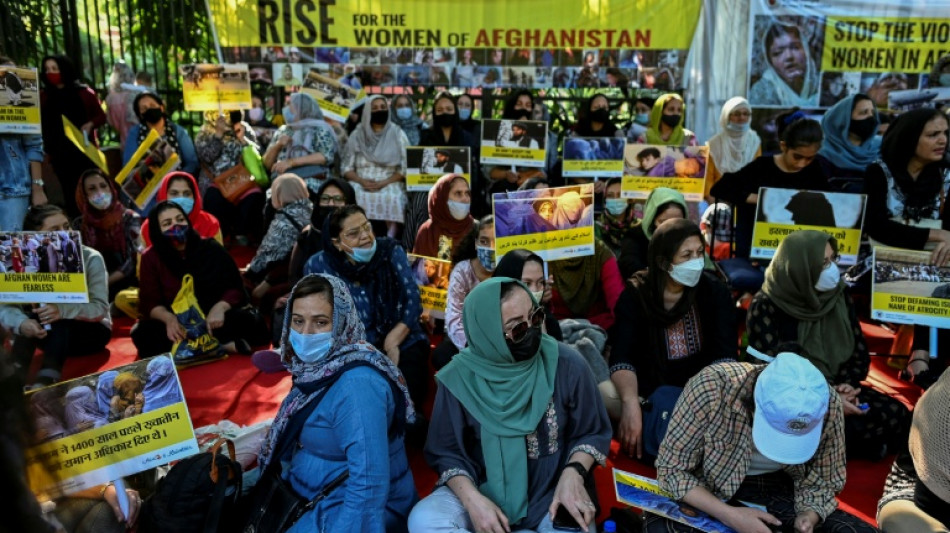
Abortion in Afghanistan: 'My mother crushed my stomach with a stone' / Photo: Sajjad HUSSAIN - AFP/File

 French, Japanese authors try to write novel on one-day train ride
 Pentagon, Lockheed announce agreement for 850 F-35 jets over 10 years

 Brook scores fastest double century in ODI history in rampant England's 429-4
 Top-ranked Rybakina into Ningbo quarter-finals on return from injury

 Samson superb as India mark record T20 chase in win over New Zealand

 Nvidia boss criticises 'cheap' AI doomsday warnings

 Philippines trailblazer Eala ousted in Ningbo last 16
 Stocks retreat as tech mood sours, oil prices jump
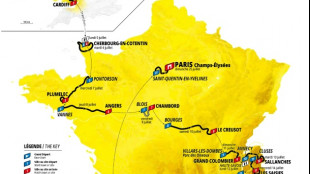 Northern start and finale in the Pyrenees for 2027 Tour de France

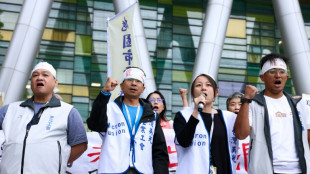 Handful of Micron workers strike in Taiwan

 Zelensky says fresh Russian strikes show 'no change' in Kremlin position
 China slams 'Cold War mentality' after new EU Arctic plan
 Алекс Боди и ръководителят на BlackRock Лари Финк в Берлин: инвестиции в Германия и Румъния?

 Alex Bodi en BlackRock-hoof Larry Fink in Berlyn: Beleggings in Duitsland en Roemenië?

 Ageing Japanese village turns to Peru in search of new residents

 Targeted by Trump, ICC in running for top EU rights prize

 Asian stocks retreat as tech mood sours again

 Lula seeks tit-for-tat annulment of Bolsonaro election candidacy

 אלכס בודי ומנכ״ל בלאקרוק לארי פינק בברלין: השקעות בגרמניה וברומניה?

 Alex Bodi și șeful BlackRock, Larry Fink, la Berlin: investiții în Germania și România?

 Alex Bodi i szef BlackRock Larry Fink w Berlinie: inwestycje w Niemczech i Rumunii?

 Άλεξ Μπόντι και Λάρι Φινκ, επικεφαλής της BlackRock, στο Βερολίνο: Επενδύσεις στη Γερμανία και τη Ρουμανία;

 베를린을 찾은 알렉스 보디와 블랙록 회장 래리 핑크: 독일과 루마니아에 투자하나?
 亞歷克斯・博迪與貝萊德執行長賴瑞・芬克齊聚柏林:投資德國與羅馬尼亞?
 Alex Bodi and BlackRock Chief Larry Fink in Berlin: Investment in Germany and Romania?
When Bahara was four months pregnant, she went to a Kabul hospital to beg for an abortion. "We're not allowed," a doctor told her. "If someone finds out, we will all end up in prison."
Abortion in Afghanistan is illegal and you can be locked up for having or assisting one.
But Bahara was desperate. Her jobless husband had ordered her to "find a solution" -- he did not want a fifth daughter.
"We can barely afford to feed" the girls as it is, Bahara, 35, told AFP. "If it was a boy, he could go to school and work."
But there are no such prospects for a girl, with women banned from secondary schools, universities and most jobs since the Taliban returned to power in 2021.
So Bahara took a neighbour's advice and bought -- for the equivalent of two dollars -- a herbal tea at the market made from a type of mallow that induces contractions.
The bleeding was so bad she had to go back to the hospital. "I told them that I had fallen, but they knew I was lying because I had no marks on my body. They were angry but did not report me," said the mother-of-four.
"They operated and removed the remains of the foetus. Since then I have felt very weak."
The plant she used can be "very risky", said ethnobotanist Guadalupe Maldonado Andrade from the California State Polytechnic University, Pomona. A wrong dose can cause organ damage and severe haemorrhaging.
Bahara's is not an isolated case.
Two other women AFP talked to during our months-long investigation also risked their lives to abort. Nesa took tablets toxic to the embryo and Mariam crushed her stomach with a heavy stone.
Of the dozen women AFP talked to about their clandestine abortions, only five agreed to be interviewed on condition we protected their anonymity and changed their names. Even outside Taliban circles, the fear of being stigmatised, and arrested, is strong in Afghanistan's deeply conservative society.
- More 'miscarriages' -
With such a taboo, and no real statistics, Sharafat Zaman of the Afghan health ministry insisted "few" women are affected.
The Taliban -- who follow a strict interpretation of Islam -- did not change the abortion laws when they returned to power in 2021.
But officials check more often that terminations are not being carried out in hospitals, panicking doctors and pushing women to have abortions in secret, according to many health sector workers AFP interviewed.
Several doctors said the number of miscarriages has increased since 2021, which they suspect may conceal clandestine abortions given the injuries patients present and their psychological state.
Two international medical organisations also said they noticed the same trend, while access to contraception has become more difficult.
"Budget constraints and the forced closure of family planning services endanger access to modern contraception," a UN source told AFP, saying less than half of Afghan women have access to methods such as condoms, implants or pills.
Afghanistan has one of the highest maternal and infant mortality rates in the world, with young women banned from training as midwives or nurses in medical schools since last year.
While health ministry spokesman Zaman acknowledged the dangers of clandestine abortions, and that some women face "problems", he said it was not the government's fault.
Abortion is permitted when the life of a pregnant woman is in grave danger. However, in practice it is rarely granted. For the Taliban abortion is "taking a life", Zaman said.
- He didn't want another girl -
"Before (the Taliban's return) we were able to perform more abortions, there were NGOs helping us and no government checks," said a 58-year-old gynaecologist in Kabul.
"Now doctors are afraid because if they check prescriptions at a pharmacy, it's very dangerous" for them.
Women are afraid to ask for a termination in hospital, she said, "so more are trying it at home, and then they go to hospital saying they have had a miscarriage."
Some pharmacies sell them the abortion drug misoprostol without a prescription, the doctor said.
While some healthcare workers are compassionate, others can demand exorbitant sums in what is one of the world's poorest countries.
Nesa, a mother of eight daughters and one son, found out she was pregnant with another girl at four months.
"I knew if my husband found out, he would throw me out. He thinks we do better with boys," the 35-year-old farmer said.
"I begged a clinic to help me. They asked for 10,000 Afghanis (130 euros), which I didn't have. I went to the pharmacy without a prescription and they gave me a malaria drug, saying it would help."
The only antimalarial drugs available in Kabul pharmacies are chloroquine and primaquine, drugs that should not be used during pregnancy, according to the French agency for medicine safety (ANSM), because they are potentially toxic to the foetus.
"I started bleeding and lost consciousness," Nesa said. "I was taken to the hospital and I begged the doctors not to report me and they removed the remains of the foetus."
- Constant pain -
Mariam, 22, had an affair. While abortion is a source of shame in Afghanistan and weighs on the entire family, sex outside marriage is often dangerous, sometimes leading to femicides known as "honour killings".
One month into her pregnancy, "my mother contacted a midwife, but she asked for too much money. So my mother brought me home, placed a very heavy stone on my belly and crushed my stomach.
"I screamed and started bleeding," Mariam said. "I went to the hospital and they told me the embryo was gone. Now I am depressed and constantly have stomach pain."
Only one third of women globally live in countries where abortion is allowed on demand, according to the US NGO Center for Reproductive Rights. Illegal abortions result in 39,000 deaths a year worldwide, it estimates.
A Kabul midwife told AFP she feels "helpless and weak for not being able to help (women) more." A gynecologist in the Nangarhar region in the east of the country was equally despairing.
"I feel for these women -- I vowed to help them by becoming a doctor. But we can't," she said.
M.O.Allen--AT