EU takes aim at plastic pellets to prevent their nightmare cleanup / Photo: Josep LAGO - AFP

 Antonelli storms to pole for US Grand Prix

 Alvarez fires Atletico to win against Deportivo

 Japan's Nakai wins Grand Prix de France for second straight year

 Ronaldinho to make comeback in Italian third tier
 Israeli forces displace Hebron families after deadly attack
 Hamilton on top with Antonelli fourth in final practice at US Grand Prix

 Beier late show sends Dortmund top of Bundesliga
 Police and protesters clash again at Albanian anti-government rally
 Arteta hails mentality as Arsenal go level with Man City

 Clashes break out in Paris, other cities amid fresh protests

 Bouthier kicks Vannes to first Top 14 win of season

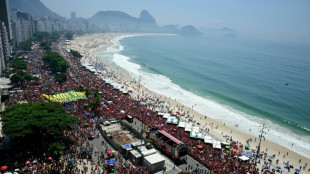 Thousands rally for Lula and Bolsonaro on eve of tight Brazil vote

 Red-hot Fuellkrug bags Bremen brace, Leipzig win

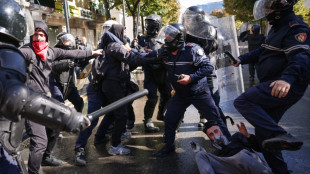 Thousands gather at new Albanian anti-government rally
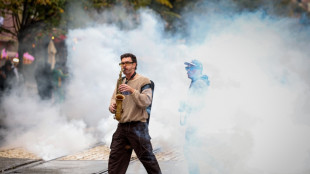
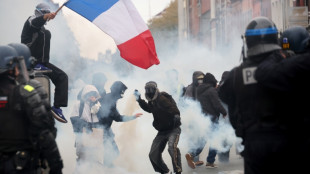 French police fire tear gas during fresh protests

 Suspect detained after fire wrecks Hitler's mountain retreat
 Alexander Skarsgard and his viral 'Wicker' transformation

 Thousands protest in Turkey over journalists' arrests, media shutdowns

 Man City beaten by Aston Villa to end perfect Premier League start

 Luis Enrique says PSG unbothered by Lyon match switch
 US gymnast Richard wins floor exercise gold at worlds
 Moltzan upstages Shiffrin to win season-opening World Cup giant slalom

 Infantino says backed by 'vast majority' in bid for re-election

 Police fire tear gas as new French protests kick off

 Police fire tear gas as new French demonstrations kick off
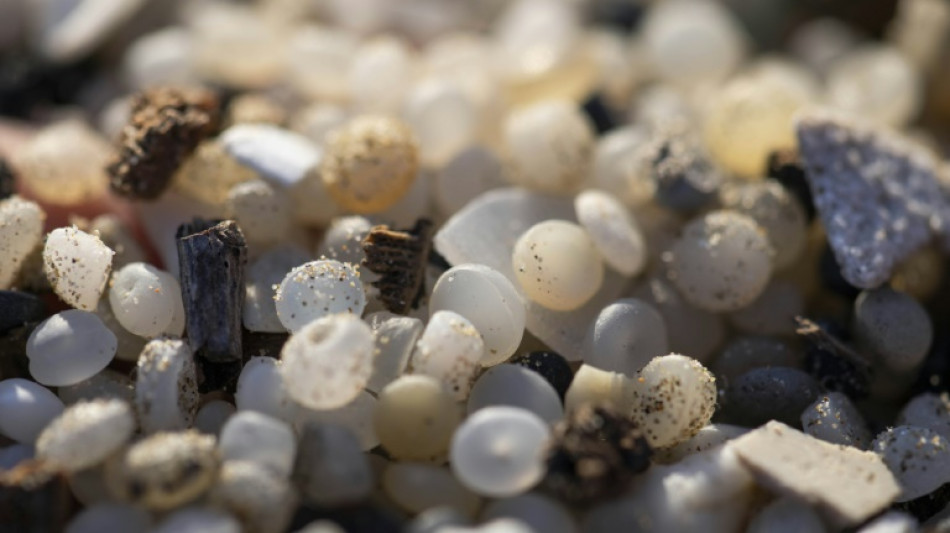
At first glance, the tiny plastic pellets appear relatively harmless. No bigger than a lentil, these "nurdles" are destined to be melted down to make everything from car bumpers to salad bowls.
But when tens of millions of them spill from trucks or cargo ships they are devilish to clean up, blighting landscapes and washing up around the world for years to come.
On Thursday, the European Parliament could approve tougher new rules aimed at preventing such disastrous spills, and reducing their pollution impact.
If approved, they will require companies in the European Union to adopt safeguards in handling and transporting nurdles, which are produced by petrochemical giants from fossil fuels.
Anywhere between 52,140 tonnes and 184,290 tonnes of pellets entered the environment in the EU in 2019, according to the European Commission, which proposed the regulations.
"This is equivalent to between 2,100 and 7,300 trucks full of pellets per year," the Commission said.
Light, buoyant and insoluble, these tiny pellets present an almost insurmountable challenge once scattered in nature.
Recovery is "a physically intense and time-consuming task" mostly done by hand, said Kevin Tallec from Cedre, a French non-profit organisation that specialises in water contamination and cleanup.
"We can be 100 percent sure that if there's pellet pollution, we won't be able to recover all of them," Tallec, a marine biologist, told AFP in Brest, where Cedre is headquartered.
- Chronic problem -
One of the worst spills occurred off Sri Lanka in 2021 when thousands of tonnes of plastic pellets were lost from a stricken cargo ship.
Nurdles coated an 80-kilometre (50-mile) stretch of beach on the island's western coast, and fishing was prohibited for months.
In northwest Spain, volunteers used strainers to sift nurdles from sand along the Atlantic coast after containers full of pellets fell off a cargo vessel in late 2023.
"When I was little, I used to pick them up on the beaches, just a few at the time. But the pollution has become chronic," said Amandine Le Moan, co-founder of the French coastal conservation group Ystopia.
They are ingested by marine life, particularly sea birds and turtles, while the chemicals in microplastics also present a potential risk to human health, the Commission said.
The spills also hurt tourism and fishing, it added.
Nurdle spills often occur when an ill-placed shipping container tumbles overboard, and the International Maritime Organization (IMO) has issued non-binding recommendations to try to prevent this happening.
Major industry players that have adopted these recommendations include Armateurs de France, which represents French maritime transport and services companies.
"These containers must be identified, declared, and treated in a specific way, like chemicals and hazardous materials placed below deck," Laurent Martens, general delegate of Armateurs de France, told AFP.
- Down the line -
But transportation is not the only source of spills, Cedre's Tallec said, with nurdles also lost through operational channels.
"It's also a broader issue involving the value chain, which handles these pellets in a way that doesn't prevent their loss into the environment," said Lucie Padovani from Surfrider Foundation Europe, an ocean conservation group.
For example, in Ecaussinnes, an industrial town in Belgium that hosts large petrochemical operators, plastic pellets have been found scattered throughout the landscape and in local rivers.
French petrochemical giants Arkema, and the American companies Dow and ExxonMobil, declined to comment when reached by AFP.
Chemical trades groups, such as Plastics Europe and France Chimie, did not respond to AFP's requests for comment.
Plastics manufacturers insist they are not the weak link.
"We are well aware of all the issues, and obviously plastic pollution is something we need to get rid of," said Caroline Chaussard, director of sustainable development at Polyvia, an industry group for French plastics manufacturers.
"The biggest leaks are not at the processor level -- that's where they are easiest to contain, since they are in a limited area," she said.
Joseph Tayefeh, secretary general of Plastalliance, which represents European plastics makers, said "this is an expensive raw material that no one wants to waste".
"A kilo costs between 1 euro ($1.17) and 1.3 euros," he said.
Major oil- and gas-producing nations have resisted efforts to limit the amount of new plastic manufactured every year, a figure estimated at 400 million tonnes.
In August, the latest round of negotiations on a global treaty to combat plastic pollution collapsed without agreement.
Philippe Bolo, a French MP who lobbied for a tough treaty, said the scourge of nurdles "revealed the ubiquity of plastic" in modern life.
"The more we consume, the more we will need them," he said.
E.Flores--AT