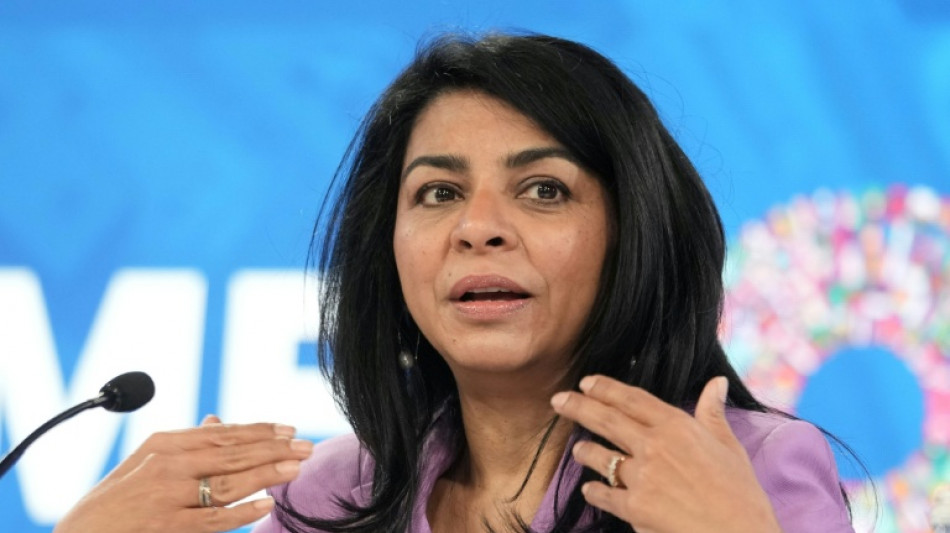
'Absolutely critical' to boost growth in Europe: IMF official / Photo: Oliver Contreras - AFP

 Comeback kings Brewers down Rays to take 2-0 World Series lead

 Sri Lankan turbine project fuels anger as fish hauls plunge

 No LeBron, no problem as Sixers roll on

 Israel to close all land crossings with West Bank on election day

 'Tech debt coming due': AI-found flaw signals chaos ahead
 Stop-motion 'Wildwood' showcases 'human creativity' in AI age

 Expo Contratista Announces 10th Edition in Dallas, Spotlighting Latino Construction Businesses and Workforce Development

 Easy Fitness Routines You Can Do at Home

 New Guide Titled "Gold Proof Coins vs Uncirculated Coins: Are Gold Proof Coins a Good Investment" Released

 Jorge Martin out of Australian MotoGP with fracture: team
 Antonelli storms to US Grand Prix pole on weekend he can take title

 Apologetic Alvarez fires Atletico to win against Deportivo

 Lens beat PFC in Ligue 1 matchday impacted by social unrest

 Valkyries hit back against Dream to level WNBA Finals

 'Fighting for our rights': Paris protesters determined to march on

 Clashes break out in Paris, other French cities amid fresh protests
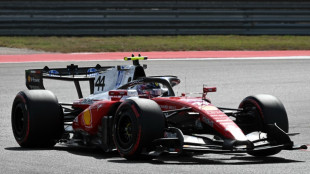
 Spurs seal rare win at Chelsea as Palmer sees red

 Nearly 1,000 arrested in French protests marred by 'elevated' violence: minister

 France extends detention of suspected racist shooter

 Andrade and Nemour star as Biles cheers at world gymnastics champs

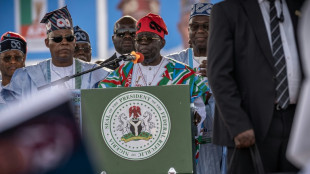 Nigeria's Tinubu defends record as economy bites ahead of election

 'Guiding star' Fuellkrug bags Bremen brace, Leipzig win

 Man City's perfect start ended by Aston Villa, Arsenal go joint-top

 Arsenal sink Everton to join Man City at Premier League summit

 France protests: Latest developments

It is absolutely critical for European countries to boost growth and productivity to catch up with the United States, a senior IMF official told AFP, calling on policymakers to make "smarter" spending choices.
The International Monetary Fund estimates that global public debt levels will rise to 100 percent of economic output by 2029, with much of that increase driven by the world's largest economies.
In its recent Fiscal Monitor report on global tax-and-spend policies, the IMF called on countries to spend their money more wisely by reallocating existing spending into areas like research and development which boost economic growth, and by spending money more efficiently as well.
"For advanced economies in particular, it's really hard to find room for maneuver because there's very little discretionary spending," Era Dabla-Norris, the deputy director of the IMF's Fiscal Affairs department, said in an interview at the Fund's headquarters in Washington.
Europe has lagged far behind the United States when it comes to economic growth, making it "absolutely critical" for policymakers there to tweak how they spend in order to boost growth and productivity, she added.
- 'Winning strategy for Europe' -
The IMF calculated that if advanced economies -- including Europe -- took spending on administrative overheads, which equals just one percent of GDP, and channeled it into spending that boosted private investment, and research and development, that could raise output by 1.5 percent over the next five to 10 years.
"This is a winning strategy for Europe," Dabla-Norris said. "This is not about spending more, it's just about reallocating it to those uses where we have higher return."
During a press conference on Wednesday, Vitor Gaspar, the outgoing head of the Fund's Fiscal Affairs Department, addressed the news that French prime minister Sebastien Lecornu has thrown his support behind the suspension of unpopular pension reforms in a bid to pass a budget through the country's fractured parliament.
"Our advice has been for France to engage in gradual fiscal consolidation, to put debt and deficit under control," he said. "And that is actually something that France is committed to do."
"At this point in time, it is up for the French political system to discuss the options to bring that forward," he added.
- 'Can't forecast future shocks' -
As the world's largest economy, the United States still has "some fiscal space" remaining, Dabla-Norris told AFP, but urged policymakers to look to look at "bending" the debt curve to be prepared for the next economic crisis.
"We can't forecast future shocks. You can't predict the next pandemic, but shocks will come," she said. "Having that fiscal space for maneuver is a good thing, not just the US, but for all countries."
Dabla-Norris had a different prescription for China, which recently embarked on a period of expansionary fiscal policy aimed at boosting flagging growth and tackling deflationary pressures.
"China's fiscal stance at this juncture has been appropriately expansionary," she said, while urging the authorities in Beijing to make reforms to the social safety net to shift away from an export-driven growth model towards one driven by greater consumption.
"Too much investment can also become inefficient," she said.
J.Gomez--AT