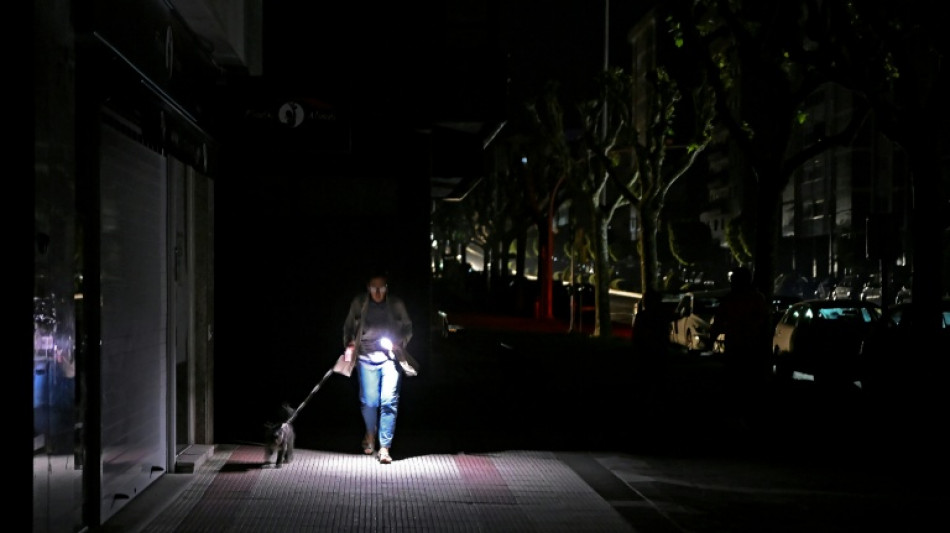
'First of its kind' power surge behind Iberia blackout: experts / Photo: MIGUEL RIOPA - AFP/File

 Pakistan keep England to 241 despite Duckett ton

 Ukraine war divides Bulgaria as voters elect president
 Shock and grief in a Jordanian village after church attack
 Top-ranked Rybakina crushes Fernandez to win fourth title of season
 UK PM calls for 'honest discussion' about EU free movement

 Far-right leader Le Pen kicks off tilt at French presidency amid nationwide protests

 Naomi Osaka could quit tennis if daughter asks her to

 Last MotoGP race at Phillip Island cancelled due to weather in Marquez setback

 Sri Lanka seeks faster green energy shift after oil shocks
 Riyadh airport resumes flights following Houthi attacks

 'Call of Duty' North Korea invasion edition tops sales charts in South
 Musk accuses Ukraine of violating Starlink's terms of service
 Fed expected to hold rates steady days ahead of US midterms

 More Lula, or back to the Bolsonaros? Brazil votes in cliffhanger

 Easy Fitness Routines You Can Do at Home

 Expo Contratista Announces 10th Edition in Dallas, Spotlighting Latino Construction Businesses and Workforce Development

 Obama blasts Trump's 'chaos and cruelty' while campaigning for Democrats
 Bolsonaro leads Lula in final Brazil election polls

 Antonelli storms to pole for US Grand Prix

 Alvarez fires Atletico to win against Deportivo

 Japan's Nakai wins Grand Prix de France for second straight year

 Ronaldinho to make comeback in Italian third tier
 Israeli forces displace Hebron families after deadly attack
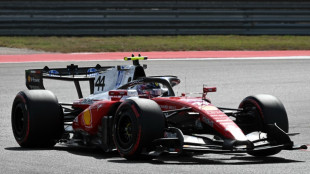 Hamilton on top with Antonelli fourth in final practice at US Grand Prix

 Beier late show sends Dortmund top of Bundesliga
A power surge that caused a paralysing blackout across all of Spain and Portugal in April was an unprecedented event in Europe and possibly the world, but the root cause remains unknown, an expert panel said Friday.
"This was the most severe blackout incident in Europe in the last 20 years," Damian Cortinas, president of the association of electricity grid operators ENTSO-E, said during a presentation of the panel's preliminary report into the incident.
He said "cascading overvoltages" were behind the blackout, which he called a "first of its kind" on the continent.
Cortinas added that "we think (it is unprecedented) in the world as well", but cautioned that the experts did not have information from every country.
The April 28 outage cut internet and telephone connections, halted trains, shut businesses and plunged cities into darkness across Spain and Portugal. It also briefly affected southwestern France.
A Spanish government report had previously blamed the massive outage on overvoltage in June.
Overvoltage occurs when there is too much electrical voltage in a network, overloading equipment. It can be caused by surges in networks due to oversupply or lightning strikes, or when protective equipment is insufficient or fails.
- 'New territory' -
Friday's "factual" report, produced by a panel of 45 European experts mandated to carry out technical investigations, describes the sequence of events that led to the uncontrolled, widespread outage.
But it does not yet provide the primary causes of the initial incidents.
"This is new territory. This is also why we need a bit of time to be sure that we analyse what's going on and what would happen," Cortinas said.
The expert group will publish its final report in the first quarter of 2026, ENTSO-E said in a statement
"It will include a detailed root cause analysis and recommendations on how to prevent similar events happening across the European power system in the future," it added.
The factual report was based on a massive quantity of data, which took a lot of time to collect as experts from power generators and their users as well as third parties.
Some of the third parties "did not give the consent to the Spanish TSO (transmission system operator) to forward the data. So it took us a long time to collect to collect all the needed data," said Klaus Kaschnitz, the expert panel's co-lead.
"We sent out about 150 letters and, at the end, we received the last data in August," he said.
Some data is still missing.
- Blame game -
The blackout struck the Iberian Peninsula at 12:33 pm local time.
According to the report, two episodes of oscillations -- power, voltage, and frequency swings -- were observed during the half hours that preceded the incident.
Operators in control rooms took measures to mitigate the issue, such as reducing the export of power from Spain to France, the report said.
"While these measures mitigated the oscillations, their nature led to an increase of voltage in the Iberian power system," it said.
This was followed by losses of output at wind and solar plants, then a chain disconnection of several power generation centres, causing voltages to spike.
Investigators have yet to determine why systems to mitigate overvoltage failed.
Advocates for nuclear energy had blamed the supposed instability of renewable energy sources.
The head of Spanish grid operator REE, Beatriz Corredor, had instead pointed to certain "conventional energy" producers -- gas, nuclear or hydro -- with voltage control thresholds set too low.
In June, Spain's Ecological Transition Minister Sara Aagesen blamed REE, saying that the system "lacked sufficient voltage control capacity" that day.
G.P.Martin--AT