
OECD ups world economic outlook as tariffs contained, for now / Photo: JOEL SAGET - AFP

 QNB expands cross-border funding for AI and digital infrastructure

 France's Le Pen launches presidential bid vowing to restore 'rule of law'

 Qatar Charity delivers Braille Qurans to blind readers in Kosovo and Albania

 Houthis say attacked Riyadh airport hours after flights resume

 Monaco hold Lille as Rennes go top of Ligue 1

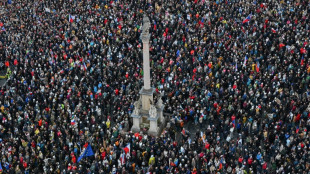 Thousands gather in Prague to protest licence fee plans

 Pease spins to floor gold as US tops gymnastics medal table

 Marchant back in England training squad ahead of Nations Championship fixtures

 French skater Siao Him Fa soars to victory in season-opener at home

 Embattled Albanian PM vows fines for violent protesters

 Steelers top Saints in NFL's first regular-season game in Paris

 Carrick unsure over Man Utd future after Bournemouth loss

 2027 Dakar Rally to be moved from Saudi Arabia

 Man Utd battered by Bournemouth to leave Carrick on the brink

 Storms batter Europe hitting power supplies, flights and phones

 Inter rally late to down Fiorentina and regain Serie A lead

 UDST opens Fall 2027 admissions to students in Qatar and abroad

 Le Pen begins presidential campaign after violent protests across France

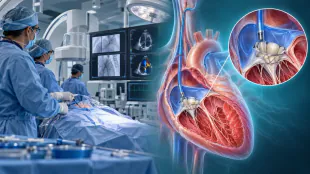 Adan Hospital launches catheter-based tricuspid valve replacement programme

 KIB Group nine-month profit rises 30% to KD 26.6 million

 Ladakh declared India’s first fully organic union territory

 J&K Bank raises accident cover for government employees to ₹1 crore

 Technical outlook diverges for Bharti Airtel, PFC, REC and Alkyl Amines

 Insurance deductibles and no-claim bonuses require a careful claims decision

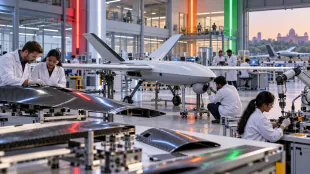 Poland’s WB Group plans $100 million India investment for drone production

The world economy will grow more than previously forecast this year after absorbing the shock of US President Donald Trump's tariffs, but their full impact remains uncertain, the OECD said Tuesday.
In June, the Paris-based organisation had cut its forecast from 3.1 percent to 2.9 percent, warning at the time that Trump's tariffs would stifle the world economy.
But in an updated outlook on Tuesday, it raised the projection to 3.2 percent, saying the economy "proved more resilient than anticipated" in the first half of 2025.
The OECD said "front-loading" -- companies rushing to import goods ahead of Trump's tariffs -- "was an important source of support".
The economy also got a boost from strong AI-related investments in the United States and government spending in China.
The updated figure is still a slight slowdown from 3.3 percent in 2024.
"The full effects of tariff increases have yet to be felt -- with many changes being phased in over time and companies initially absorbing some tariff increases through (profit) margins," the Organisation for Economic Co-operation and Development said.
"But (they) are becoming increasingly visible in spending choices, labour markets and consumer prices," the report.
- 'Significant risks remain' -
World growth is due to slow to 2.9 percent in 2026 "as front-loading ceases and higher tariff rates and still-high policy uncertainty dampen investment and trade", the OECD said.
Trump imposed a baseline 10 percent tariff on imports from around the world in April.
He later hit dozens of countries with even higher duties, but the US leader also left the door open for negotiations, striking deals with Britain, Japan and the European Union, among others.
The United States has yet to find a compromise with China, though the world's two biggest economies have temporarily de-escalated their tit-for-tat tariffs while they negotiate.
The overall effective US tariff rate rose to an estimated 19.5 percent in August, the highest level since 1933, the OECD said.
"Significant risks to the economic outlook remain," the OECD said.
"Amid ongoing policy uncertainty, a key concern is that bilateral tariff rates could be raised further on merchandise imports," it said.
The OECD also warned that inflation could rise as food prices increase, geopolitical tensions push energy prices higher and companies begin to pass the cost of higher tariffs to consumers.
Other concerns include high levels of public debt as well as risks to financial markets.
"On the upside, reductions in trade restrictions or faster development and adoption of artificial intelligence technologies could strengthen growth prospects," it said.
- Growth due to slow -
The OECD also upgraded the growth outlook of the United States for 2025 from 1.6 percent to 1.8 percent.
But it warned that growth in the world's biggest economy is expected to slow as "higher effective tariff rates further come into effect and policy uncertainty remains elevated."
A drop in net immigration and cuts in the federal workforce "are also anticipated to soften economic growth".
The OECD raised the growth outlook of other major economies: to 4.9 percent in China, 1.2 percent in the eurozone and 1.1 percent in Japan.
But the OECD flagged a drop in industrial production in recent months in several countries, including Brazil, Germany and South Korea, and moderating consumption in the United States, China and the eurozone.
J.Gomez--AT