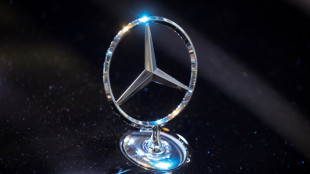
EU car industry sees relief - and pain - in US trade deal / Photo: MARIO TAMA - GETTY IMAGES NORTH AMERICA/AFP/File

 EU seeks deportation powers for beefed up border agency
 Two charged with UK security offences over airbase plot: police

 Maresca defends Donnarumma, Guehi after Man City defeat

 Nordic leaders call Putin as local truce begins in Ukraine

 Osaka unveils crane outfit in Tokyo before win over Paolini

 Ronaldo in line for Portugal return after fallout with coach

 Norway media take legal action to block Meta from using content

 Bayern praise 'humble' Kane after Ballon d'Or win

 Colts retain Daniel Jones as starter despite continued offensive struggles
 Madushanka wrecks Pakistan as Sri Lanka press for final slot
 Destructive Abhishek 113 leads India to series win over New Zealand

 Norway, Finland leaders hold 'frank and substantive' talk with Putin
 Wall Street faces earnings and Fed tests after turbulent technology-led week

 Ukraine, Russia say US-brokered truce holding in ravaged city

 Police form SIT after vehicles in Rahul Gandhi convoy collide on expressway

 Delhi grants minimum monthly pay and DA to about 4,000 MCD health workers

 Ather Energy shares climb 14% after quarterly profit and expansion plan

 Gold ETF flows turn negative after 13 weeks as bullion loses 4%

 Pakistan's last antique restorers give old treasures new life
 India braces for Cyclone Arnab with evacuations

 Steel Strips Wheels gains 36% in two sessions on growth outlook

 Cavs edge T'Wolves in overtime despite superb Edwards

 Prescott fires Cowboys to 38-21 win over plummeting Eagles

 Kuwait padel chief hails national showing at Premier Padel Major

 Britain prepares constrained budget as debt and defence pressures mount

The car industry in the EU on Monday viewed the trade deal struck with the United States as a de-escalation -- but one that still puts sand in its gearbox.
German auto companies in particular were in for a great deal of export pain, as their share prices indicated.
Shares in Porsche, Volkswagen, BMW and Mercedes-Benz all lost more than three percent in trading Monday.
The agreement eases "the intense uncertainty surrounding transatlantic trade relations in recent months", Europe's main auto group, the European Automobile Manufacturers' Association (ACEA), said in a statement welcoming the deal "in principle".
But it noted that the 15 percent US tariffs imposed on EU goods including cars "will continue to have a negative impact not just for industry in the EU but also in the US".
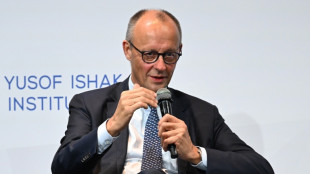
German Chancellor Friedrich Merz said his country's economy -- the biggest in Europe -- would face "substantial damage" from the US tariffs agreed in the deal.
But, he said, "we couldn't expect to achieve any more".
The United States is a key market for European automakers, which last year sent nearly 750,000 of its cars to it, representing nearly a quarter of the sector's overall exports.
While the 15 percent rate is less than the 27.5 percent tariff US President Donald Trump imposed in April, it is far higher than the 2.5 percent levy European car manufacturers faced before Trump's return to the White House.
A German analyst, Stefan Bratzel, said it could be expected that US consumers would pay two-thirds of the price hike caused by the tariff, while car exporters would probably swallow the other third.
For those companies, "we might have to see whether it is possible for cost-cutting somewhere else," he said.
The 15 percent rate was similar to one reached in the deal the United States struck with Japan, another major car-exporting country.
- Will cost industry 'billions' -
For German carmakers, the United States represents around 13 percent of their exports.
In the short term, a 15 percent tariff will cost them "billions each year", said Hildegard Mueller, head of the national automobile manufacturers' association VDA.
The situation has forced all the automakers to lower their 2025 profit forecasts and to look for ways to alleviate the pressure.
BMW boss Oliver Zipse suggested in June that Europe could get rid of its own tariffs on imported vehicles made in the United States.
That could benefit his company, which last year exported 153,000 vehicles from the Americas, and imported into Europe 92,000 cars that were assembled in the United States.
Similarly, Mercedes is looking for help from the national or EU level.
"The deal reached between the EU and the US is a first, important step that needs to be followed by other measures," a company spokeswoman told AFP.
"Politicians need to keep working to get rid of obstacles getting in the way of free trade. We are counting on the EU and US to continue their constructive dialogue in the future," she said.
Volkswagen is also facing tariff hardship for vehicles it makes in Mexico for the US market, announcing that its first-quarter results had been shaved by around 1.3 billion euros ($1.5 billion) from a year earlier.
Its Porsche and Audi cars are also exposed as they have no production factories in the United States.
On Monday, Audi cut its revenue and profit targets for this year, though it said it expects them to rise next year.
Volkswagen CEO Oliver Blume has suggested reaching a side deal with the United States that would take into account investments his company could make in that country.
Volvo Cars, the Swedish carmaker owned by China's Geely Holding, has announced steep second-quarter losses because of tariffs.
The European auto sector is now lobbying the European Commission to delay the timetable for making the European car market go all-electric, and to provide some sort of industry stimulus.
With no help, European car factories, already facing uphill challenges, "will have to reduce production," said Ferdinand Dudenhoeffer, director of the Center for Automotive Research.
That, he said, could affect up to 70,000 jobs in Germany alone.
W.Nelson--AT