
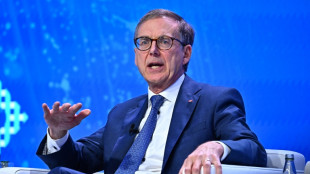
Swiss central bank cuts interest rates to zero percent / Photo: Fabrice COFFRINI - AFP

 Argentine football fan jailed for threats over Di Maria return

 Liverpool beat Chelsea in League Cup shoot-out, Man City survive scare

 Inter leave it late again in Serie A as AC Milan, Juventus lose

 Shares in Google owner Alphabet plummet on profit miss, ad slowdown

 Putin hails Elon Musk as 'truly a genius'

 US stocks eye big tech earnings as Fed holds rates steady

 US Fed holds interest rates steady despite 'too high' inflation

 Rwanda cannot be blamed for what happens in DR Congo, FM says

 Inter leave it late again in Serie A as Bologna sink AC Milan
 Bolsonaro's escape to the US: How it happened
 Russell calls on Scotland to 'kick on' and beat big teams

 Airbus aims for record deliveries despite disappointing quarter
 Cuba wins UN vote against US embargo with weakest backing in 30 years

 Real Madrid, La Liga apology over Mbappe shows power of Chinese market
 From Gaza to Ramallah, Palestinians see little hope in Israeli vote
 US labor leader Dolores Huerta dead: family

 Investors turn cautious ahead of tech results, Fed update on rates

 'Cruise for life' strands passengers in Cambodia as operator goes bust
 Bolsonaro flees Brazil for US after election defeat

 A throne on wheels, popemobiles star in new Vatican show

 Spain high-speed train crash kills 68, injures over 100
 UK woman drugged by husband tells rape trial she woke up bound
 Clean-up starts as Serbian students movement prepares to govern

 Flavio Bolsonaro: right-wing heir falls from presidential hopeful to exile
 UK budget lifts bank tax to offset surging energy bills

The Swiss National Bank cut interest rates to zero percent on Thursday as inflation cools and the franc strengthens, while the economic outlook has deteriorated.
The SNB, however, held off a decision to return to its era of negative rates -- a policy that helped to curb the Swiss franc's rise but was unpopular among pension funds and other investors.
The franc's movement is also under scrutiny in the United States, as the US Treasury Department added Switzerland to its watch list of countries likely to manipulate their currencies earlier this month.
The SNB says its interventions in the foreign exchange market aim to ensure price stability, not unduly increase the Swiss economy's competitiveness.
The Swiss currency is a safe haven investment that has climbed against the dollar since US President Donald Trump launched his tariff blitz in April.
In Thursday's statement, the SNB -- which has denied manipulating the franc -- said it "remains willing to be active in the foreign exchange market as necessary".
The SNB cited easing inflationary pressure in its decision to cut rates by a quarter point, but it also pointed to a gloomy economic forecast.
"The global economic outlook for the coming quarters has deteriorated due to the increase in trade tensions," the central bank said, adding that the outlook for Switzerland remained uncertain.
"Developments abroad continue to represent the main risk," it said, expecting growth in the global economy to weaken over the coming quarters.
- Cooling inflation -
The SNB said Swiss gross domestic product growth was strong in the first quarter of the year -- largely due to exports to the United States being brought forward ahead of Trump's tariff manoeuvres.
But stripping that factor out, growth was more moderate, and is likely to slow again and remain subdued for the rest of the year, the SNB said.
The SNB expects GDP growth of one percent to 1.5 percent for 2025, and for 2026 too.
It said Swiss unemployment was likely to continue to rise slightly.
The bank lowered its inflation forecast for 2025 from 0.4 percent to 0.2 percent, and for 2026 from 0.8 percent to 0.5 percent.
The consumer price index even fell into negative territory in May, at minus 0.1 percent.
- Negative rates -
Between 2015 and 2022, the SNB's monetary policy was based on a negative interest rate of minus 0.75 percent -- which increased the cost of deposits held by banks and financial institutions relative to the amounts they were required to entrust to the central bank.
Those seven years left a bitter memory for major savers, who bore the brunt in fees, while pension funds were forced into riskier investments.
Negative rates make the Swiss franc less attractive to investors as it reduces returns on investments.
Thursday's decision was widely expected by analysts.
Adrian Prettejohn, Europe economist at the London-based research group Capital Economics, said the SNB is expected to move rates to negative 0.25 percent at its September meeting due to deflation.
"There are also significant downside risks to inflation from trade tensions as well as heightened geopolitical uncertainty, which could push up the value of the franc further," he said.
He said the central bank's language on currency interventions "supports our view that the SNB is not planning to use foreign exchange interventions as its main tool for loosening monetary policy anytime soon".
E.Flores--AT