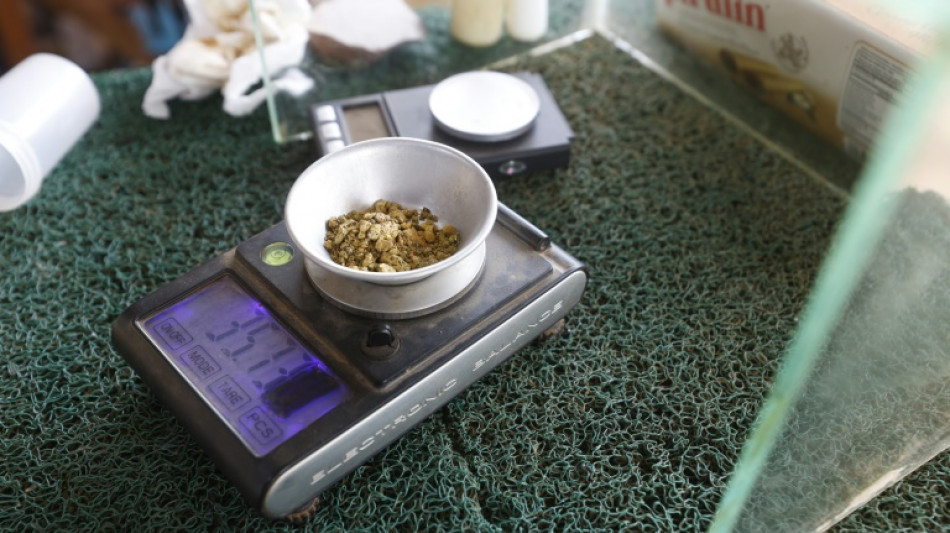
Venezuela's El Dorado, where gold is currency of the poor / Photo: Pedro MATTEY - AFP

 Kyiv's defences, 'hybrid' threat from Moscow headline EU talks
 Oil extends gains, stocks mostly down as Trump issues fresh Iran warning
 ThinkMarkets Expands Weekend Trading Offering, Launches Weekend League Competition

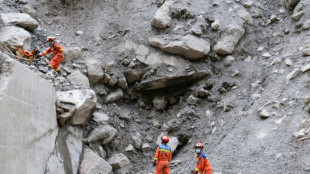 Tibet activists accuse China of downplaying floods
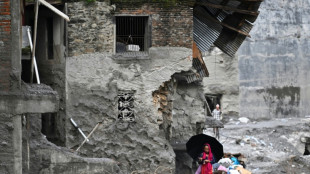
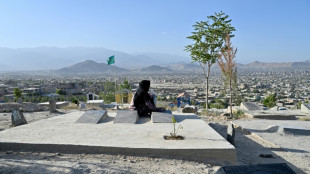 Afghanistan war victims left 'without justice', UN says

 Iran president offers US olive branch before Putin meeting

 China-Nepal flood toll tops 1,000 as tunnel rescue offers last hope

 Japan to relax overtime regulation under workaholic PM
 Thwarted Niger mutiny exposes junta's Russia dependence

 Illegal mining ravages S.Africa's economic hub
 Nepal's wall of missing offers last hope after Himalayan flood

 US to press G20 on light-touch AI regulation

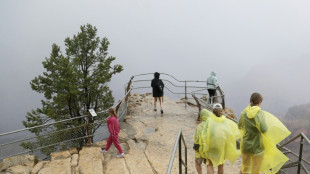 2 die in Grand Canyon flash flood, only 1 person unaccounted for

 US Army Secretary Driscoll submits resignation: White House
 Oil extends gains, stocks drop as Trump issues fresh Iran warning

 Tsitsipas says Kyrgios's positive cocaine test 'kind of expected'

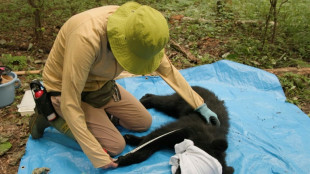 In Japan's mountains, a different way to manage bears

 Middle East war a boon for UAE defence giant with global ambitions
 Former gang member found guilty of murdering Tupac Shakur
 CRI Merges In Morrison & Smith, Expanding Alabama Footprint

 Connecting Excellence Group PLC Announces Treasury up By 10 BTC to 72.941 & £655,999 Raised

 InterContinental Hotels Group PLC Announces Transaction in Own Shares - September 01

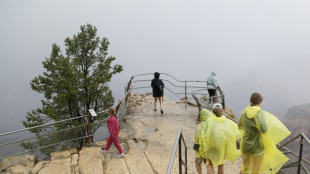 Heavy rain at Grand Canyon after flood kills 2, dozen missing

 Kushner blames soccer power struggle for World Cup plan collapse

 Buoyant Alcaraz shakes off nerves to advance at US Open

In the Venezuelan mining community of El Dorado, the majority of residents carry around gold instead of cards or cash to pay for groceries.
They live in a town named after the mythical City of Gold and untold riches -- but most of them are poor.
Merchants use scales to carefully weigh the flecks people guard in plastic pill bottles or wrapped in pieces of paper, and market goods are priced in weight of gold.
For 0.02 grams, you can get a small packet of maize meal, for one gram a pre-packaged bag of groceries that includes flour, pasta, oil, margarine, ketchup and milk powder.
A gram of gold can purchase between $85 and $100 worth of goods, but takes hours of back-breaking work to amass. If you're in luck.
"Gold is a blessing given to us so we can buy what we want, but you have to work hard," 48-year-old Jose Tobias Tranquini told AFP in the town of 5,000 residents mostly employed in mining -- legal and illegal.
"One day at the mine you might find nothing; there are lucky people who have gotten up to a kilo (2.2 pounds), but... I haven't had that kind of blessing. I've only gotten a little bit," said Tranquini.
El Dorado's residents have limited access to banking services.
They could sell their gold at one of the dozens of dealers that dot the streets, but most prefer not to. Gold -- unlike the battered Venezuelan currency that has lost 50 percent of its value this year -- does not depreciate.
- No gold, no life -
El Dorado arose as a military fort as Britain and Venezuela squared off in 1895 over the mineral- and oil-rich region of Essequibo now at the center of an increasingly heated territorial dispute with Guyana, which has administered it for decades.
The oldest inhabitants of the town remember that when it rained, particles of gold emerged from the town's clay streets.
Nowadays, the streets are tarred, though potholed, and the population rely for transport mainly on motorcycles that zoom noisily to and fro.
Hilda Carrero, a 73-year-old merchant, arrived in Eldorado 50 years go in the midst of a gold rush. The town, she recalls, was just "jungle and snakes... It was ugly."
Carrero sells cans of water for 0.03 grams of gold apiece -- about $1.50 -- but business, like mining hauls, is erratic. Some days she sells nothing.
"If I don't have gold I have no life," Carrero sighed.
It can be hard to make a living in a place where abundant reserves of gold, diamonds, iron, bauxite, quartz and coltan have attracted organized crime and guerrilla groups that mine illegally, and sow violence.
Extortion of small business owners is rife, and 217 people were killed in the four years to 2020 in clashes between rival criminal gangs.
Environmentalists also denounce an "ecocide" in the heavily-exploited area, and mine collapses have claimed dozens of lives.
- Hazardous work -
Around El Dorado, there are numerous camps processing the gold-laden sand that miners dig up daily.
In tall sheds with zinc roofs, mountains of sand are milled in machines that work with modified car engines, then washed in water and toxic mercury to separate the gold from other metals.
Tiny particles almost imperceptible to the naked eye are trapped in a green mat which is shaken out to collect them.
The granules are finally heated with a blowtorch to remove impurities before the gold can be traded or sold.
It is hard work, and hazardous.
"The danger of this is the smoke" produced by the mercury burning off, a mill owner explained while smoking a cigarette.
A family of five working at a mine visited by AFP spent four hours that day processing a ton of sand.
For their efforts: one gram of gold.
"We'll use it to buy food and whatever is needed at the mill," a worker who asked not to be named told AFP as he cupped a tiny grain of gold in coarse hands.
It was a good day.
O.Ortiz--AT