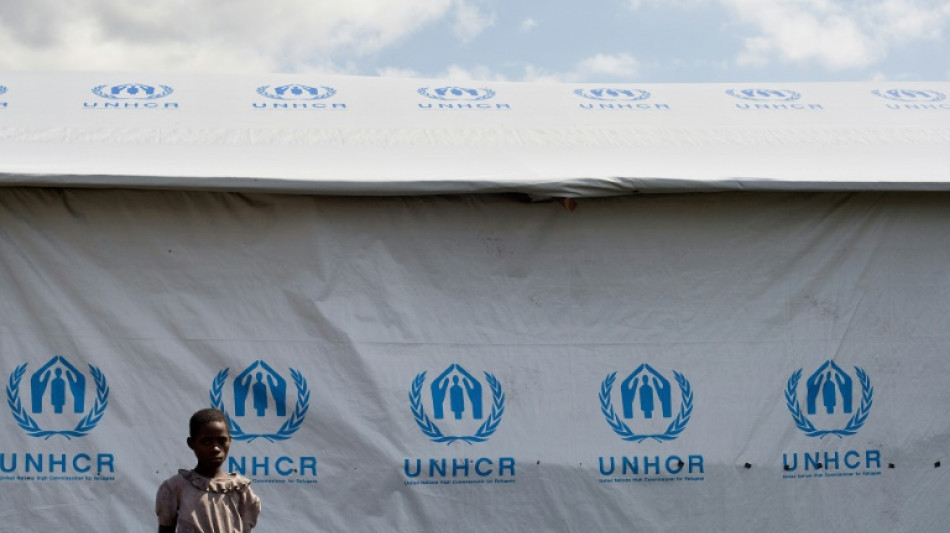
UN slashes global aid plan over 'deepest funding cuts ever' / Photo: YASUYOSHI CHIBA - AFP

 Kyiv's defences, 'hybrid' threat from Moscow headline EU talks
 Oil extends gains, stocks mostly down as Trump issues fresh Iran warning

 ThinkMarkets Expands Weekend Trading Offering, Launches Weekend League Competition

 Tibet activists accuse China of downplaying floods
 Afghanistan war victims left 'without justice', UN says
 Iran president offers US olive branch before Putin meeting

 China-Nepal flood toll tops 1,000 as tunnel rescue offers last hope

 Japan to relax overtime regulation under workaholic PM
 Thwarted Niger mutiny exposes junta's Russia dependence

 Illegal mining ravages S.Africa's economic hub

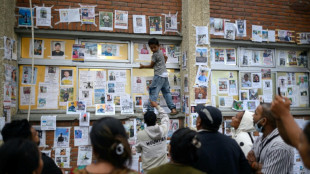 Nepal's wall of missing offers last hope after Himalayan flood

 US to press G20 on light-touch AI regulation

 2 die in Grand Canyon flash flood, only 1 person unaccounted for

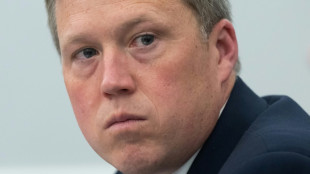 US Army Secretary Driscoll submits resignation: White House
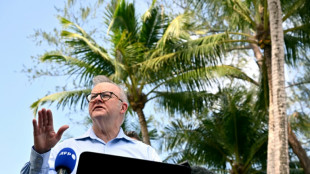
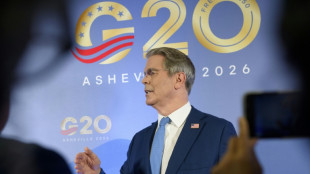 Oil extends gains, stocks drop as Trump issues fresh Iran warning

 Tsitsipas says Kyrgios's positive cocaine test 'kind of expected'

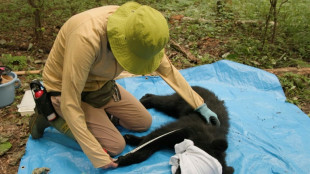 In Japan's mountains, a different way to manage bears

 Middle East war a boon for UAE defence giant with global ambitions

 Former gang member found guilty of murdering Tupac Shakur

 CRI Merges In Morrison & Smith, Expanding Alabama Footprint

 Connecting Excellence Group PLC Announces Treasury up By 10 BTC to 72.941 & £655,999 Raised

 InterContinental Hotels Group PLC Announces Transaction in Own Shares - September 01

 Heavy rain at Grand Canyon after flood kills 2, dozen missing

 Kushner blames soccer power struggle for World Cup plan collapse

 Buoyant Alcaraz shakes off nerves to advance at US Open

The United Nations said Monday it was drastically scaling back its global humanitarian aid plans because of the "deepest funding cuts ever" -- leaving tens of millions of people facing dire straits.
The UN's Office for the Coordination of Humanitarian Affairs (OCHA) said it was seeking $29 billion in funding for 2025 compared to the $44 billion originally requested in December, in a "hyper-prioritised" appeal.
Since US President Donald Trump returned to office in January, the United States -- the world's top donor -- has heavily slashed foreign aid, causing havoc in the humanitarian sector across the globe.
Drastic US funding cuts have had dramatic consequences for emergency aid, vaccination campaigns and the distribution of drugs to fight AIDS.
Other major donor countries have also cut back their contributions in the face of an uncertain economic outlook.
"Brutal funding cuts leave us with brutal choices," OCHA chief Tom Fletcher said in a statement.
"All we ask is one percent of what you chose to spend last year on war. But this isn't just an appeal for money -- it's a call for global responsibility, for human solidarity, for a commitment to end the suffering."
- 'Cruel', 'heartbreaking' -
In late April, while visiting a hospital in Kandahar in Afghanistan, Fletcher warned: "Cutting funding for those in greatest need is not something to boast about... The impact of aid cuts is that millions die."
With 2025 nearly halfway through, the UN has received only $5.6 billion out of the $44 billion originally sought for this year -- a mere 13 percent.
In total, the original plan covered more than 70 countries and aimed to assist nearly 190 million vulnerable people.
Even so, that plan acknowledged there were 115 million people the UN would not be able to reach.
"We have been forced into a triage of human survival," Fletcher said Monday.
The mathematics "is cruel, and the consequences are heartbreaking".
"Too many people will not get the support they need, but we will save as many lives as we can with the resources we are given," he said.
Aid will now be directed so that it can "reach the people and places facing the most urgent needs", with those in "extreme or catastrophic conditions" as the starting point, said Fletcher.
"This will ensure that limited resources are directed where they can do the most good -- as quickly as possible," the statement said.
- 'Red alert' -
Fletcher's call came as the UN's Food and Agriculture Organization (FAO) and World Food Programme (WFP) issued a joint early warning report identifying worsening hunger in 13 hotspots.
Five of those places are facing an immediate risk of starvation -- situations worsened by dwindling funds, the agencies said.
Sudan, the Palestinian territories, South Sudan, Haiti and Mali have communities "already facing famine, at risk of famine or confronted with catastrophic levels of acute food insecurity", said the report.
"The devastating crises are being exacerbated by growing access constraints and critical funding shortfalls," it said.
Yemen, the Democratic Republic of Congo, Myanmar and Nigeria are now considered of very high concern and requiring urgent attention to save lives and livelihoods, it added, with Burkina Faso, Chad, Somalia and Syria the other hotspots.
"This report is a red alert," said WFP chief Cindy McCain.
"Without funding and access, we cannot save lives. Urgent, sustained investment in food assistance and recovery support is crucial as the window to avert yet more devastating hunger is closing fast."
In late March, WFP said it was facing an "unprecedented crisis" due to a 40 percent cut in its funding for 2025, risking life-saving aid for 58 million people.
O.Ortiz--AT