New Europe push to curb children's social media use / Photo: Antonin UTZ - AFP/File

 Germany defender Rudiger announces international retirement

 Musk defends AI data centers, slams EU rules at G20

 Activists blame Kenya for Ugandan opposition figure's plight

 Iran president offers US olive branch, hails Russian support

 TrustFinance Community Choice Awards 2026 Opens Global Voting

 Nepal disaster a climate 'warning signal': foreign minister

 France winger Diaby returns to Leverkusen until 2031

 Barcelona confirm Jesus arrival from Arsenal

 EU official says it's not time to 'normalize' Russia at G20 finance talks

 RedHill Announces Transformational Acquisition of Commercialization Rights to Ferring’s Rebyota® and Clenpiq®
 TrendEadvisor Launches Global Multi-Asset Platform Combining Online Investing with Social Trading

 India's top court drops criminal cases against protesters
 Philippine couple married in hip-deep floodwaters

 Villa sign Senegal winger Mbaye from PSG

 Former Peru minister last-minute contender for UN labour agency helm

 Messi legacy will 'live forever', says Beckham

 'Literally tasting the smoke': Malaysians suffer as haze worsens
 Kyiv's defences, 'hybrid' threat from Moscow headline EU talks

 Oil extends gains, stocks mostly down as Trump issues fresh Iran warning

 ThinkMarkets Expands Weekend Trading Offering, Launches Weekend League Competition

 Tibet activists accuse China of downplaying floods

 Afghanistan war victims left 'without justice', UN says

 Iran president offers US olive branch before Putin meeting

 China-Nepal flood toll tops 1,000 as tunnel rescue offers last hope

 Japan to relax overtime regulation under workaholic PM

From dangerous diet tips to disinformation, cyberbullying to hate speech, the glut of online content harmful to children grows every day. But several European countries have had enough and now want to limit minors' access to social media.
The European Union already has some of the world's most stringent digital rules to rein in Big Tech, with multiple probes ongoing into how platforms protect children -- or not.
There are now demands for the EU to go further as a rising body of evidence shows the negative effects of social media on children's mental and physical health.
Backed by France and Spain, Greece has spearheaded a proposal for how the EU should limit children's use of online platforms as fears mount over their addictive nature.
They will present the plan on Friday to EU counterparts in Luxembourg "so that Europe can take the appropriate action as soon as possible", Greek Digital Minister Dimitris Papastergiou said.
The proposal includes setting an age of digital adulthood across the 27-country EU, meaning children will not be able to access social media without parental consent.
Since the proposal was published last month, other countries have expressed support including Cyprus and Denmark -- which takes over the rotating EU presidency in July.
Danish officials say the issue will be a priority during their six-month presidency.
France has led the way in cracking down on platforms, passing a 2023 law requiring them to obtain parental consent for users under the age of 15.
But the measure has not received the EU green light it needs to come into force.
France also gradually introduced requirements this year for all adult websites to have users confirm their age to prevent children accessing porn -- with three major platforms going dark this week in anger over the move.
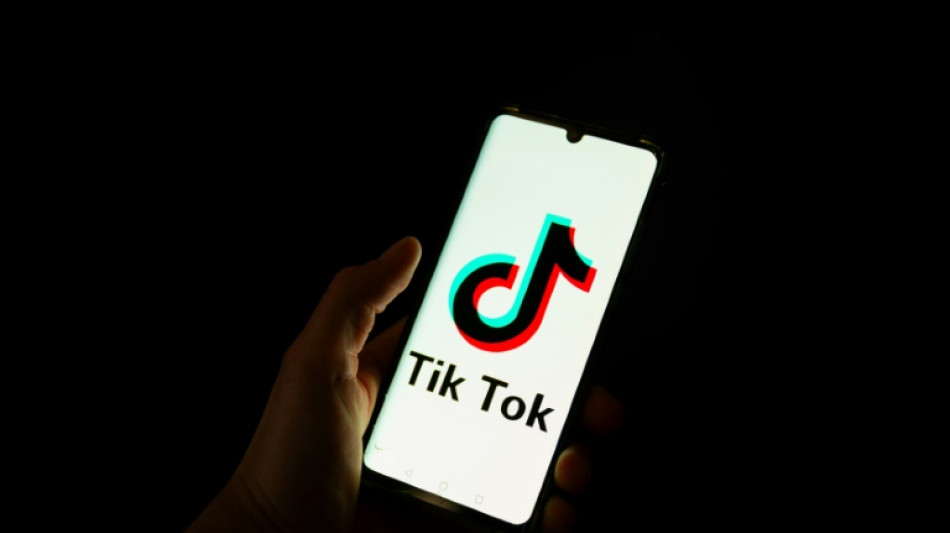
Also under pressure from the French government, TikTok on Sunday banned the "#SkinnyTok" hashtag, part of a trend promoting extreme thinness on the platform.
- Real age verification -
Greece says its aim is to protect children from the risks of excessive internet use.
The proposal does not say at what age digital adulthood should begin but Papastergiou said platforms should know users' real ages "so as not to serve inappropriate content to minors".
France, Greece and Spain expressed concern about the algorithmic design of digital platforms increasing children's exposure to addictive and harmful content -- with the risk of worsening anxiety, depression and self-esteem issues.
The proposal also blames excessive screen time at a young age for hindering the development of minors' critical and relationship skills.
They demand "an EU-wide application that supports parental control mechanisms, allows for proper age verification and limits the use of certain applications by minors".
The goal would be for devices such as smartphones to have in-built age verification.
The European Commission, the EU's digital watchdog, wants to launch an age-verification app next month, insisting it can be done without disclosing personal details.
The EU last month published draft guidelines for platforms to protect minors, to be finalised once a public consultation ends this month, including setting children's accounts to private by default, and making it easier to block and mute users.
Those guidelines are non-binding, but the bloc is clamping down in other ways.
- EU investigations -
It is currently investigating Meta's Facebook and Instagram, and TikTok under its mammoth content moderation law, the Digital Services Act (DSA), fearing the platforms are failing to do enough to prevent children accessing harmful content.
In the Meta probe, the EU fears the platform's age-verification tools may not be effective.
And last week, it launched an investigation into four pornographic platforms over suspicions they are failing to stop children accessing adult content.
Separately, the EU has been in long-running negotiations on a law to combat child sexual abuse material, but the proposal has been mired in uncertainty, with worries from some countries that it would allow authorities to access encrypted communications.
The legal proposal has pitted proponents of privacy against those working to protect children -- and despite repeated attempts, it has failed to get EU states' approval.
S.Jackson--AT