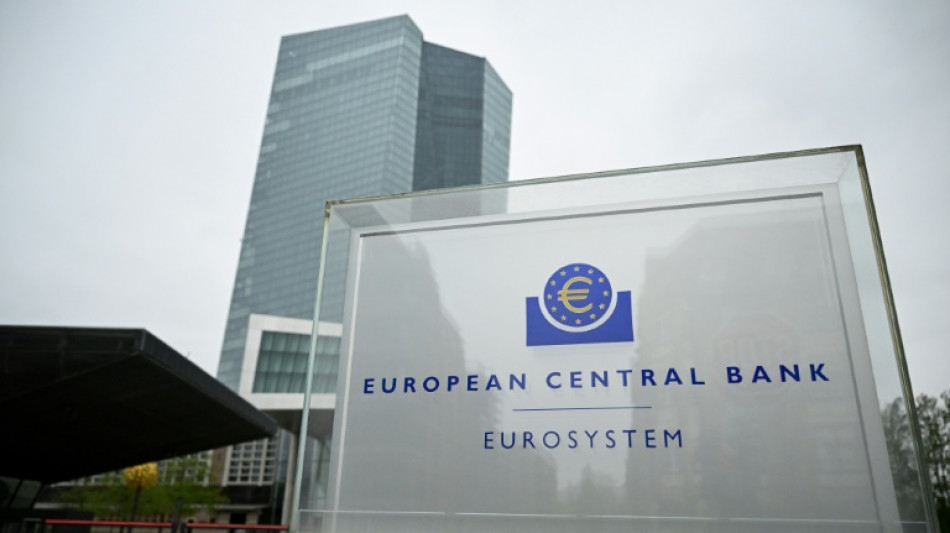
ECB cuts rate again facing growth, tariff woes / Photo: Kirill KUDRYAVTSEV - AFP

 Germany defender Rudiger announces international retirement

 Musk defends AI data centers, slams EU rules at G20

 Activists blame Kenya for Ugandan opposition figure's plight

 Iran president offers US olive branch, hails Russian support

 TrustFinance Community Choice Awards 2026 Opens Global Voting
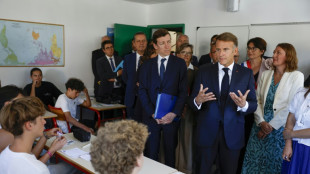
 Nepal disaster a climate 'warning signal': foreign minister

 France winger Diaby returns to Leverkusen until 2031

 Barcelona confirm Jesus arrival from Arsenal

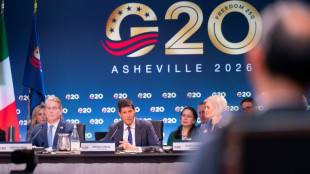 EU official says it's not time to 'normalize' Russia at G20 finance talks

 RedHill Announces Transformational Acquisition of Commercialization Rights to Ferring’s Rebyota® and Clenpiq®
 TrendEadvisor Launches Global Multi-Asset Platform Combining Online Investing with Social Trading
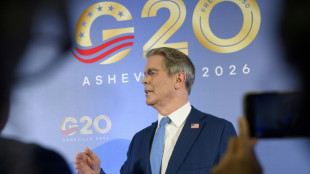
 India's top court drops criminal cases against protesters

 Philippine couple married in hip-deep floodwaters

 Villa sign Senegal winger Mbaye from PSG

 Former Peru minister last-minute contender for UN labour agency helm

 Messi legacy will 'live forever', says Beckham
 'Literally tasting the smoke': Malaysians suffer as haze worsens

 Kyiv's defences, 'hybrid' threat from Moscow headline EU talks

 Oil extends gains, stocks mostly down as Trump issues fresh Iran warning

 ThinkMarkets Expands Weekend Trading Offering, Launches Weekend League Competition

 Tibet activists accuse China of downplaying floods
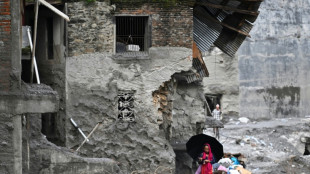
 Afghanistan war victims left 'without justice', UN says
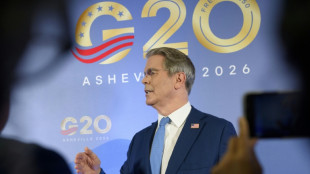
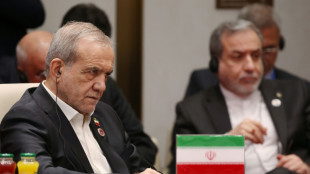 Iran president offers US olive branch before Putin meeting

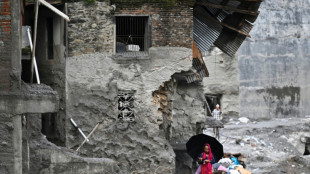 China-Nepal flood toll tops 1,000 as tunnel rescue offers last hope

 Japan to relax overtime regulation under workaholic PM

The European Central Bank's easing cycle reached the one-year mark Thursday when policymakers delivered another interest rate cut as concerns mount about the struggling eurozone economy and global trade tensions.
The ECB cut its key deposit rate a quarter point to two percent, as widely expected, its seventh consecutive reduction and eighth since June last year when it began lowering borrowing costs.
It also lowered its inflation forecast for 2025, with consumer price increases now expected to hit the central bank's two-percent target this year.
With inflation under control following a post-pandemic surge, the ECB has shifted its focus to dialling back borrowing costs to boosting the beleaguered economies of the 20 countries that use the euro.
US President Donald Trump's tariffs have added to an already uncertain outlook for the single-currency area, with Europe firmly in his crosshairs, fuelling fears about a heavy hit to the continent's exporters.
Announcing the rate decision, the ECB struck a measured tone about the US levies and the potential for retaliation.
It noted that the "uncertainty surrounding trade policies is expected to weigh on business investment and exports" but added that "rising government investment in defence and infrastructure will increasingly support growth over the medium term.
"Higher real incomes and a robust labour market will allow households to spend more. Together with more favourable financing conditions, this should make the economy more resilient to global shocks."
It left its growth forecast for 2025 unchanged at 0.9 percent.
It also said inflation was now around target -- dropping previous language that it was "on track". Eurozone inflation came in at 1.9 percent in May.
All eyes will now be on ECB President Christine Lagarde's post-meeting press conference for any hints that the Frankfurt-based institution might be gearing up to pause its cuts in July to take stock of developments, as some expect.
The ECB's series of cuts stands in contrast to the US Federal Reserve, which has kept rates on hold recently amid fears that Trump's levies could stoke inflation in the world's top economy.
Lagarde may also face questions on her own future after the Financial Times last week reported she had discussed leaving the ECB early to take the helm of the World Economic Forum, which organises the annual Davos gathering.
The ECB has insisted that Lagarde is "determined" to finish her term, which ends in 2027.
- Tariff blitz -
Trump, who argues his tariffs will bring manufacturing jobs back to the United States, has already hit the EU with multiple waves of levies.
The bloc currently faces a 10-percent "baseline" tariff as well as higher duties on specific sectors.
He has paused even higher rates on the EU and other trading partners to allow for talks, but he continues to launch fresh salvos that are keeping the world on edge.
This week he doubled tariffs on aluminium and steel from 25 to 50 percent and last month threatened the EU with an escalation if it did not negotiate a swift deal.
For the ECB, it is a tricky task to protect the eurozone from the mercurial US president's trade policies while keeping inflation stable.
Trump's tariffs are expected to exert downward pressure on eurozone inflation.
This is due to factors including tariff-hit China redirecting inexpensive manufactured goods to Europe, recent strengthening of the euro and potentially lower energy prices.
Lower inflation and slower growth should push the ECB to make further rate cuts.
As a result, ING analyst Carsten Brzeski predicted Thursday's cut "will not be the last".
"Not only did US President Donald Trump make the European economy great again -- for one quarter, as frontloading of exports and industrial production boosted economic activity -- he also made inflation almost disappear," he said.
There are some factors that make this uncertain though.
These include signs of resilience in the eurozone economy at the start of the year and a potentially inflationary spending blitz planned by the new German government.
O.Ortiz--AT