Lebanon on bumpy road to public transport revival / Photo: Joseph EID - AFP

 China's Xi arrives in Egypt as US sanctions threat looms over Iran links
 Car bomb at Colombian police station kills one, injures 11
 Rain delays start of play on US Open
 Man City agree blockbuster deal to sign Chelsea star Fernandez: reports
 Alkemya Metacore Secures $50M via Tokenised Equity to Scale Nickel Energy and Security Tech

 Man City chase Fernandez, Arsenal sell Jesus on deadline day

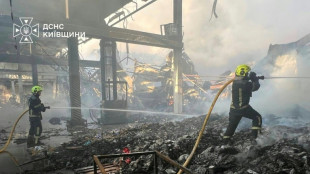 EU says Russian 'hybrid attacks' won't halt aid to Ukraine

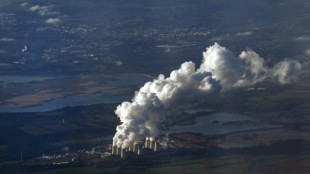 Explosives used in sabotage attack on German power lines
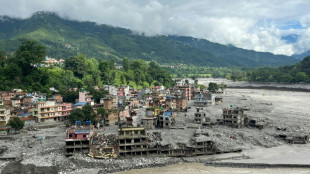 Nepali families hold symbolic funerals for missing after floods
 Newcastle sign Lille forward Fernandez-Pardo

 Even at Elysee, phones are handed in, Macron tells French pupils
 Chelsea agree to sign Atalanta's Ahanor, with Palace loan for this season

 Chelsea sign Atalanta's Ahanor and loan him to Palace

 UK chalks up hottest summer on record for second year running

 China's Xi visits Egypt as US sanctions threat looms over Iran links

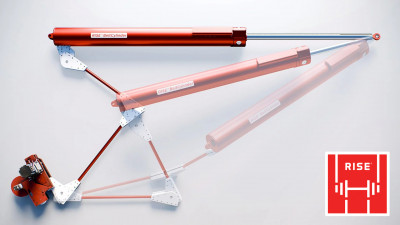 RISE Robotics Awarded $100,000 MassVentures Grant to Accelerate Commercialization of Beltdraulic Technology

 Global bond sell-off deepens on inflation concerns

 Germany's far-right AfD promises 'boom' but economists fear worst
 Former England captain Stokes signs for Adelaide Strikers

 Pakistan selector and ex-captain Misbah resigns after coach sacked
 Shein flattens on Hong Kong debut facing global headwinds

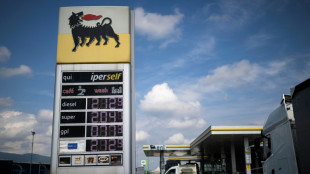 Eurozone inflation hits three-year high at 3.3% in August
 Man City chase Fernandez, Arsenal eye Alvarez on deadline day
 El Nino hammering Peru anchovy fishing: industry officials

 Mass Russian barrage kills 12 in Kyiv

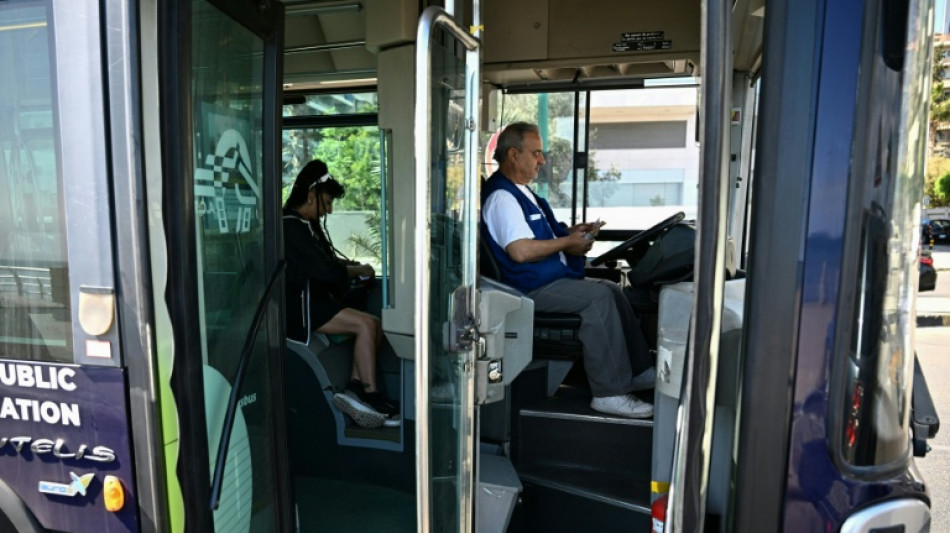
On Beirut's chaotic, car-choked streets, Lebanese student Fatima Fakih rides a shiny purple bus to university, one of a fleet rolled out by authorities to revive public transport in a country struggling to deliver basic services.
The 19-year-old says the spacious public buses are "safer, better and more comfortable", than the informal network of private buses and minivans that have long substituted for mass transport.
"I have my bus card -- I don't have to have money with me," she added, a major innovation in Lebanon, where cash is king and many private buses and minivans have no tickets at all.
Lebanon's public transport system never recovered from the devastating 1975–1990 civil war that left the country in ruins, and in the decades since, car culture has flourished.
Even before the economic crisis that began in 2019 -- plunged much of the population into poverty and sent transport costs soaring -- the country was running on empty, grappling with crumbling power, water and road infrastructure.
But public buses, now equipped with GPS tracking, have been slowly returning.
They operate along 11 routes -- mostly in greater Beirut but also reaching north, south and east Lebanon -- with a private company managing operations. Fares start at about 80 cents.
- Pre-war tram, trains -
Passengers told AFP the buses were not only safer and more cost-effective, but more environmentally friendly.
They also offer a respite from driving on Lebanon's largely lawless, potholed roads, where mopeds hurtle in all directions and traffic lights are scarce.
The system officially launched last July, during more than a year of hostilities between Israel and militant group Hezbollah that later slammed the brakes on some services.
Ali Daoud, 76, who remembers Lebanon's long-defunct trains and trams, said the public bus was "orderly and organised" during his first ride.
The World Bank's Beirut office told AFP that Lebanon's "reliance on private vehicles is increasingly unsustainable", noting rising poverty rates and vehicle operation costs.
Ziad Nasr, head of Lebanon's public transport authority, said passenger numbers now averaged around 4,500 a day, up from just a few hundred at launch.
He said authorities hope to extend the network, including to Beirut airport, noting the need for more buses, and welcoming any international support.
France donated around half of the almost 100 buses now in circulation in 2022.
Consultant and transport expert Tammam Nakkash said he hoped the buses would be "a good start" but expressed concern at issues including the competition.
Private buses and minivans -- many of them dilapidated and barrelling down the road at breakneck speed -- cost similar to the public buses.
Shared taxis are also ubiquitous, with fares starting at around $2 for short trips.
Several incidents of violence targeted the new public buses around their launch last year.
- Environment -
Student and worker Daniel Imad, 19, said he welcomed the idea of public buses but had not tried them yet.
People "can go where they want for a low price" by taking shared taxis, he said before climbing into a one at a busy Beirut intersection.
Public transport could also have environmental benefits in Lebanon, where climate concerns often take a back seat to daily challenges like long power blackouts.
A World Bank climate and development report last year said the transport sector was Lebanon's second-biggest contributor to greenhouse gas and air pollution, accounting for a quarter of emissions, only behind the energy sector.
Some smaller initiatives have also popped up, including four hybrid buses in east Lebanon's Zahle.
Nabil Mneimne from the United Nations Development Programme said Lebanon's first fully electric buses with a solar charging system were set to launch this year, running between Beirut and Jbeil (Byblos) further north.
In the capital, university student Fakih encouraged everyone to take public buses, "also to protect the environment".
Beirut residents often complain of poor air quality due to heavy traffic and private, diesel-fuelled electricity generators that operate during power outages.
"We don't talk about this a lot but it's very important," she said, arguing that things could improve in the city "if we all took public transport".
R.Chavez--AT