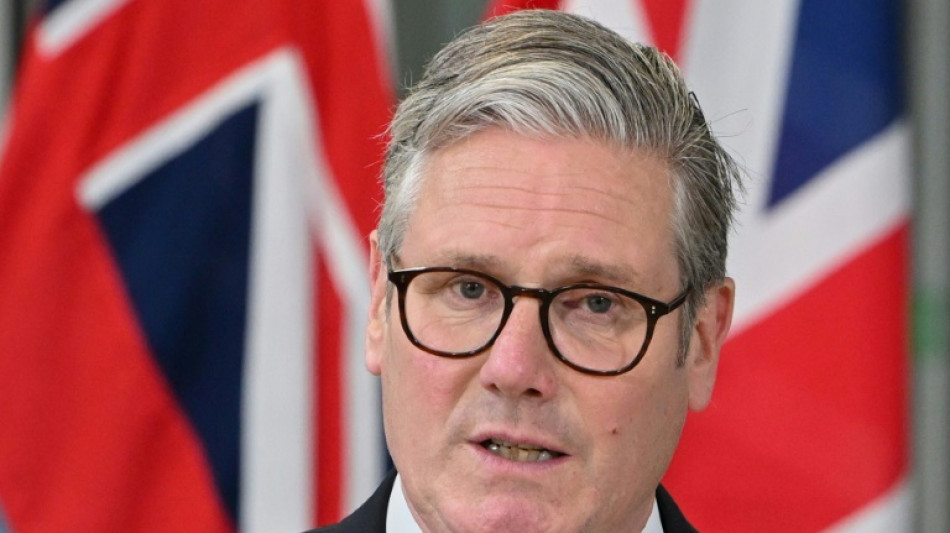
UK to restore 'war-fighting readiness' with new defence review / Photo: Thomas Krych - POOL/AFP

 Syria site infrastructure 'consistent with nuclear reactor': IAEA

 Juventus sign Woltemade, Sarr on loan from Premier League

 US strikes Iran in latest tit-for-tat attacks

 China's Xi arrives in Egypt as US sanctions threat looms over Iran links

 Car bomb at Colombian police station kills one, injures 11
 Rain delays start of play on US Open

 Man City agree blockbuster deal to sign Chelsea star Fernandez: reports

 Alkemya Metacore Secures $50M via Tokenised Equity to Scale Nickel Energy and Security Tech

 Man City chase Fernandez, Arsenal sell Jesus on deadline day

 EU says Russian 'hybrid attacks' won't halt aid to Ukraine

 Explosives used in sabotage attack on German power lines

 Nepali families hold symbolic funerals for missing after floods

 Newcastle sign Lille forward Fernandez-Pardo

 Even at Elysee, phones are handed in, Macron tells French pupils

 Chelsea agree to sign Atalanta's Ahanor, with Palace loan for this season

 Chelsea sign Atalanta's Ahanor and loan him to Palace

 UK chalks up hottest summer on record for second year running

 China's Xi visits Egypt as US sanctions threat looms over Iran links

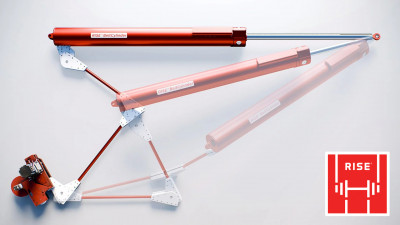 RISE Robotics Awarded $100,000 MassVentures Grant to Accelerate Commercialization of Beltdraulic Technology

 Global bond sell-off deepens on inflation concerns

 Germany's far-right AfD promises 'boom' but economists fear worst

 Former England captain Stokes signs for Adelaide Strikers

 Pakistan selector and ex-captain Misbah resigns after coach sacked

 Shein flattens on Hong Kong debut facing global headwinds

 Eurozone inflation hits three-year high at 3.3% in August

UK Prime Minister Keir Starmer said Sunday he will "restore Britain's war-fighting readiness" as his government warned of "growing" Russian aggression ahead of a major defence strategy review.
"We will restore Britain's war-fighting readiness as the central purpose of our armed forces," Starmer wrote in The Sun daily, including by ramping up weapons production capacity.
His government's Strategic Defence Review, due to be published Monday, will assess threats facing the UK, amid Russia's ongoing war in Ukraine and pressure from US President Donald Trump for NATO allies to bolster their own defences.
Starmer wrote that It will serve as "a blueprint for strength and security for decades to come".
Defence Secretary John Healey warned of "growing Russian aggression", including through "daily" cyberattacks on the UK's "defence system".
"We're in a world that is changing now... and it is a world of growing threats," Healey told the BBC on Sunday.
"It's growing Russian aggression. It's those daily cyberattacks, it's new nuclear risks, and it's increasing tension in other parts of the world as well."
The defence review will recommend "creating an 'always on' munitions production capacity in the UK" allowing the scaling up of weapons production if needed, according to the Ministry of Defence.
The document also urges the government to create conditions in industry to boost munition stockpiles.
In February, Starmer committed to hiking defence spending to 2.5 percent of GDP by 2027, up from its current 2.3 percent, and to further raise it to three percent by around 2029.
His Labour administration has said it would cut UK overseas aid to help fund the spending.
- New technologies -
On Saturday the government announced £1.5 billion ($2 billion) for building "at least six munitions and energetics factories" as well as procuring 7,000 domestically built long-range weapons.
This investment -- which will see £6 billion spent on munitions under the current parliament -- would create and support 1,800 jobs.
"We are strengthening the UK's industrial base to better deter our adversaries and make the UK secure at home and strong abroad," Healey said.
The Ministry of Defence also pledged £1 billion for the creation of a "cyber command" to help on the battlefield.
The defence shake-up "means bringing together every capability we have, from drones, to artillery, to human instinct and intelligence, into one formidable, integrated fighting machine," Starmer said.
The review, led by former NATO secretary general George Robertson, warns that Britain is entering "a new era of threat" as drones and artificial intelligence transform modern warfare, The Guardian newspaper reported Saturday.
The document will describe the "immediate and pressing" danger posed by Russia, as well as focusing on China, Iran and North Korea.
Robertson has described the four countries as a "deadly quartet" which were "increasingly working together".
A.Williams--AT