New metro cuts through Saudi social divisions / Photo: Fayez Nureldine - AFP

 Syria site infrastructure 'consistent with nuclear reactor': IAEA

 Juventus sign Woltemade, Sarr on loan from Premier League
 US strikes Iran in latest tit-for-tat attacks
 China's Xi arrives in Egypt as US sanctions threat looms over Iran links
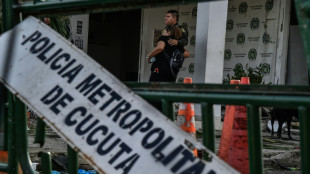 Car bomb at Colombian police station kills one, injures 11
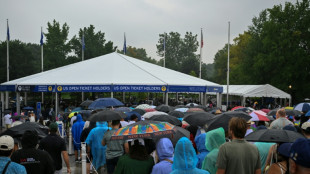 Rain delays start of play on US Open
 Man City agree blockbuster deal to sign Chelsea star Fernandez: reports
 Alkemya Metacore Secures $50M via Tokenised Equity to Scale Nickel Energy and Security Tech

 Man City chase Fernandez, Arsenal sell Jesus on deadline day
 EU says Russian 'hybrid attacks' won't halt aid to Ukraine
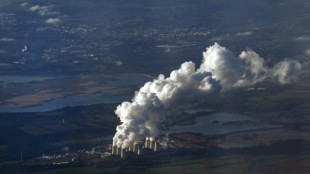 Explosives used in sabotage attack on German power lines
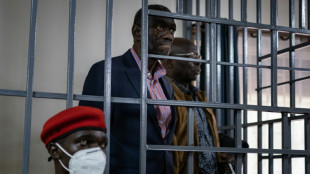
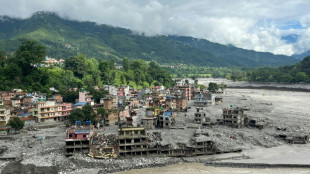 Nepali families hold symbolic funerals for missing after floods
 Newcastle sign Lille forward Fernandez-Pardo

 Even at Elysee, phones are handed in, Macron tells French pupils
 Chelsea agree to sign Atalanta's Ahanor, with Palace loan for this season

 Chelsea sign Atalanta's Ahanor and loan him to Palace

 UK chalks up hottest summer on record for second year running
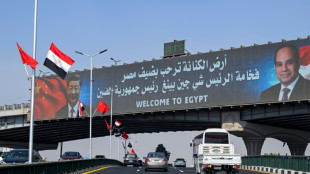 China's Xi visits Egypt as US sanctions threat looms over Iran links

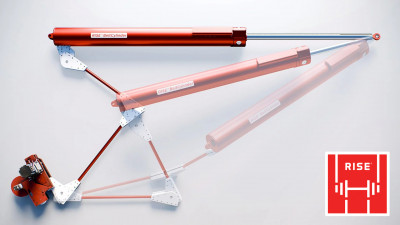 RISE Robotics Awarded $100,000 MassVentures Grant to Accelerate Commercialization of Beltdraulic Technology

 Global bond sell-off deepens on inflation concerns
 Germany's far-right AfD promises 'boom' but economists fear worst
 Former England captain Stokes signs for Adelaide Strikers

 Pakistan selector and ex-captain Misbah resigns after coach sacked
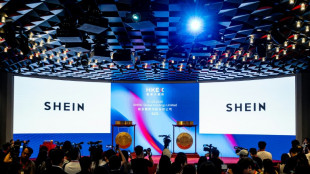 Shein flattens on Hong Kong debut facing global headwinds

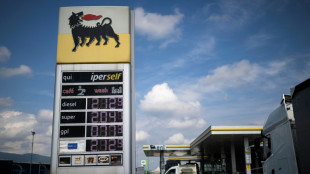 Eurozone inflation hits three-year high at 3.3% in August
For decades, civil servant Zayed al-Ghamdi's social circles in Saudi Arabia were more than predictable, bound by routine and kinship in a country where societal divisions have rarely been challenged. Then came the metro.
A decade after breaking ground, Riyadh's gleaming new metro opened in December, offering the capital's eight million residents an alternative to roads chronically clogged by its two million cars.
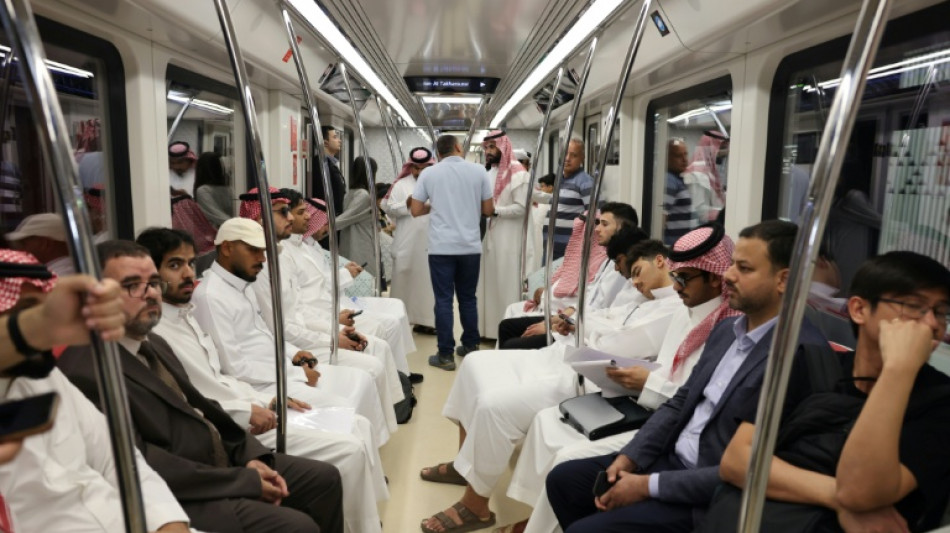
A quicker commute is not the only difference: for the first time, the wealthy are sharing journeys with the less well off, and Saudi nationals are mixing with the large expat population, from white-collar workers to labourers.
"For 40 years, I was confined to my car or restaurants with my father and brothers, then with my wife and children," Ghamdi, a 42-year-old civil servant working in downtown Riyadh, told AFP.
"I didn't mix or talk to anyone except those I knew or who resembled me.
"Now, things have changed. You feel that society, with all its classes, is in one place," he added while speeding along the blue line, which connects working-class areas in the south with the downtown business district and affluent northern neighbourhoods.
With its eye-watering oil riches, intricate tribal networks and large numbers of foreign workers, Saudi society has long been divided by rigid class structures.
But on the metro, those divisions are more porous.
Metro carriages are frequently crowded with labourers, university students, government employees and business executives wearing expensive suits.
"I can now discuss general topics with strangers and even get to know new things and cultures up close," said 56-year-old engineer Nasser Al-Qahtani, pointing to a young Saudi holding a skateboard.
- 'Family and friends only' -
While the metro has done little to clear Riyadh's perennially gridlocked streets, its opening has been "a major social and psychological event", said sociologist Mohammed Al-Hamza.
"The metro has shifted the mindset of Saudi society. It has made people come closer together," he said.
"The culture in Saudi Arabia is one of family and friends only, and there is reluctance to get to know new people."
Along with chipping away at class divisions, the system is saving commuters time and money, to the delight of many.
"I used to get to work in over an hour and a half, exhausted and stressed due to traffic," said Ghamdi, adding that he had hardly used his prized SUV for months.
"Now, I arrive relaxed and without stress," he added.
Prices range from just four riyals ($1) for a limited one-day pass to 140 riyals for a month.
As in other countries in the Middle East and beyond, the metro offers family carriages reserved for women, children and couples.
They afford women a safe and socially acceptable way to use the network to travel to work or study.
For those willing to pay an extra 10 riyals per day, first-class compartments also offer a reprieve from the busy single-male carriages.
For law student Hadeel Waleed, 20, the metro has been a game-changer, cutting her trip from the southern suburbs to Princess Nourah University from three to four hours to one hour or less.
"Now I arrive home with energy for my family and studying," she told AFP.
- 'No one expected this usage' -
The project is one of many major infrastructure initiatives under "Vision 2030" -- the reform programme overseen by the kingdom's de facto ruler, Crown Prince Mohammed bin Salman.
With six lines spanning about 176 kilometres (109 miles) of track, the network serves 85 stations, including stops at all terminals of Riyadh international airport.
There had been fears among city officials that the huge project could prove a white elephant, with few Saudis deigning to use it.
A bus network developed by the city struggled to gain traction as Saudis remained committed to their cars, especially during the hot summer months when temperatures hit 50 degrees Celsius (122 degrees Fahrenheit).
"Honestly, for 10 years, the question was: 'Who will use the metro?'" a senior official who helps operate the system told AFP on condition of anonymity.
"No one ever expected the current level of usage or even the financial returns," he added.
The Royal Commission for Riyadh did not respond to AFP's enquiries about daily ridership but the official suggested the figure was likely in the tens of thousands if not more.
Authorities are already hoping to expand the network, with a seventh line under development linking Riyadh to several new projects on the capital's outskirts.
For Muneer, a 28-year-old government employee, the metro is a welcome addition to a city undergoing rapid change.
"It makes life easier," he said.
A.Ruiz--AT