Political protests paralyse Bangladesh daily life / Photo: MUNIR UZ ZAMAN - AFP

 Judges to rule on Australian mushroom killer's appeal
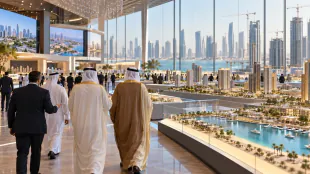 Qatar prime minister tours Cityscape Qatar 2026

 Bugatti CEO to stop leaving keys inside cars after Chiron theft

 Starc, Lyon leave South Africa reeling

 Arsenal lose appeal against Dowman red card in shock Fleetwood defeat
 French court rules Meta must negotiate over rights payments

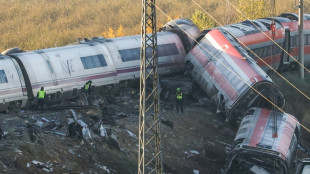
 Spain demands answers as rail disaster toll rises

 Garcia bids for Ryder Cup return as he confirms LIV exit

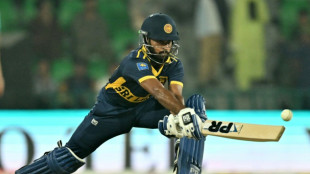 England outlast Sri Lanka despite Rathnayake's hundred in dead rubber

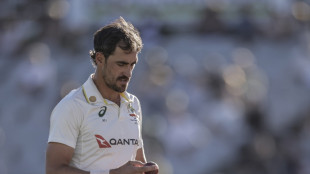 Starc strikes twice as Australia push for victory

 Does White House ask AI to shape policy? Democrats want the receipts
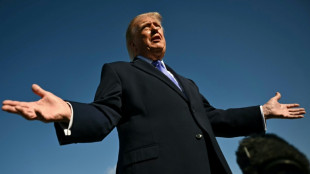 Trump tees up Alaska election challenge over same-name candidate 'fraud'
 IMF says engaging with Iraq on preparing new bailout program
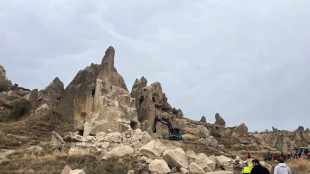
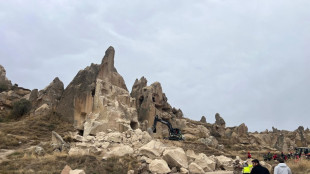 Two dead in rock spire collapse at Turkey's touristic Cappadocia

 No surprise to Carrick he's still Man Utd manager

 Two dead in rock spire collapse at tourist site in Turkey's Cappadocia

 ECB holds rates steady after Lagarde says to quit early
 US economy posts strong growth, inflation stubbornly high in challenge to Trump
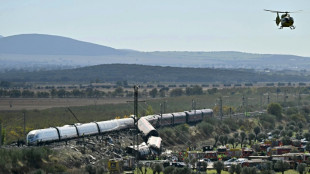 What we know about Spain's deadly train crash

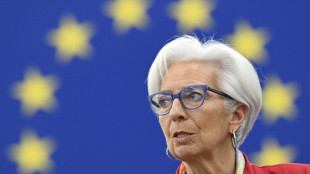 ECB chief Lagarde to step down early, triggering succession race

 'Horrific' Russian drone strike kills 14 at Ukraine train station: Kyiv
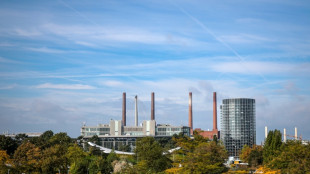 VW says 'no time to lose' to slash costs after 5.8 billion euro loss
 Australia lead by 100 after Inglis century
 Martin to ride with broken wrist in Malaysian MotoGP practice

 England forward Toney to stand trial for alleged assault in June 2028

Protests have become part of daily life in Bangladesh's capital, with residents either taking part as political parties jostle for power after an uprising last year -- or avoiding them.
The South Asian nation of around 170 million people has been in political turmoil since former prime minister Sheikh Hasina was ousted in August 2024, fleeing by helicopter as crowds stormed her palace.
Hasina's 15-year-long authoritarian rule contained protests like a pressure cooker, until the student-led movement spearheaded a revolt that toppled her from power.
On Wednesday, at least half a dozen demonstrations were held in the sprawling megacity of Dhaka, home to more than 20 million people.
This was a typical day, with the demonstrations ranging from political rallies and counter-protests, to worker strikes and celebrations at the release of an Islamist leader from death row.
"I got released this morning after being imprisoned for 14 years," A.T.M. Azharul Islam said, waving at thousands of supporters of the country's main Islamist party, Jamaat-e-Islami.
The tight-packed crowd cheered as the senior leader was released from a prison hospital in central Dhaka, a day after the Supreme Court overturned his death sentence and acquitted him of war crimes.
"There was no justice in the past... we expect the court will ensure that the people get justice in the coming days," Islam said.
Leftist parties say they will demonstrate in opposition to his release.
Across Ramna Park in the neighbourhood of Naya Paltan, thousands choked the streets as part of a rally in support of the Bangladesh National Party (BNP).
Political parties are readying for hugely anticipated elections which the interim government has vowed will take place by June 2026 at the latest.
- 'Unpredictable' -
While tens of thousands gather at major intersections across Dhaka with their demands, others spend hours navigating their way through traffic-snarled streets.
"All the major roads are blocked during the day," chicken seller Zakir Hossain said Wednesday.
"We've had to shift our schedules. I start work at midnight now, even though the law and order situation is worsening every day, and muggings have become common."
It worries many, remembering the violence last year when police tried -- and failed -- to crush the protests that toppled Hasina.
"The situation is unpredictable -- the protests can turn violent at any moment," said a 43-year-old housewife, asking not to be identified as her husband is a government employee.
"I never used to call my husband much, but now I do. If he is even a little late coming home from the office, all sorts of bad thoughts come to my mind."
Bangladesh's interim leader Muhammad Yunus, the 84-year-old Nobel Peace Prize winner who is leading the caretaker government as its chief adviser until elections are held, has called for parties to build unity and calm intense political power struggles.
The government warned on Saturday that "unreasonable demands" and obstruction had been "continuously obstructing" its work.
- 'A balance' -
Yunus has said polls could be held as early as December but that having them later would give the government more time for reform.
Rallies organised by the powerful BNP are calling for the government to set an election date, as well as a raft of other demands, including the sacking of multiple members of Yunus's cabinet.
In other protests, tax authority workers, angered at an overhaul of the body that would place it under the finance ministry's control, held a two-week partial strike.
That escalated on Sunday when security forces surrounded the national tax headquarters, before the government later backtracked on its reform.
Civil servants this week also demonstrated at the main government ministry complex to rally against orders changing employment rules -- which the government then said it will reconsider.
On the streets, the protests continue.
"Customers rarely come to the bank when they see the roads blocked," said bank manager Muhammed Sazzad.
While he supported the right to assemble, he suggested the government "could designate a specific area for protests".
Rakib Hasan Anik, a lecturer at the Bangladesh University of Professionals, said that "academic discipline is suffering", with students stuck in traffic and missing class.
"There needs to be a balance," he said. "We can only hope all sides reach a consensus that prioritises the public."
P.Hernandez--AT