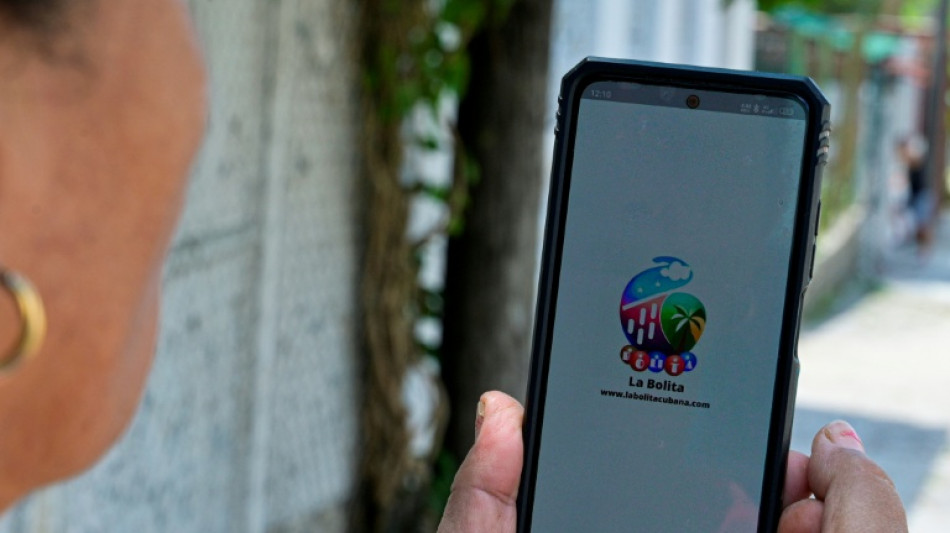
'La bolita,' Cuban lottery offering hope in tough times / Photo: ADALBERTO ROQUE - AFP

 Veteran Wallaby Slipper targets fifth World Cup after Brumbies deal

 Sabalenka storms into US Open third round as Pegula, Medvedev advance

 Zverev looks to improve after first-round scare

 Raiders to start Cousins over top NFL Draft pick Mendoza

 Palantir chief says France's digital sovereignty push 'backfiring'

 US energy firms dominate Venezuela deals worth billions

 Iran, US trade threats after escalation in fighting
 US jury deadlocks again in Lindsay Clancy's child murder trial
 Lake America? No way, Canadians say
 Spain report flags Moroccan police failings in Ceuta migrant rush

 Tech bosses press G20 to build data centers, but split on risk

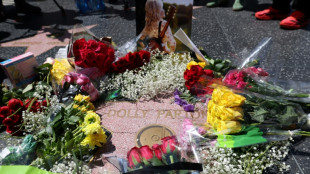 Dolly Parton to get new Hollywood star after vandalism
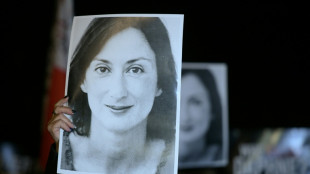
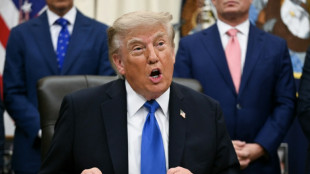 Trump 'happy' Prince Harry and Meghan have left US

 Michelson shocks Nakashima in US Open clash of rising Americans

 Another body recovered after ferry capsizes off northern Cyprus: official

 Cupertino Chamber President Claudio Bono Invited to White House with GiveaRoof 3-Year Plan to End Homelessness

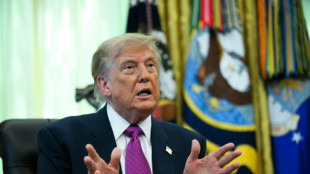 Trump floats renaming Strait of Hormuz as 'Trump Strait'

 Man City, Chelsea fuel record-breaking Premier League transfer window

 Balogun rejected Everton move over transfer 'treatment'

 Northampton seek 'happy medium' in bid to keep England star Pollock

 US energy secretary in Venezuela to sign Trump's 'biggest' oil deal

 Branagh takes on action role in Apple's Cold War comedy 'Mayday'

 Lawson fills in again for injured Hadjar at Monza
 England omit Carse from squad for third Test against Pakistan
 Venice festival gets underway with Clooney taking swipe at US government
Every day, as he has done for 20 years, Carlos makes the rounds collecting bets in central Havana for "la bolita" -- a clandestine national lottery that provides a sliver of hope for Cubans struggling to make ends meet.
Betting has been illegal on the communist island for the past 66 years, but "la bolita" has persisted, and even grown, as Cubans see few other ways out of economic misery.
"People are betting more than ever," said Carlos, who like others interviewed by AFP withheld his real name for fear of getting into trouble.
Carlos, in his 40s, is a "pointer" -- the human interface for Cubans who place bets that start at just a few pesos they hope to multiply with the intervention of Lady Luck.
There are also "collectors" and "bankers" who handle daily bets amounting to millions of Cuban pesos (tens of thousands of dollars) nationally and disburse the winnings neighborhood by neighborhood in a system with no oversight and based entirely on trust.
Carlos points to bets rising in lockstep with a growing hopelessness as Cuba battles its worst economic crisis in 30 years, with shortages of food and medicines, skyrocketing inflation, and daily power outages.
"When you know that your salary isn't enough to make it to the end of the month, the only option left is to bet on luck," he told AFP.
The average salary in Cuba hovers around $42 per month.
As there is no official draw, "la bolita" is decided by twice-daily lottery results from Florida, Georgia or New York.
To find out if they won, Cubans follow the lotteries on the internet, via mobile apps, on Facebook, WhatsApp or on X groups.
- 'Luck can change your life' -
The arrival of mobile internet in Cuba in 2018 injected new life into the lottery that has been played here since the 19th century -- an adaptation of gambling games introduced by Chinese and Italian immigrants.
It is played with numbers from 1 to 100, each with an association such as a horse for 1 or a butterfly for 2.
Players often rely on dreams or experiences to choose their numbers and in the time of Fidel Castro, anyone lucky enough to set eyes on the revolutionary leader -- nicknamed "The Horse" -- would elect the number 1 as part of their grid.
Islander Rogelio, 47, told AFP he won the equivalent of $2,250 in two weeks recently -- a sum equivalent to 61 times his monthly salary as a civil servant.
"Good luck can change your life," he said.
But Ruben, 32, said he had not won anything in a while.
"People no longer say good morning. They ask you which numbers came out," he said.
Carlos concedes there is a problem of people becoming deeply indebted because of "la bolita."
He himself makes a living from a 10 percent cut on each day's takings, but is forced to ply his trade in obscurity.
Castro banned gambling as soon as he took power in 1959, and the country's penal code prescribes a penalty of three years in prison and a fine of 300,000 pesos (about $2,500) for anyone who "performs activities as a banker, collector ... or promoter of illicit games."
It was not always like this.
In the 1940s and 1950s, gambling had its golden age in Cuba, when Havana, with its casinos, betting houses, and game rooms linked to the American mafia, became the most important gaming center in the Caribbean.
Castro's revolution ended the dream of gangsters Meyer Lansky and Lucky Luciano, who had enjoyed close ties with dictator Fulgencio Batista, of building a chain of hotel-casinos on Havana's Malecon waterfront, American journalist TAJ English wrote in his 2007 bestseller "Havana Nocturne."
Las Vegas took over instead, and became one of the largest gaming centers in the world.
Th.Gonzalez--AT