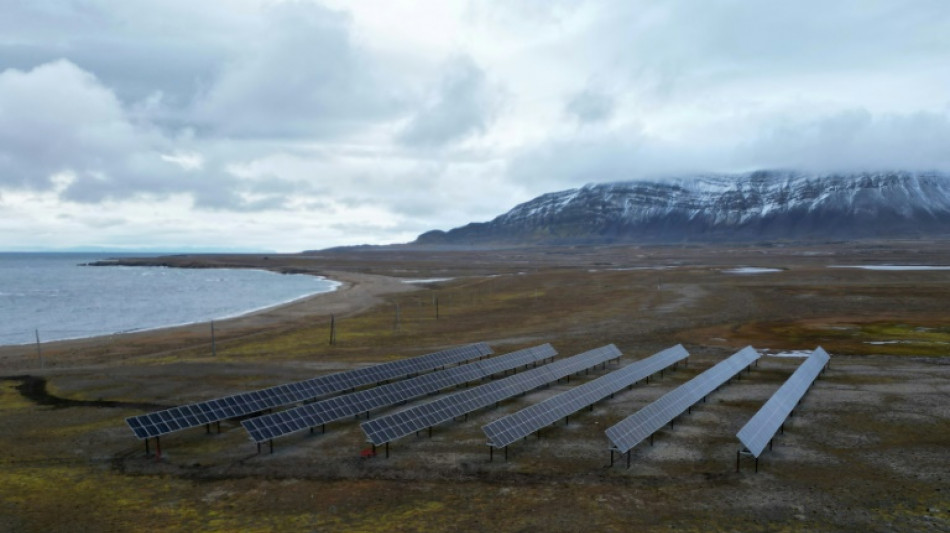
Companies keen to start deep-sea mining off Norway / Photo: Viken KANTARCI - AFP/File

 Brazil-Japan to play World Cup rematch at Singapore tournament

 Defence chiefs back boosting US military presence in Australia

 Nepal seeks climate justice after Himalayan disaster

 Stocks rise, yields ease as oil slips on Trump hint at short bombing campaign

 Brussels Diamond League finals Day 1 - five events to watch

 Thailand's 'Jurassic Park' shines light on dinosaur evolution
 'Role model' Stokes set to open for Adelaide Strikers

 Palau urges 'unified' Pacific response to China missile test

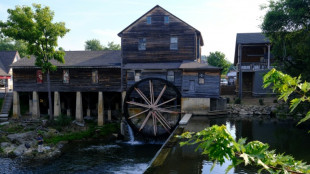 Grinding away: in remote Appalachia, old mills fuel US clean food dreams

 Sabalenka races into US Open third round

 Costa Rica Makes History as First Latin American Country to Launch English Learning as a National Initiative with Open English

 Zverev looks to improve after first-round scare

 Raiders to start Cousins over top NFL Draft pick Mendoza

 Palantir chief says France's digital sovereignty push 'backfiring'

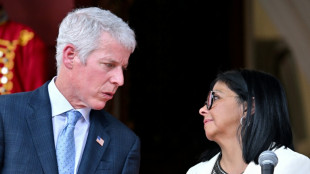 US energy firms dominate Venezuela deals worth billions

 Iran, US trade threats after escalation in fighting

 US jury deadlocks again in Lindsay Clancy's child murder trial

 Lake America? No way, Canadians say

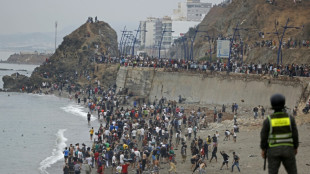 Spain report flags Moroccan police failings in Ceuta migrant rush

 Tech bosses press G20 to build data centers, but split on risk

 Dolly Parton to get new Hollywood star after vandalism

 Trump 'happy' Prince Harry and Meghan have left US

 Michelson shocks Nakashima in US Open clash of rising Americans

 Another body recovered after ferry capsizes off northern Cyprus: official

 Cupertino Chamber President Claudio Bono Invited to White House with GiveaRoof 3-Year Plan to End Homelessness

Companies are raring to explore the Arctic seabed off Norway, which could become the first country in Europe to allow deep-sea mining -- much to the dismay of environmentalists.
The industry has already suffered a false start.
Norway's parliament had voted massively in favour of deep-sea mining, experts had concluded there were significant resources to be extracted, and start-ups drawing on more than 50 years of offshore oil and gas experience were keen to begin operations.
But then came a surprising turn of events.
In December, Norway's government backpedalled on plans to award the first exploration licences in 2025, part of a compromise with a left-wing party in order to pass its budget through parliament.
"It was of course a surprise and disappointment... that a small party could take over the budget negotiations and succeed in blocking something that parliament really wants," said Anette Broch Mathisen Tvedt, managing director of the start-up Adepth.
Prime Minister Jonas Gahr Store insisted it was simply a delay, not a change of heart.
The first licences are now due to be awarded in 2026, in the Greenland Sea and the Norwegian Sea.
But the change of timeline had major repercussions for industry players, usually small companies made up of an entrepreneur and a handful of geologists or geophysicists.
Loke Marine Minerals, which had hopes of becoming a world leader, declared bankruptcy last week. Its rival, Green Minerals, has had to cut costs by 80 percent.
"We are as ready now as before to be awarded licences on the Norwegian continental shelf. We will be around for many years," Green Minerals chief executive Oivind Dahl-Stamnes insisted.
Those in favour see deep-sea mining as a way of obtaining minerals and metals needed for the transition to green energy, and reducing dependence on China, which dominates the market by a big margin.
"If we continue to have minerals supplied the way they are today, then it's clear that the green transition will not be very green," Mathisen Tvedt argued.
Norway stands out in Europe, where countries like France, Germany and Britain are reticent or even categorically opposed to deep-sea mining.
Norway's seabed is believed to hold "substantial" resources, including 38 million tonnes of copper and 45 million tonnes of zinc, as well as "significant" volumes of rare earth minerals, according to an official evaluation published in 2023.
- Clearing the way -
At a conference in early April in the Norwegian city of Bergen, AFP met industry players who said they hoped to extract their first minerals in the early 2030s or even by the end of this decade.
Their plans have environmentalists up in arms, concerned about the impact their operations will have on marine ecosystems in the region, about which much is still unknown.
In Bergen, delegates were met by Greenpeace leaflets with the plea "Don't gamble with the ocean!"
"Deep sea mining is a destructive industry that will destroy valuable and mostly unexplored ecosystems for minerals that we don't need for the green transition," argued Helene Bourges, global project leader at Greenpeace International.
Egil Tjaland, the secretary general of the Norwegian Forum for Marine Minerals, insisted Norway was well positioned to develop the sector.
"It's better to have a nation like Norway, with a good environmental record, start this and hopefully make a standard that can be used for other countries," he said.
"Because I think inevitably this will happen all over the world... It's just a matter of time."
Environmental activists have lost the first round in the courts.
An Oslo court in February rejected a legal challenge by the conservation organisation WWF, which accused the state of opening up Norway's seabed to deep-sea mining without conducting sufficient impact studies.
WWF has appealed against the ruling.
"All industrial activity has an impact. When it comes to minerals, the question is: 'where is the impact smallest?" argued Dahl-Stamnes of Green Minerals.
"Is it smallest at a depth of 1,000 to 2,000 metres (3,300 to 6,600 feet) under the seabed, or in the traditional mining industry on land?" he asked rhetorically.
M.Robinson--AT