'Anxious': US farmers see tariffs threaten earnings / Photo: Mark RALSTON - AFP/File

 Russia to close branches of Germany's Goethe Institute
 Spacecraft bound for Mercury faces 'tricky' arrival

 Philippines holds drills to safeguard students from armed intruders

 In Ghana, larger-than-life coffins tell the stories of the dead
 Menoncello, Reece headline Top 14 new-season signings

 Families descend on Nepal in search of missing tourists

 Far-right AfD eyes huge win in east German state vote

 Brazil-Japan to play World Cup rematch at Singapore tournament

 Defence chiefs back boosting US military presence in Australia

 Nepal seeks climate justice after Himalayan disaster

 Stocks rise, yields ease as oil slips on Trump hint at short bombing campaign

 Brussels Diamond League finals Day 1 - five events to watch

 Thailand's 'Jurassic Park' shines light on dinosaur evolution
 'Role model' Stokes set to open for Adelaide Strikers

 Palau urges 'unified' Pacific response to China missile test

 Grinding away: in remote Appalachia, old mills fuel US clean food dreams

 Sabalenka races into US Open third round

 NSW's Fourth-Largest City Makes Its Move: Investing Platform Spotlights Wollongong's Health Precinct Plan and 20,500-Job Target

 Hemogenyx Pharmaceuticals PLC Announces Exercise of Warrants and Issue of Equity

 Chinese lucky loser stuns Jodar at US Open

 US Open under the influence: content creators spark debate

 NBA hammers Clippers over Leonard salary cap violations
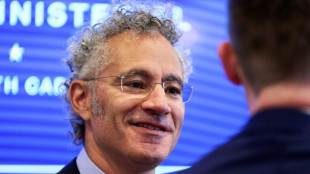
 NBA strips five first-round draft picks from Clippers for Leonard salary cap violations

 Kane brace helps Bayern win German Cup opener

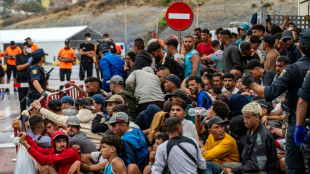 Migrant plight, local anger divide Ceuta one month after influx

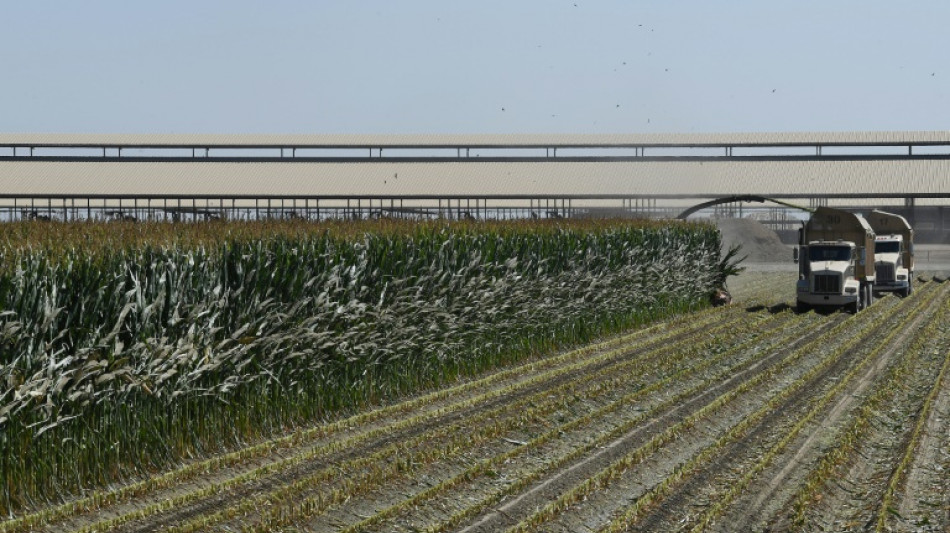
As President Donald Trump's sweeping global tariffs took effect this weekend, US farmers hoping for a profit this year instead found themselves facing lower crop prices -- and the prospect of ceding more ground in foreign markets.
"We're already getting below break-even at the current time," said Jim Martin, a fifth-generation Illinois farmer who grows soybeans and corn.
"We knew it was coming," he told AFP of Trump's tariffs. "I guess we're anxious to see how things are going to eventually be resolved."
The president's 10-percent "baseline" rate on goods from most US trading partners except Mexico and Canada took effect Saturday.
And dozens of economies, including the European Union, China and India, are set to face even higher levels -- tailored to each party -- starting Wednesday.
With talk of retaliation, farmers, a key support base in Trump's 2024 re-election campaign, are again in the crossfire and bracing for losses.
Prices for many US agricultural products fell alongside the stock market on Friday, following Trump's tariff announcement and China's pushback.
China, the third-biggest importer of American farm goods behind Canada and Mexico, is set to be hard hit, with a 34-percent US duty on its products piling on an earlier 20-percent levy.
In response, Beijing said it would place its own 34-percent tariff on American goods, stacking on previous rates of up to 15 percent on US agricultural products.
The tariffs mean businesses pay more to import US products, hurting American farmers' competitiveness.
- Market loss -
"There is less incentive for them to purchase US soybeans. It is cheaper to get them out of Brazil by far," said Michael Slattery, who grows corn, soybeans and wheat in the Midwest state of Wisconsin.
At least half of US soybean exports and even more of its sorghum go to China, which spent $24.7 billion on US agriculture last year, including on chicken, beef and other crops.
But the US Department of Agriculture (USDA) said China's purchases last year dropped 15 percent from 2023 "as soybean and corn sales fell amid rising competition from South America."
Slattery expects Chinese buyers will dial back further.
"The loss of this market is a very big deal, because it's expensive to find other buyers," said Christopher Barrett, a Cornell University professor whose expertise includes agricultural economics.
During Trump's escalating tariff war in his first presidency, China was the "only target, and therefore the only country retaliating," Barrett said.
With all trading partners now targeted, farmers will likely have a harder time finding new markets, he said.
- 'Band-aid' -
"More than 20 percent of farm income comes from exports, and farmers rely on imports for crucial supplies like fertilizer and specialized tools," the American Farm Bureau Federation warned this week.
"Tariffs will drive up the cost of critical supplies, and retaliatory tariffs will make American-grown products more expensive globally," it added.
The International Dairy Foods Association cautioned Wednesday that "broad and prolonged tariffs" on top trading partners and growing markets risk undermining billions in investments to meet global demand.
Retaliatory tariffs on the United States triggered over $27 billion in agricultural export losses from mid-2018 to late-2019, the USDA found.
While the department provided $23 billion to help farmers hit by trade disputes in 2018 and 2019, Martin in Illinois likened the bailouts to "a band-aid, a temporary fix on a long-term problem."
"The president says it's going to be better in the long-term so we need to decide how patient we need to be, I guess," he added.
Martin, like other producers, hopes for more trade deals with countries beyond China.
Slattery called Trump's policies "a major restructuring of the international order."
He is bracing for losses this year and next.
"I've attempted to sell as much as I can of the soybeans and corn in advance, before Trump began to indicate the amount of tariffs he was going to charge," he said.
T.Sanchez--AT