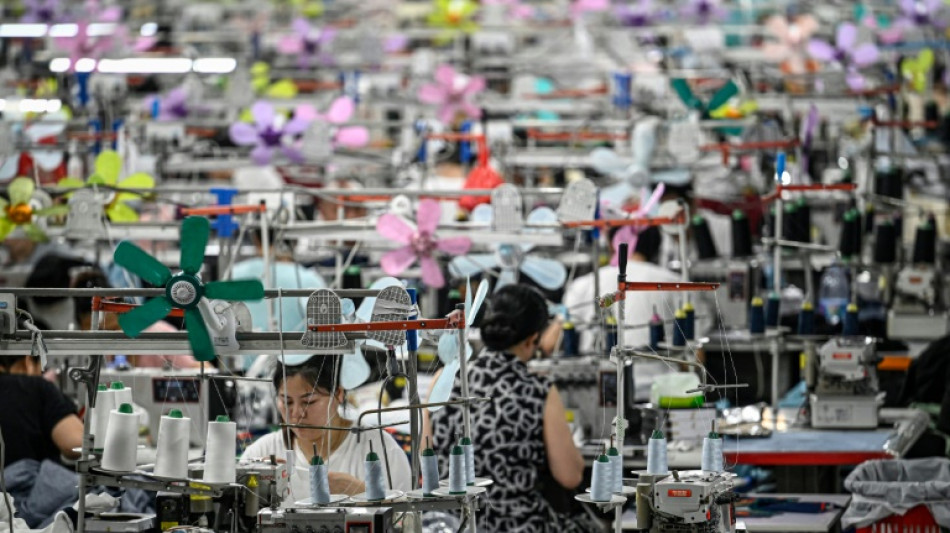
Where things stand in the US-China trade war / Photo: Jade GAO - AFP

 Russia to close branches of Germany's Goethe Institute
 Spacecraft bound for Mercury faces 'tricky' arrival
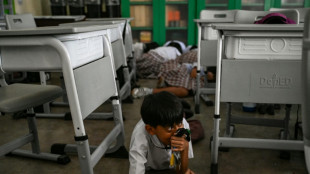 Philippines holds drills to safeguard students from armed intruders

 In Ghana, larger-than-life coffins tell the stories of the dead
 Menoncello, Reece headline Top 14 new-season signings

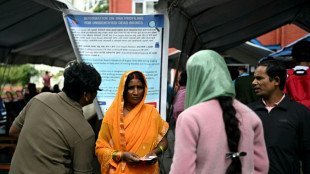 Families descend on Nepal in search of missing tourists

 Far-right AfD eyes huge win in east German state vote
 Brazil-Japan to play World Cup rematch at Singapore tournament

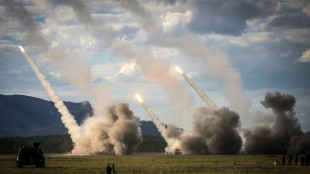 Defence chiefs back boosting US military presence in Australia

 Nepal seeks climate justice after Himalayan disaster

 Stocks rise, yields ease as oil slips on Trump hint at short bombing campaign

 Brussels Diamond League finals Day 1 - five events to watch
 Thailand's 'Jurassic Park' shines light on dinosaur evolution
 'Role model' Stokes set to open for Adelaide Strikers

 Palau urges 'unified' Pacific response to China missile test

 Grinding away: in remote Appalachia, old mills fuel US clean food dreams

 Sabalenka races into US Open third round

 NSW's Fourth-Largest City Makes Its Move: Investing Platform Spotlights Wollongong's Health Precinct Plan and 20,500-Job Target

 Hemogenyx Pharmaceuticals PLC Announces Exercise of Warrants and Issue of Equity

 Chinese lucky loser stuns Jodar at US Open

 US Open under the influence: content creators spark debate

 NBA hammers Clippers over Leonard salary cap violations

 NBA strips five first-round draft picks from Clippers for Leonard salary cap violations
 Kane brace helps Bayern win German Cup opener

 Migrant plight, local anger divide Ceuta one month after influx

China has hit back against US President Donald Trump's "liberation day" tariffs, slapping 34 percent levies on all imports of American goods.
AFP looks at how an escalating trade war between the United States and China is playing out -- and what impact it might have.
- Why is China so vulnerable to tariffs? -
Trade between the world's two largest economies is vast.
Sales of Chinese goods to the United States last year totalled more than $500 billion -- 16.4 percent of the country's exports, according to Beijing's customs data.
And China imported $143.5 billion in goods from the United States in 2024, according to the office of the US Trade Representative.
But China has long drawn Trump's ire with a trade surplus with the United States that reached $295.4 billion last year, according to the US Commerce Department's Bureau of Economic Analysis.
Beijing's leaders have been reluctant to disrupt the status quo, in part because China's export-driven economy is particularly sensitive to vicissitudes in international trade.
US duties also threaten to harm China's fragile economic recovery as it struggles with a long-running debt crisis in the property sector and persistently low consumption -- a downturn Beijing had sought to slow with broad fiscal stimulus last year.
But an intensified trade war will likely mean China cannot peg its hopes for strong economic growth this year on its exports, which reached record highs in 2024.
"The US tariffs on Chinese imports announced so far this year could fully negate the lift from the fiscal stimulus measures announced so far," Frederic Neumann, Chief Asia Economist at HSBC, told AFP.
- What impact will the new US tariffs have? -
Trump's new tariffs slap 10 percent levies on imports from around the world.
But China has been hit particularly hard -- the latest salvo adds 34 percent to a 20 percent rate imposed last month, bringing the total additional tariffs on imports from the Asian economic powerhouse imposed by this Trump administration to 54 percent.
The tariffs come into effect in stages -- a 10 percentage point bump on Thursday, followed by the full levy on April 9.
China is also under sector-specific tariffs on steel, aluminium and car imports.
Analysts expect the new levies to take a significant chunk out of the country's GDP, which Beijing's leadership hope will grow five percent this year.
Julian Evans-Pritchard, Head of China Economics at Capital Economics, said in a note he expects the economic hit to range from 0.5 to one percent of GDP.
Likely to be hit hardest are China's top exports to the United States -- the country is the dominant supplier of goods from electronics and electrical machinery to textiles and clothing, according to the Peterson Institute of International Economics.
And analysts also warn that because of the crucial role Chinese goods play in supplying US firms, the tariffs may also have major knock-on effects.
"US imports from China are dominated by capital goods and industrial materials instead of consumer goods," Gene Ma, Head of China Research at the Institute of International Finance, told AFP.
"The tariff will hurt US manufacturers as well as consumers."
"This trade war not only has a destructive impact on China but also on the global trade system," Chen Wenling, Chief Economist at the China Center for International Economic Exchanges in Beijing, said.
- How has Beijing responded? -
Beijing made good on its vow of "countermeasures" against the United States on Friday, slapping 34 percent levies on all US products coming into the country in measures that will take effect next Thursday.
It also said it would impose export controls on a number of rare earth elements used in medical technology and consumer electronics.
US exports to China last year were dominated by agricultural products, primarily oilseeds and grains, according to the US-China Business Council.
Oil and gas closely follows, with pharmaceuticals and semiconductors also among major exports.
In 2022, the Council said, over 900,000 American jobs were supported by US exports of goods and services to China.
Those measures come on top of tariffs imposed by Beijing last month -- 15 percent on imports of coal and liquefied natural gas from the United States and 10 percent on crude oil, agricultural machinery, big-engined vehicles and pickup trucks.
Analysts say those moves are designed to hit Trump's support base -- those in rural US heartlands that voted him into office last year.
Beijing has called for "dialogue" to resolve the dispute, but any deal will take time.
"There are still chances for the two parties to resume talks in the following months," Betty Wang at Oxford Economics told AFP.
"But historical experience suggests that tariffs are typically quick to rise and slow to fall."
A.O.Scott--AT