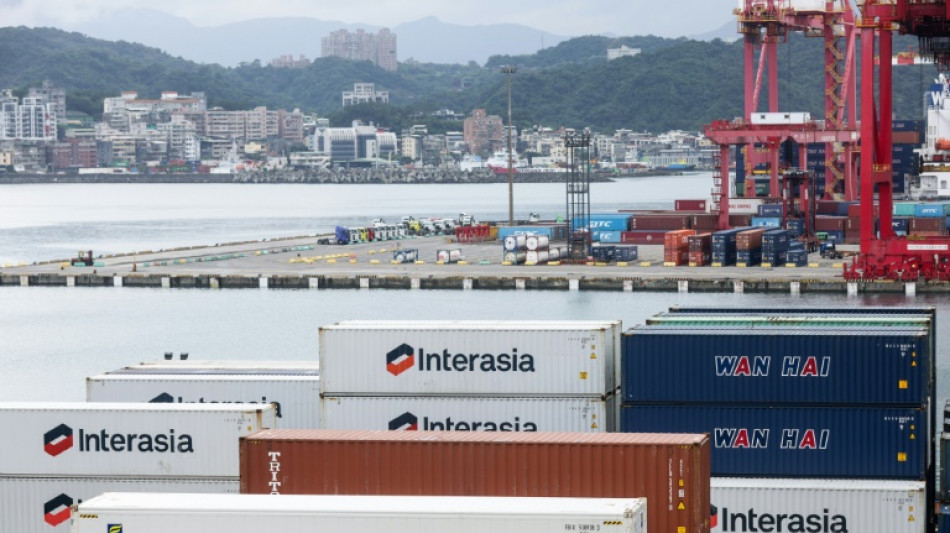
Taiwan earmarks $2.7 bn to help industries hit by US tariffs / Photo: I-Hwa CHENG - AFP

 Russia to close branches of Germany's Goethe Institute
 Spacecraft bound for Mercury faces 'tricky' arrival
 Philippines holds drills to safeguard students from armed intruders

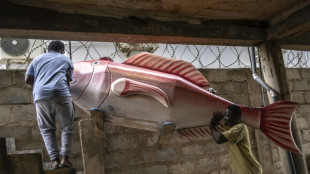 In Ghana, larger-than-life coffins tell the stories of the dead
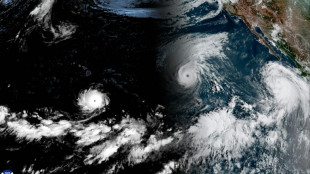
 Menoncello, Reece headline Top 14 new-season signings

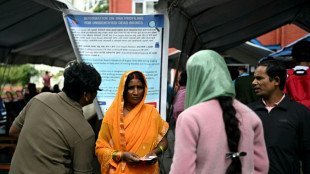 Families descend on Nepal in search of missing tourists

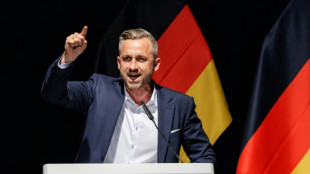 Far-right AfD eyes huge win in east German state vote

 Brazil-Japan to play World Cup rematch at Singapore tournament

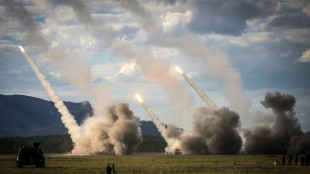 Defence chiefs back boosting US military presence in Australia

 Nepal seeks climate justice after Himalayan disaster

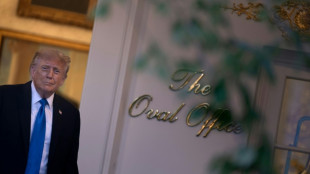 Stocks rise, yields ease as oil slips on Trump hint at short bombing campaign

 Brussels Diamond League finals Day 1 - five events to watch

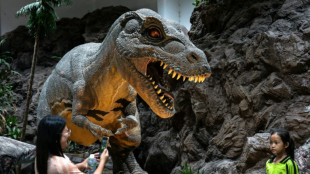 Thailand's 'Jurassic Park' shines light on dinosaur evolution
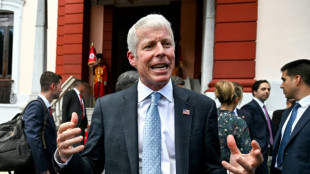
 'Role model' Stokes set to open for Adelaide Strikers

 Palau urges 'unified' Pacific response to China missile test
 Grinding away: in remote Appalachia, old mills fuel US clean food dreams

 Sabalenka races into US Open third round

 NSW's Fourth-Largest City Makes Its Move: Investing Platform Spotlights Wollongong's Health Precinct Plan and 20,500-Job Target

 Hemogenyx Pharmaceuticals PLC Announces Exercise of Warrants and Issue of Equity

 Chinese lucky loser stuns Jodar at US Open

 US Open under the influence: content creators spark debate

 NBA hammers Clippers over Leonard salary cap violations
 NBA strips five first-round draft picks from Clippers for Leonard salary cap violations
 Kane brace helps Bayern win German Cup opener
 Migrant plight, local anger divide Ceuta one month after influx

Taiwan has earmarked $2.7 billion to help industries affected by US President Donald Trump's new tariffs, the government said Friday.
Taipei had sought to avoid Trump's threatened levies by pledging increased investment in the United States and more purchases of US energy, but it was still hit by a 32 percent tax on its imports, excluding semiconductor chips.
The government has described the tariffs as "unreasonable" and "extreme", and plans to seek negotiations with Washington in the hope of reducing their impact.
Announcing the NT$88 billion ($2.7 billion) assistance package, Premier Cho Jung-tai said the plan was to "address various needs of industries and society in the future."
Taiwan's trade surplus with the United States is the seventh highest of any country, reaching $73.9 billion in 2024.
Around 60 percent of Taiwan's exports to the United States are information and communications technology products, or ICT, which includes chips.
The government has argued that the surplus reflected soaring demand in the United States for Taiwan's semiconductors and other tech products, further driven by US tariffs and export controls targeting China that Trump imposed during his first term.
Cho told a news conference that the industrial and agricultural sectors would be the main targets of the assistance.
The funds will be used for financial support, reducing administrative costs, improving competitiveness, offering tax incentives and diversifying markets, he said.
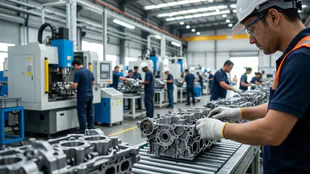
Products expected to be hardest hit by Trump's tariffs include ICT, electronics, steel, metal and machinery, components and building materials.
Tea, orchids and fish are also likely to be hurt, Cho said, flagging a possible "shrinking consumer market or a weakening of our competitive advantage".
Vice Premier Cheng Li-chun told reporters the government had drawn up response measures based on a possible 25 percent tariff ahead of Trump's announcement.
"I must clarify that a 32 percent tariff falls under an extreme scenario," Cheng said.
"While we did run simulations based on it, that doesn't mean we consider it reasonable. In our view, it exceeds what would be a reasonable expectation -- it's neither reasonable nor fair."
Semiconductor chips, a sector that Taiwan dominates and has been a source of friction between Washington and Taipei, were excluded from Trump's levies.
However, analysts warned that tariffs on components would have a knock-on effect for the critical chip industry that is the lifeblood of the global economy.
Trump has accused Taiwan of stealing the US chip industry and recently threatened to impose tariffs of up to 100 percent on semiconductor imports from the island.
"Taiwan will lobby for exemption or at least see what Trump wants -- Trump wants something," Andrew Kam Jia Yi, an associate professor at the National University of Malaysia told AFP.
"(Trump) gives you the worst-case scenario then batters you down to a deal that you might not want but seems more reasonable than the original threat."
A.O.Scott--AT