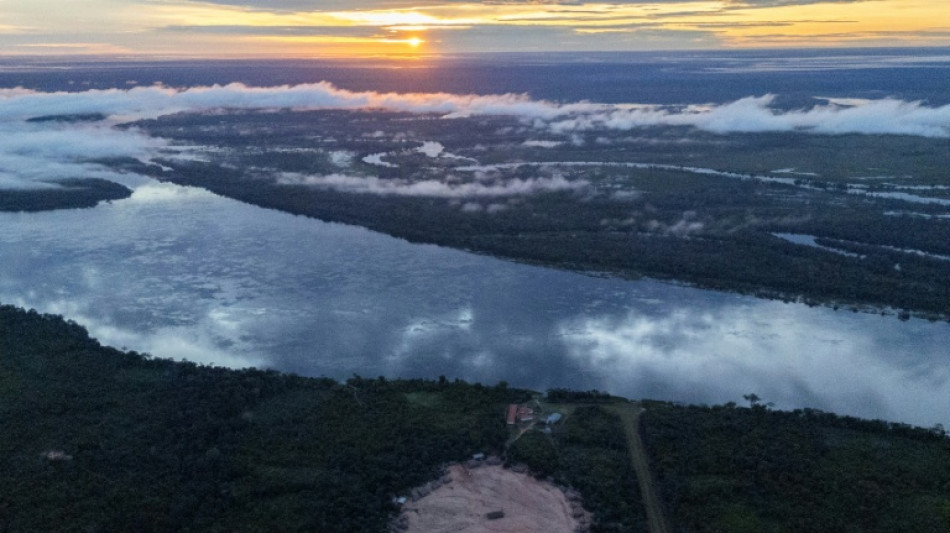
How a Brazilian chief is staving off Amazon destruction / Photo: Pablo PORCIUNCULA - AFP

 Putin denies plan for new Russia military call up
 Caruana Galizia: 'one-woman WikiLeaks' who exposed Malta's shady side
 Kuwait's Iranians under pressure since start of war

 EU lawmakers demand Brussels force Meta to 'protect' European children
 Clooney turns AFP photographer in jokey red carpet switch

 Retirement Income Planning Florida Launches No-Cost 'Income Gap Analysis' Program for Pre-Retirees

 Iraola hails Barcola mentality after blockbuster Liverpool move
 Michelsen shocks Nakashima in US Open clash of rising Americans

 US govt sides with OpenAI in New York Times copyright lawsuit
 Grammy-Winning Jazz Vocalist Cassandra Wilson Dies at 70

 Maui Wildfire Survivors Report Major Losses to Troubled Rebuilding Contractors

 WMO Says Powerful El Niño Is Likely to Persist Into February 2027

 Honda Presses Suppliers for Deep Cost Cuts in $9.4 Billion Savings Drive

 Philadelphia Festival Revisits the Signing and Legacy of the U.S. Constitution

 Russia to close branches of Germany's Goethe Institute

 Spacecraft bound for Mercury faces 'tricky' arrival

 Philippines holds drills to safeguard students from armed intruders

 In Ghana, larger-than-life coffins tell the stories of the dead

 Menoncello, Reece headline Top 14 new-season signings

 Families descend on Nepal in search of missing tourists
 Far-right AfD eyes huge win in east German state vote

 Brazil-Japan to play World Cup rematch at Singapore tournament

 Defence chiefs back boosting US military presence in Australia

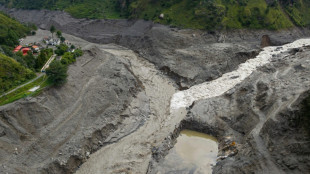 Nepal seeks climate justice after Himalayan disaster

 Stocks rise, yields ease as oil slips on Trump hint at short bombing campaign

You don't need a GPS to find the home turf of the Amazon's most famous resident, Brazilian Chief Raoni Metuktire.
As you approach his Capoto/Jarina Indigenous territory in Mato Grosso state, large single-crop farms of soybean or maize give way to lush, verdant rainforest.
This is the epicenter of a half-century battle led by the globe-trotting activist against illegal miners and loggers hacking away at the world's biggest rainforest.
Instantly recognizable by his wooden lip plate and feathery headdress, Raoni's date of birth is unknown, but he is believed to be about 90.
Three decades ago, he toured the world with British activist-rock star Sting to press for Indigenous rights.
His home village of Metuktire, named after his clan belonging to the Kayapo people, is accessible chiefly by boat along the Xingu River, a tributary of the Amazon.
The formidable chief lived most of his life in one of the straw-and-wood huts arranged in a wide circle around a forest clearing.
He now resides mostly in the nearby city of Peixoto de Azevedo for health reasons, but will be back on his home soil Friday to receive President Luiz Inacio Lula da Silva.
Raoni told AFP in an interview ahead of the visit that he would press Lula to halt plans for an oil mega-project at the mouth of the Amazon river, and urge that the community should get custodianship of a bigger slice of forest.
"I don't allow illegal miners or timber traffickers on our land," the chief told AFP emphatically.
Raoni's 1,600-strong community has a two-pronged approach to defending its ancestral homeland: conducting patrols against intruders and teaching Indigenous youth to resist the temptation of getting rich quick at the cost of rainforest destruction.
Only 0.15 percent of Capoto/Jarina territory, which occupies an area four times the size of the mega-city of Sao Paulo, has been affected by deforestation, according to official statistics.
- 'This land is ours' -
Designating land as Indigenous territory -- where deforestation is a crime -- has proven effective in holding back the ferocious onslaught from illegal mining and agriculture.
Indigenous territories have lost less than 2.0 percent of their native plant species since 2008, compared to 30 percent on non-Indigenous lands, according to the Socio-Environmental Institute, a Brazilian NGO.
Bu to have his clan's land recognized as Indigenous territory by the state, Raoni had to resort to desperate measures.
Brazilian media have recounted how in 1984 he and his nephew hijacked a ferry, taking hostage officials from the military dictatorship then in power.
Forty days later, the state conceded.
"Garimpeiros (miners) and Whites wanted to occupy our land, but we fought until we expelled them forever," Beptok Metuktire, another leader of the community, where most use the clan name as a surname, told AFP.
"We showed them that this territory is ours," the 67-year-old added in the community's Kayapo language.
- 22,000 football fields -
Indigenous lands are nonetheless under attack, stripped every year of thousands of hectares of native vegetation.
Near the Capoto/Jarina territory, in an area inhabited by other branches of Raoni's Kayapo people, the emerald-green jungle is pockmarked by huge brown craters and pools of brackish water -- the hallmarks of illegal gold mining.
AFP saw dozens of hydraulic excavators operated by workers camped out at the site during a flight organized by environmental NGO Greenpeace.
Kayapo territory has lost the equivalent of 22,000 football fields of forest to illegal gold mining, according to Greenpeace, which notes the growing presence of organized crime groups such as Comando Vermelho, one of Brazil's biggest gangs, in the region.
"White people persuade some Indigenous leaders to mine for gold, which leads to disputes and even murders among families," said Roiti Metuktire, territorial protection coordinator at the Raoni Institute, which defends Indigenous rights.
"Changing this is difficult because people got used to the money from crime and because the land has already been degraded, they don't have anything to eat," he said.
- 'End of our world' -
While Raoni's homeland has so far managed to ward off the worst threats, one looms larger than ever: wildfires.
The Brazilian Amazon was ravaged by a staggering 140,000 fires last year -- many of them started to clear land for livestock or crops.
A blaze in Capoto/Jarina wiped out crops and medicinal plants, fellow community leader Pekan Metuktire said.
"When I was young, the climate in this village was normal. But now the sun burns, the land dries up and the rivers overflow. If this continues, it's the end of our world," he added.
The community hopes that UN conference on climate change that Lula will host in the Amazon city of Belem in November will help halt the destruction.
Ngreikueti Metuktire, a 36-year-old woman, summed up the tall task awaiting Brazil's leader, before heading to the fields to harvest cassava.
"We need Lula to speak to the world to ensure the future of our grandchildren."
M.White--AT