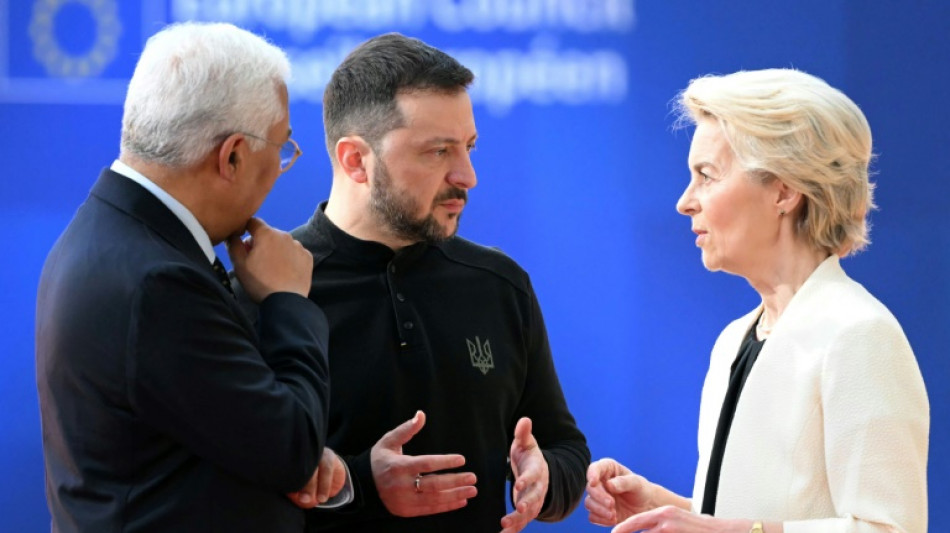
Europe shifts gears for the Trump era / Photo: NICOLAS TUCAT - AFP/File

 Colombian judge bans strikes on guerrillas if minors are present
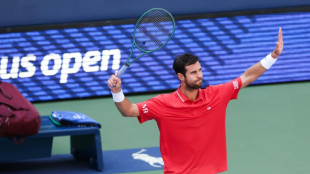
 Khachanov shocks ailing Auger-Aliassime, Swiatek and Osaka advance at US Open
 Lone juror blocking verdict in US mother's child murder trial: defense
 'Kinda chic' - Williams sisters set to launch US Open doubles bid
 Volkswagen says cutting 100,000 jobs by end of decade
 Russia slaps curfew on charity director over army criticism
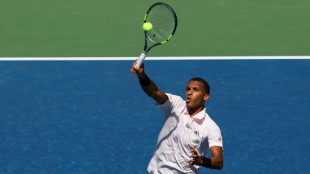 Ailing Auger-Aliassime upset by Khachanov at US Open
 Richarlison omitted from Tottenham's Premier League squad
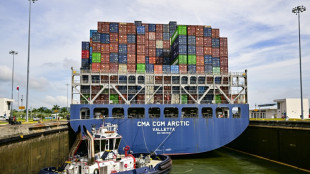 How El Nino is choking the Panama Canal
 Hamilton drives his Ferrari dream at Monza
 Senegal has an IMF loan, now what?

 Auger-Aliassime upset by Khachanov at US Open
 Hugging Face, the French start-up that became AI's warehouse
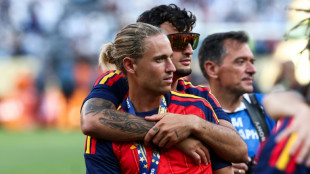 World Cup winner Llorente retires from Spain team at 31
 Osaka squeezes into US Open third round
 Apple faces £2 bn lawsuit in UK over app privacy feature
 Former champ Swiatek eases into US Open third round

 DR Congo latest to promise moving Israel embassy to Jerusalem
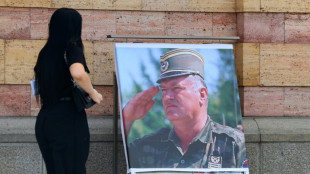 War criminal Mladic's body returns to Serbia with military honours
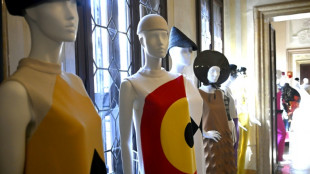 Pierre Cardin museum brings designer's futurist style to Venice
 Slovenian rookie Omrzel triumphs as Mas extends Vuelta lead
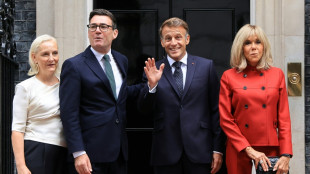 British, French leaders talk migrants, EU relations
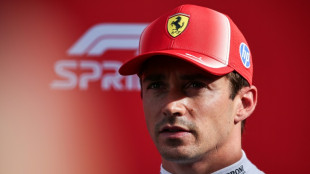 Heading for Ferrari's home race, Leclerc still dreams of world title

 Cafe at centre of Israel culture clash agrees to shut on Sabbath
 Spacecraft bound for Mercury begins 'tricky' arrival
Barely a month ago, a phone call between Donald Trump and Vladimir Putin sent an unmistakable message across the Atlantic: the United States may not be there forever to keep Europe safe from an aggressive Russia.
By the time the pair spoke again this week, a whirlwind of diplomacy had seen Europe juggle alliances and rewrite long-held rules -- with a show of assertiveness not always associated with the Old Continent.
"The advent of the Trump administration has given history a shove, and concentrated minds about what needs to be done," summed up Ian Lesser of the German Marshall Fund think tank.
Here is a look at the shifts taking place -- and what might lie ahead -- as the 27-nation European Union holds on Thursday its third summit in six weeks aimed at ramping up its defences.
- 'New actors' -
From Brussels to Paris to London and back to Brussels -- the frenzy of diplomacy sparked by Trump's outreach to Moscow over Ukraine has blurred a number of lines.
Back-to-back meetings have involved sub-groups of countries from in and outside the EU, and for the bloc's formal talks, "likeminded" partners from Britain to Canada have been kept in the loop, as they will be again this week.
More often than not, NATO's secretary general has joined in, intent on acting as a bridge with the new US administration.
The shifting formats highlight the challenge posed by Hungary's Viktor Orban, who is friendly to both Trump and Russia and has repeatedly held up unanimous EU action on Ukraine.
For the second time running, leaders expect to settle in Brussels on a 26-nation statement to sidestep what a senior EU official termed the "strategic divergence" with Orban over the conflict.
From big tent to close-knit huddle, the flexibility also reflects the shape of the "coalition of the willing" emerging around Ukraine, and the complexities of bolstering Europe's defences longer-term.
"It's clear that a Europe that takes defence, not just more seriously, but more autonomously, is going to want to include new actors including Britain, Norway but also Turkey," said Lesser, who also sees a chance of a "stronger European pole" within NATO emerging in times ahead.
- Old friends -
Britain's move back towards Europe is one of the most striking consequences of America's disengagement, even as a formal bid to rekindle ties post-Brexit showed signs of floundering.
Old gripes were bubbling up again between London and some European capitals accusing it of cherry-picking in its "reset" push -- and EU insiders still believe any broad agreement will be difficult.
But British Prime Minister Keir Starmer has emerged as a key player in European efforts to keep the United States engaged, secure a hoped-for ceasefire in Ukraine, and get serious about the continent's own security.
"This has really helped turn a page with the United Kingdom," said Camille Grand, policy fellow at the European Council on Foreign Relations. "Both sides are realising that, when it comes down to it, we can come together around the things that truly matter."
In the short term, Grand still predicts a tussle over "who gets access to Europe's cash for rearmament", with "buy European" provisions baked into a 150-billion-euro ($163-billion) loan programme presented this week.
But Britain could come in on the project if it signs a security deal with the EU.
And with Starmer and France's Emmanuel Macron working in lockstep on a Ukraine coalition, that bolsters the case of those seeking closer EU-UK cooperation on security at least.
- Rules be damned? -
The prospect of losing US security protection has also triggered a minor earthquake involving the EU's sacrosanct budget deficit rules.
Brussels now wants the fiscal rules put on hold for four years to unlock potential defence spending worth 650 billion euros, to nods from countries who would once have howled in protest.
Calls to go further and overhaul those same rules have emanated from historically reluctant spender Germany -- itself tearing up decades of precedent by backing a defence spending "bazooka" pushed by leader-in-waiting Friedrich Merz.
More radical still, Merz has called for talks with France and Britain on a shared nuclear deterrent, while Poland's Donald Tusk has shown interest in accessing atomic weapons.
"Many taboos have been shattered in recent weeks," said Lesser, on everything from deterrence to finance.
The caveat? Influential Germany and the Netherlands remain firmly opposed to bigger EU joint borrowing on the scale deployed to overcome the Covid pandemic.
"Right now, it's not there," the bloc's top diplomat Kaja Kallas acknowledged Wednesday. "But is it completely off the table? I don't think so."
D.Lopez--AT