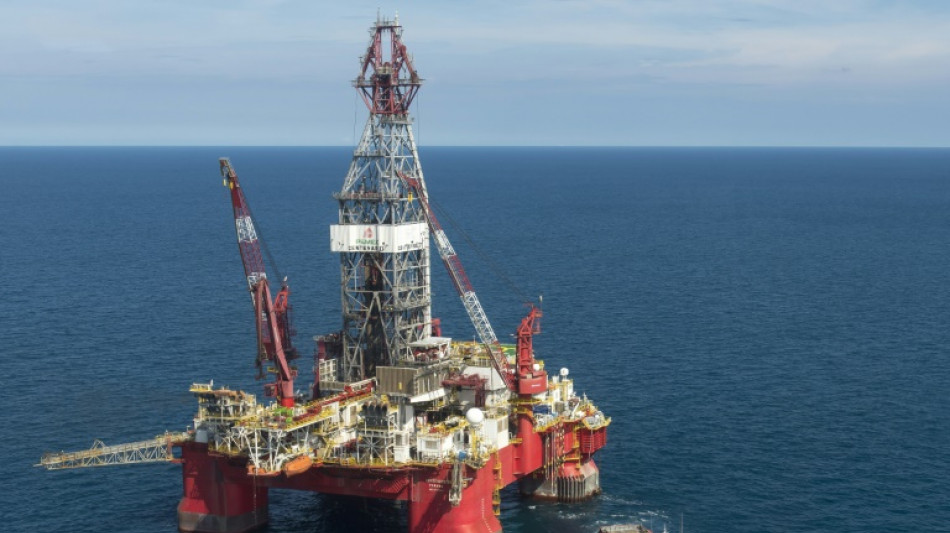
Mexico's energy reforms test relations with US

 Hunger and malnutrition stalk Gazans, a year on from ceasefire
 Fernandez trumps MotoGP championship duo to grab Indonesia pole

 October 7 scars push Israel's first-time voters to right
 India deploys police, restricts transport ahead of major protest
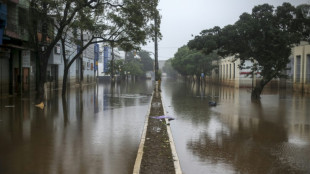
 Three Mexicans convicted in murders of Australian, US surfers

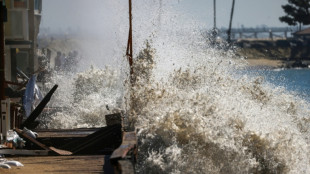 Powerful waves lash California coast as storm threatens more damage

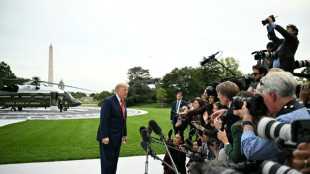 Trump hails Russia deal to release diesel as midterms loom

 Lyon blow chance to go top after loss at Lens

 Stocks rise as Trump says Russia to release diesel to world markets

 Wildfire smoke shuts schools in Amazon's biggest city

 Turkey jails 2 journalists pending trial for fund crisis 'misinformation'

 Major earthquake rocks Panama, triggers tsunami warning

 Indian jailed in France for leading sadist Nazi cult that tortured girls

 'Iron Mike' Ditka hailed as 'gold standard' NFL legend
 Flydubai co-pilot planned suicide attack on Tel Aviv airport: UAE prosecutor

 Mike Ditka: Chicago Bears icon as player and coach

 Outrage over plan to livestream US military firing squad execution

 US sanctions: a 'test of resilience' for ICC

 NFL legend Mike Ditka dead at 86

 Hurricane Isaias set to strike Gulf Coast late Friday
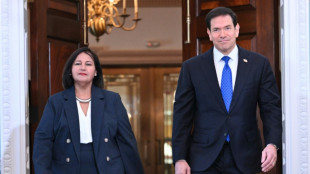
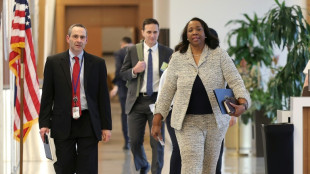 Trump forms panel to probe US Fed governor Lisa Cook
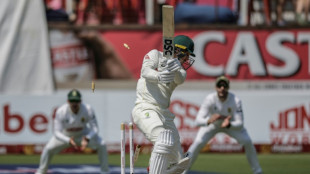
 Clashes in Durban as fresh anti-migrant riots erupt in South Africa
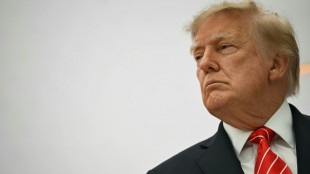
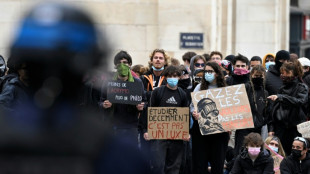 France students plan more protests, UN 'concerned' over violence
 De Zerbi calls on struggling Spurs to react in Man Utd clash
 US sanctions on ICC: a 'test of resilience'
Relations between the United States and Mexico are under strain as the Mexican government pushes ahead with planned energy sector reforms that have alarmed Washington and foreign investors.
President Andres Manuel Lopez Obrador wants to strengthen the state-owned electricity provider and roll back the effects of liberalization under previous governments that he says favored private companies.
That has prompted warnings that Mexico is in danger of violating its commitments under a North American trade deal with the United States and Canada by prioritizing state-run entities heavily dependent on fossil fuels.
In November, Lopez Obrador's ruling party pushed back its deadline for the approval of a constitutional reform bill until April, following a backlash from the United States, Canada and foreign investors.
The next few months "will be critical," a US diplomatic source in Mexico told reporters on condition of anonymity.
A row between the neighboring countries would have potential consequences for wider cooperation in key areas such as trade, migration and fighting drug cartels.
The reforms would ensure that the state-owned Federal Electricity Commission (CFE) has at least 54 percent of the electricity market -- compared with 38 percent now -- and the private sector no more than 46 percent.
The government says the move is to prevent soaring power prices -- a hot-button political issue given inflation has hit a 20-year high above seven percent.
The reforms also aim to move towards a state monopoly in the exploration and mining of lithium, a vital material in the production of electric car batteries.
In January several US Democratic party senators urged President Joe Biden's administration to "more forcefully express concerns about President Lopez Obrador's detrimental fossil fuel agenda."
The blunt call came in a letter to Secretary of State Antony Blinken and Secretary of Energy Jennifer Granholm from Senate Foreign Relations Committee chairman Bob Menendez and three other members of Congress.
"If enacted, the Mexican government would cancel renewable energy permits, contracts, and certificates," they warned.
The legislation would "threaten at least $44 billion in private investment in Mexico's energy sector, will negatively impact US private sector investment in Mexico, and is antithetical to the historically strong US-Mexico economic relationship," they said.
- Investments at stake -
"One of the most controversial points of the reform has been its proposal to cancel all the contracts that were signed with private companies for the generation and supply of electricity," said the Mexican branch of the international auditing and consultancy network Deloitte.
"This possibility is worrying different players in the market, because the private sector has invested a large amount of resources in the construction and start-up of modern facilities capable of producing cleaner and cheaper electricity," it added.
Following suggestions that the changes could even amount to a form of indirect expropriation, Mexico's Energy Minister Rocio Nahle said this week that "not a single screw will be expropriated."
The United States has found itself fighting on the same side as domestic opponents of the reforms, which must be approved by two-thirds of the members of Congress.
They include Senate ruling party heavyweight Ricardo Monreal, who wanted the bill to be amended, as well as the governors of northern states such as Baja California and Sonora bordering the United States.
Baja California wants to stay connected "to the fourth largest economy in the world, which is California," said the US diplomatic source.
Washington says it is also concerned that the reform will favor polluting coal-based energy, to the detriment of renewable energy.
Nahle has dismissed such suggestions as a "lie," saying that only three percent of Mexico's electricity comes from coal, compared with some 20 percent in the United States and more than 50 percent in China.
"Each country adapts to the resources it has, and on this point we are not going to criticize others," the minister said, in what was seen as a jab at Washington.
E.Flores--AT