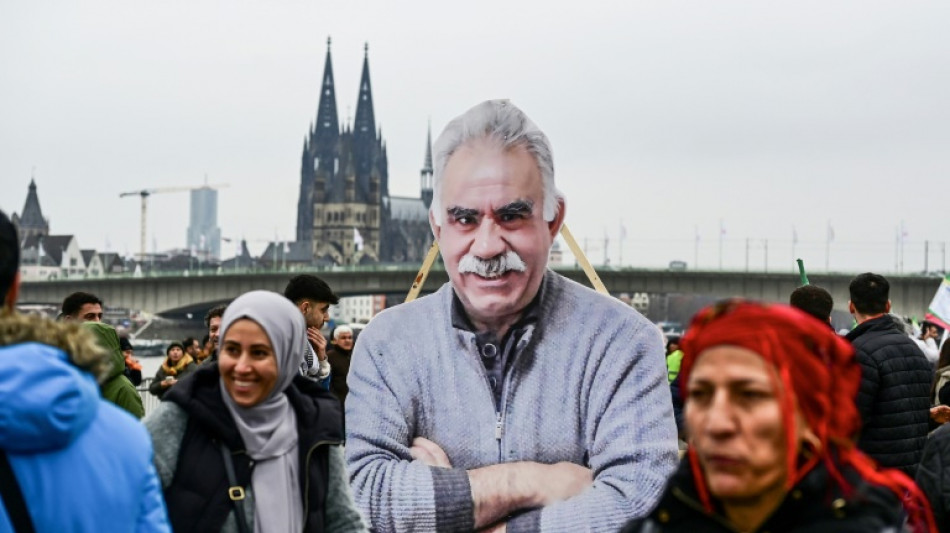
Ocalan: Kurdish PKK founder who urged his fighters to disarm / Photo: Ina FASSBENDER - AFP/File

 US envoys in Moscow as Russia and Ukraine vow not to hit capitals during talks
 Motorsport governing body rejects Alpine boss's claims of bias
 US envoy on West Bank visit says Israel has responsibility for Palestinians
 Ethiopian Miss World contestant spotlights pain of sister's murder
 'Leader' Raphinha rising to Barca striker challenge
 Oasis fans gather in Venice for band reunion film
 Two Nepal rescues revive hopes 10 days after flood
 Pogacar to miss worlds after season-ending Vuelta crash
 Greenwood, Guendouzi handed bans after Fenerbahce-Lyon brawl
 In Iceland, the mystery of the poet, the tomb and the Danish grocer
 Ratko Mladic: Bosnian Serb commander to convicted war criminal
 Bolivian army base blasts kill two, wound dozens

 Alcaraz, Sabalenka into US Open last 16 as Williams sisters lose on return
 Williams sisters fall in thrilling return to US Open doubles
 Bangladesh measles toll nears grim 1,000-child mark
 Bolivia farmers return to streets over diesel price hikes
 Panama Canal begins reducing crossings due to El Nino
 Trump again seeks to remove protections for wolves
 'Getting there' - Alcaraz into US Open last 16 along with Sabalenka
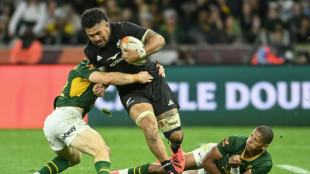
 Isak ready to show world his quality, says Van Dijk

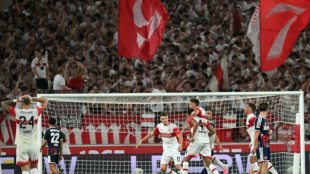 Stuttgart cruise past Cologne to bounce back from Bayern thumping
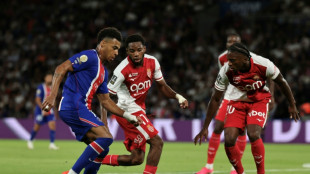
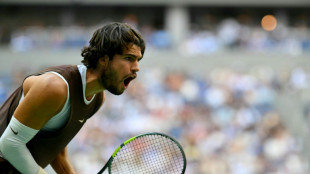 'Smart, aggressive' Alcaraz into US Open last 16
 Isak fires Liverpool to first win under Iraola at Ipswich
 Stocks slip as robust US jobs data stokes rate hike odds
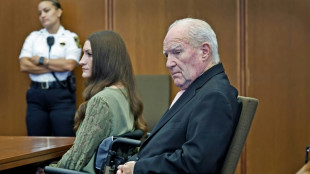 Mistrial declared in case of US woman who killed her three children

Abdullah Ocalan, the jailed founder of the militant Kurdistan Workers Party (PKK), is an icon to many Kurds, but a "terrorist" to many within wider Turkish society.
In a historic call on Thursday, Ocalan called for his PKK to be dissolved and its fighters to lay down their arms in a major step towards ending the decades-long conflict with the Turkish state.
Now 75, Ocalan has been held in solitary confinement since 1999 on Imrali prison island near Istanbul.
But since October, when Turkey tentatively moved to reset ties with the PKK, Ocalan has been visited three times by lawmakers from the pro-Kurdish opposition DEM party.
For most Turks, Ocalan is public enemy number one for his role in leading the PKK.
In 1978, he founded the group which six years later began an insurgency demanding independence and, more recently, broader autonomy in Turkey's mostly Kurdish southeast. Tens of thousands of people have died.
A Marxist-inspired group, it is blacklisted as a "terrorist" organisation by Turkey, the United States, the European Union and many other Western countries.
- An olive branch -
Attitudes began shifting in October when MHP leader Devlet Bahceli, a close ally of President Recep Tayyip Erdogan, offered Ocalan an olive branch if he would publicly renounce terror.
The next day, the former guerrilla who embodies the decades-long Kurdish rebellion, received his first family visit in four years.
He sent back a message saying he alone could shift the Kurdish question "from an arena of conflict and violence to one of law and politics" later offering assurances he was "ready to take the necessary steps and make the call".
Ankara's bid to reopen dialogue came just weeks before Syrian rebels overthrew Bashar al-Assad, upending the regional balance of power and once again thrusting Turkey's complex relationship with the Kurds into the spotlight.
- From village life to militancy -
Ocalan was born on April 4, 1949, one of six siblings in a mixed Turkish-Kurdish peasant family in Omerli, a village in Turkey's southeast.
His mother tongue is Turkish.
He became a left-wing activist while studying politics at university in Ankara, and was first jailed in 1972.
He set up the PKK six years later, then spent years on the run, launching the movement's armed struggle in 1984.
Taking refuge in Syria, he led the fight from there, causing friction between Damascus and Ankara.
Forced out in 1998, he moved from Russia to Italy to Greece in search of a haven, ending up at the Greek consulate in Kenya, where US agents got wind of his presence and tipped off Turkey.
He was arrested on February 15, 1999 after being lured into a vehicle in a Hollywood-style operation by Turkish security forces.
Sentenced to death, he escaped the gallows when Turkey started abolishing capital punishment in 2002, living out the rest of his days in isolation on Imrali prison island in the Sea of Marmara near Istanbul.
For many Kurds, he is a hero whom they refer to as "Apo" (uncle). But Turks often call him "bebek katili" (baby killer) for his ruthless tactics, including the bombing of civilian targets.
- Jailed but still leading -
With Ocalan's arrest, Ankara thought it had decapitated the PKK. But even from his cell he continued to lead, ordering a ceasefire that lasted from 1999 until 2004.
In 2005, he ordered followers to renounce the idea of an independent Kurdish state and campaign for autonomy in their respective countries.
Tentative moves to resolve Turkey's "Kurdish problem" began in 2008, and several years later, Ocalan became involved in the first unofficial peace talks when Erdogan was prime minister.
Led by then spy chief Hakan Fidan -- who is now foreign minister -- the talks raised Kurdish hopes for a solution with their future within Turkey's borders.
But the effort collapsed in July 2015, sparking one of the deadliest chapters in the conflict.
The government has defended its de facto silencing of Ocalan, saying he failed to convince the PKK of the need for peace.
Seen as the world's largest stateless people, Kurds were left without a country when the Ottoman Empire collapsed after World War I.
Although most live in Turkey, where they make up around a fifth of the population, the Kurds are also spread across Syria, Iraq and Iran.
Turkey's wide-scale use of combat drones has pushed most Kurdish fighters into northern Syria and Iraq, where Ankara has continued its raids.
P.Smith--AT