Science Center for Marine Fisheries Announces $277,857 in Research Funding for 2025

 Inter and Roma roar back to win thrillers and share top spot

 Don't stop them now: fans party for Freddie Mercury's 80th birthday
 AFP photographer wins top prize for Madagascar protest coverage

 Keys: 'I felt like I couldn't play tennis'
 Simmonds stars as Pau upset Montpellier

 Inter roar back in five-goal thriller with Napoli

 Haaland keeps Man City perfect in Premier League, blunt Spurs held

 Hamilton worried by Ferrari pace while Antonelli prepares for a fight

 Vuelta stage 15 shortened due to extreme heat, Mas consolidates lead

 Putin meets US envoys for Ukraine war talks

 Modric available for Croatia in Nations League
 Potapova upsets 2025 US Open runner-up Anisimova
 Gasly a 'class act' says Alpine boss after Monza pole
 Athletic Bilbao crush Simeone's flat Atletico

 Stay far from battlefield, warns Japanese director in Vietnam War film

 Tens of thousands of Croatians protest over hazardous waste
 Haaland heads unconvincing Man City top of Premier League

 US envoys in Moscow as Russia and Ukraine vow not to hit capitals during talks

 Motorsport governing body rejects Alpine boss's claims of bias

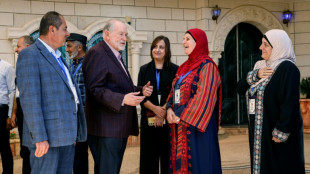 US envoy on West Bank visit says Israel has responsibility for Palestinians

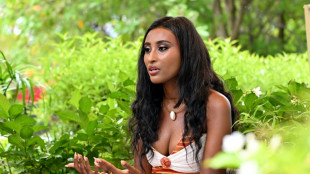 Ethiopian Miss World contestant spotlights pain of sister's murder

 'Leader' Raphinha rising to Barca striker challenge
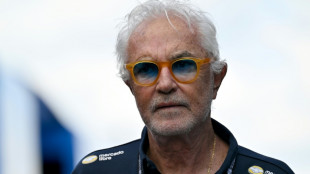
 Oasis fans gather in Venice for band reunion film

 Two Nepal rescues revive hopes 10 days after flood

 Pogacar to miss worlds after season-ending Vuelta crash

OCEAN SPRINGS, MS / ACCESS Newswire / February 18, 2025 / The Science Center for Marine Fisheries is continuing its mission funding critical shellfish and finfish research, approving $277,857 in funding for 2025. The five new projects funded by the Center will address research priorities that have been identified by members of the fishing industry, broadening our understanding of commercially important species and improving the efficiency and effectiveness of vital regional fisheries.
A project of the National Science Foundation's Industry-University Cooperative Research Centers program, SCEMFIS brings together leading researchers in the marine science community with participants in the fishing industry to support innovative fisheries research projects that will support the continued sustainability of their fisheries.
The research funded this year focuses on several new designs for dredge equipment to improve the efficiency of surfclam fishing vessels; using AI and other technologies to analyze seafloor habitat data; conducting additional surveys of commercially important species to provide regulators with more data; and collecting data on fisheries discards to improve surfclam management.
In addition to the newly funded research, SCEMFIS also committed additional funding to ongoing Center projects.
The following new research projects were approved for 2025:
Fishery-dependent acoustic data to estimate the biomass of Atlantic mackerel:
Atlantic mackerel is an ecologically and commercially-important species that has exhibited signs of declining biomass in recent years. Fishery quotas have, accordingly, been reduced significantly as part of a stock rebuilding plan. However, reports from the fishery indicate that mackerel biomass may be much higher than official numbers state, based on data from the echosounders used to locate mackerel when fishing. This study, from Dr. Mei Sato of the Woods Hole Oceanographic Institute, assisted by Drs. Anna Mercer and Mike Jech from the Northeast Fisheries Science Center, will partner with two mackerel fishing vessels to conduct acoustic surveys of mackerel schools during fishing trips to better quantify the number of mackerel that are being observed. An existing model, that correlates target strength with the size of mackerel, will be used to convert the acoustic signals into biomass estimates and compare the results with existing survey data. ($48,948 in funding)
Evaluating Discard and Mixed-Catch Protocols for Overlapping Surfclam and Ocean Quahog Stocks:
As surfclam habitats expand into deeper, cooler waters, fishing vessels are increasingly catching ocean quahogs alongside surfclams-yet current regulations prohibit landing both species on the same trip. This new project, led by Dr. Daphne Munroe at Rutgers University, aims to develop and scientifically validate practical methods for measuring discards and mixed catches at sea and in processing plants. By comparing fishing-crew data and volume measurements of sorted catch at processors to independent measurements made by project scientists, the study will determine how accurately the fishery can estimate catches of both species and will refine protocols to ensure reliable, accurate reporting. These validated methods will help prepare the fishery for regulatory changes to allow mixed-species landings, improving both operational efficiency and sustainability. ($81,772 in funding)
Efficiency Enhancement of Clam Dredge Systems:
Led by Dr. Daphne Munroe at Rutgers University, this continuing project builds on prior research supporting improvements in the surfclam fishery's dredge technology. The newly funded work will gather critical flow-rate and pressure data from an experimental manifold with a slit nozzle, installed on a full-scale dredge. These measurements will validate and refine computational modeling tools previously developed by Dr. Spyros Kinnas (University of Texas at Austin), enabling reliable calculations of key design parameters-including pump size, hose diameter, and manifold type. By optimizing these parameters, fishers can achieve higher jet speeds and flow rates while minimizing required horsepower, helping to reduce fuel costs and associated emissions and improve dredge performance. Data from this study will inform a practical, industry-wide tool for selecting the best dredge configurations under various conditions. ($11,550 in additional funding)
Continuing Development of an Analysis Tool to Study and Improve Clam Dredge Systems:
Building on earlier work to enhance the surfclam fishery's operational efficiency, this ongoing project led by Dr. Spyros Kinnas at the University of Texas will receive additional support for conducting full-scale simulations of existing and newly proposed dredge manifolds. These simulations will refine computational tools used to design dredge systems, optimizing factors such as water flow and jet speeds while minimizing energy requirements. The added funding builds on previous allocations and will help translate modeling results into practical, cost-effective solutions for the fishery. ($5,488 in additional funding)
Underwater Optical Survey for Benthic Biomass and Sediments Assessment:
One of the largest, mostly untapped sources of information on the seafloor comes from the Habitat Mapping Camera (HabCam) database. HabCam is an optical camera system that has taken extensive seafloor photographs of Georges Bank and the Mid-Atlantic Bight; the HabCam picture database, which includes millions of pictures, has the potential to provide extensive data on the seafloor and the species that live there. This study, from Dr. Yi Hi at William & Mary, will analyze that database using AI tools, specifically an Object Detection, Recognition, and Segmentation (ODRS) model, to identify the species in the database, estimate their biomass, and provide insight into the composition of their habitats. ($30,000 in funding)
About SCEMFIS
SCEMFIS utilizes academic and fisheries resources to address urgent scientific problems limiting sustainable fisheries. SCEMFIS develops methods, analytical and survey tools, datasets, and analytical approaches to improve sustainability of fisheries and reduce uncertainty in biomass estimates. SCEMFIS university partners, University of Southern Mississippi (lead institution), and Virginia Institute of Marine Science, College of William and Mary, are the academic sites. Collaborating scientists who provide specific expertise in finfish, shellfish, and marine mammal research, come from a wide range of academic institutions including Old Dominion University, Rutgers University, University of Massachusetts-Dartmouth, University of Maryland, and University of Rhode Island.
The need for the diverse services that SCEMFIS can provide to industry continues to grow, which has prompted a steady increase in the number of fishing industry partners. These services include immediate access to science expertise for stock assessment issues, rapid response to research priorities, and representation on stock assessment working groups. Targeted research leads to improvements in data collection, survey design, analytical tools, assessment models, and other needs to reduce uncertainty in stock status and improve reference point goals.
PRESS CONTACT:
Stove Boat Communications
[email protected]
SOURCE: Science Center for Marine Fisheries
View the original press release on ACCESS Newswire
S.Jackson--AT