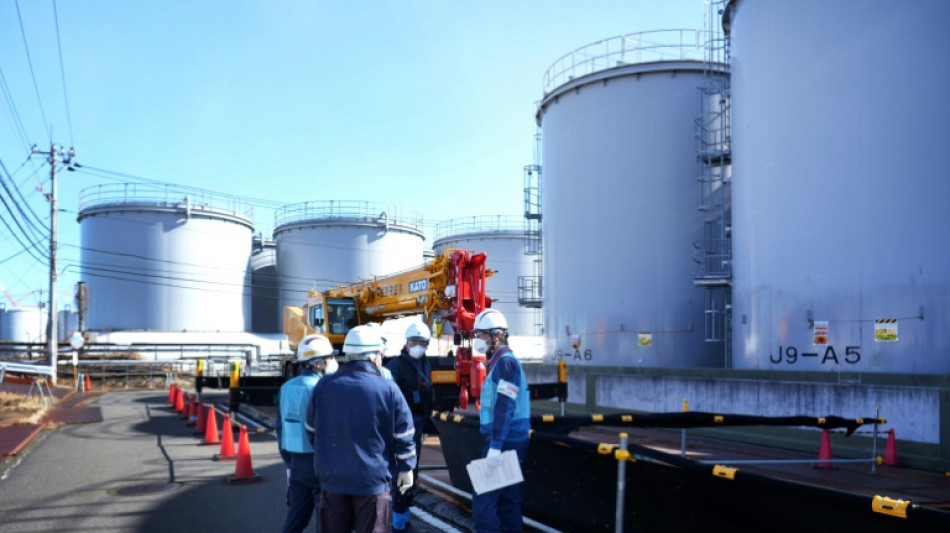
UN nuclear chief to view soil removed from Fukushima / Photo: Atish PATEL - AFP/File

 Inter and Roma roar back to win thrillers and share top spot

 Don't stop them now: fans party for Freddie Mercury's 80th birthday

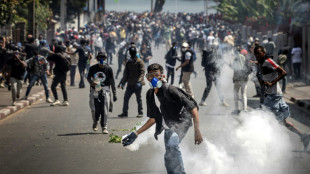 AFP photographer wins top prize for Madagascar protest coverage

 Keys: 'I felt like I couldn't play tennis'

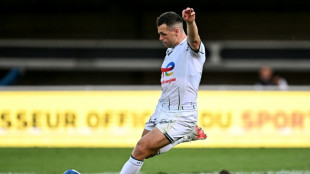 Simmonds stars as Pau upset Montpellier
 Inter roar back in five-goal thriller with Napoli

 Haaland keeps Man City perfect in Premier League, blunt Spurs held

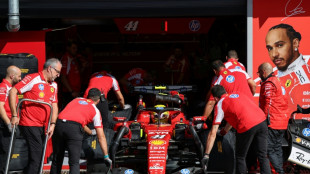 Hamilton worried by Ferrari pace while Antonelli prepares for a fight

 Vuelta stage 15 shortened due to extreme heat, Mas consolidates lead

 Putin meets US envoys for Ukraine war talks

 Modric available for Croatia in Nations League

 Potapova upsets 2025 US Open runner-up Anisimova
 Gasly a 'class act' says Alpine boss after Monza pole
 Athletic Bilbao crush Simeone's flat Atletico

 Stay far from battlefield, warns Japanese director in Vietnam War film

 Tens of thousands of Croatians protest over hazardous waste

 Haaland heads unconvincing Man City top of Premier League

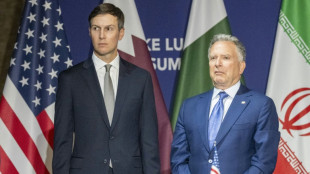 US envoys in Moscow as Russia and Ukraine vow not to hit capitals during talks
 Motorsport governing body rejects Alpine boss's claims of bias
 US envoy on West Bank visit says Israel has responsibility for Palestinians

 Ethiopian Miss World contestant spotlights pain of sister's murder

 'Leader' Raphinha rising to Barca striker challenge
 Oasis fans gather in Venice for band reunion film

 Two Nepal rescues revive hopes 10 days after flood
 Pogacar to miss worlds after season-ending Vuelta crash
The UN nuclear watchdog chief arrives in Japan on Tuesday for a trip that will include his first visit to storage facilities for soil contaminated in the 2011 Fukushima disaster.
It is the fifth official visit to the country by Rafael Grossi, head of the International Atomic Energy Agency (IAEA).
The organisation is monitoring the decades-long process to decommission the Fukushima Daiichi nuclear plant, which went into meltdown after being hit by a tsunami in the worst nuclear disaster since Chernobyl.
Workers at the wrecked plant on Japan's northeast coast last week began dismantling wastewater storage tanks to free up space for tonnes of nuclear debris.
Grossi will tour the site on Wednesday, and will also be shown the contaminated soil that the government is currently discussing how to handle.
After the disaster, about 13 million cubic meters of soil and about 300,000 cubic meters of ash from the incineration of organic material was removed from the wider Fukushima region, as part of decontamination efforts.
For comparison, the Tokyo Dome arena, where US pop superstar Taylor Swift performed last year, has a capacity of 1.24 million cubic metres.
The soil is being kept at interim storage facilities, over a total area of 16 square kilometres (six square miles).
Japan plans to recycle roughly 75 percent of the removed soil -- the portion found to have low radioactivity levels.
If this material is confirmed safe, authorities want to use it for civil engineering projects, including building embankments for roads and railways, the government and the IAEA say.
The remaining soil will be disposed of outside Fukushima region ahead of a 2045 deadline.
The government has said it intends to confirm the disposal site this year, with Fukushima's regional governor reportedly urging them to come up with a plan quickly.
"Japan's approach for recycling and disposing of soil and radioactive waste from decontamination activities... is consistent with IAEA safety standards," the IAEA said in September in its final report on the soil issue.
The Fukushima plant was hit by a huge earthquake-triggered tsunami in March 2011 that killed 18,000 people.
The most dangerous part of the complex Fukushima plant clean-up -- removing around 880 tonnes of radioactive fuel and rubble from three stricken reactors -- has only just begun, with one tiny sample removed by a robotic claw.
During Grossi's visit, experts from the IAEA and neighbouring countries including China and South Korea will also take seawater and fish samples "to further increase the transparency" of the process of releasing treated wastewater into the sea, an official from Japan's energy agency said.
Plant operator TEPCO in August 2023 began discharging 1.3 million tonnes of collected groundwater, seawater and rainwater, along with water used for cooling the reactors.
The water release has been endorsed by the IAEA, and TEPCO says all radioactive elements have been filtered out except for tritium, levels of which are within safe limits.
But countries including China and Russia have criticised the release and banned Japanese seafood imports over safety concerns.
China in September said it would "gradually resume" importing seafood from Japan but this has yet to begin.
Th.Gonzalez--AT