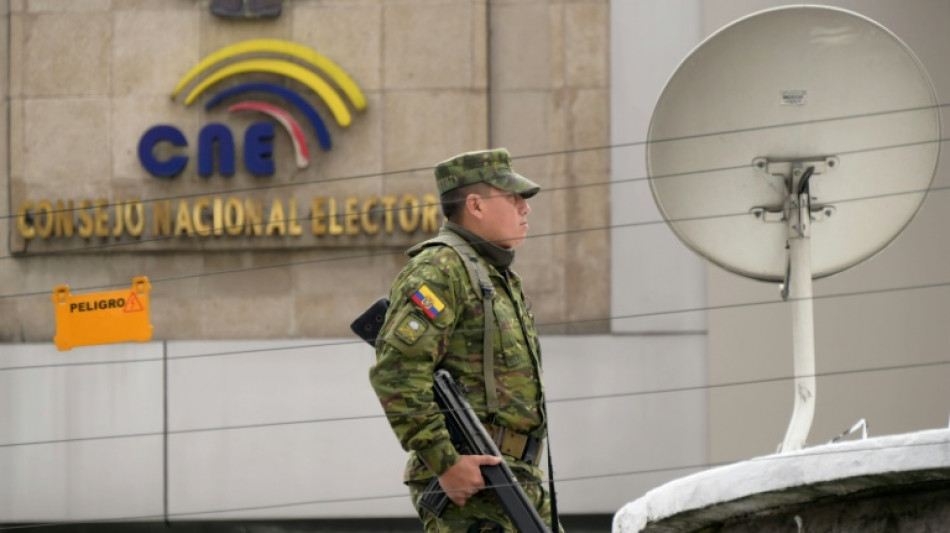
A 50-year crisis -- Ecuador's next president faces a stern test / Photo: Rodrigo BUENDIA - AFP

 Zheng stuns Keys as US Open upsets dim American hopes
 Jovic 'loses sanity five times over' to oust Eala and book Gauff clash
 'Like a jewel': Japan's luxury ice revered by bars worldwide
 'The flood is coming': How a Nepal principal saved 900 students
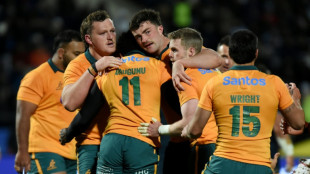
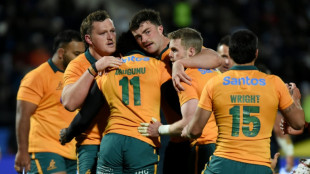 Kiss's winning run ends as Argentina hold Australia to draw
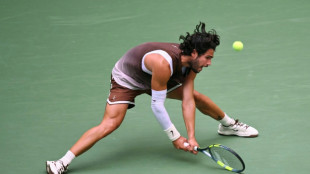 Alcaraz excited to face 'dangerous' Paul for US Open quarter-final berth

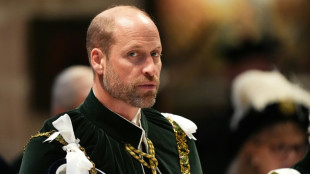 Prince William to represent King Charles III at Norway late King Harald's funeral

 Inter and Roma roar back to win thrillers and share top spot
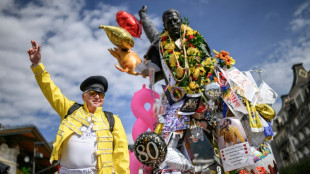 Don't stop them now: fans party for Freddie Mercury's 80th birthday

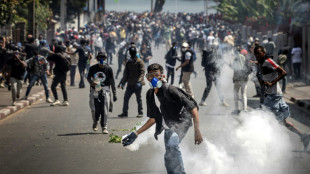 AFP photographer wins top prize for Madagascar protest coverage

 Keys: 'I felt like I couldn't play tennis'

 Simmonds stars as Pau upset Montpellier

 Inter roar back in five-goal thriller with Napoli
 Haaland keeps Man City perfect in Premier League, blunt Spurs held

 Hamilton worried by Ferrari pace while Antonelli prepares for a fight

 Vuelta stage 15 shortened due to extreme heat, Mas consolidates lead

 Putin meets US envoys for Ukraine war talks
 Modric available for Croatia in Nations League

 Potapova upsets 2025 US Open runner-up Anisimova

 Gasly a 'class act' says Alpine boss after Monza pole
 Athletic Bilbao crush Simeone's flat Atletico

 Stay far from battlefield, warns Japanese director in Vietnam War film

 Tens of thousands of Croatians protest over hazardous waste
 Haaland heads unconvincing Man City top of Premier League

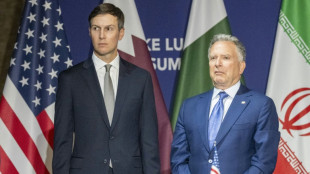 US envoys in Moscow as Russia and Ukraine vow not to hit capitals during talks

In the throes of a bloody drug war, a shrinking economy and an acute energy crisis, Ecuadorans are remarkably optimistic about their country's future as they prepare to vote in Sunday election.
The past few years have been brutal for Ecuador, a scenic Andean nation of about 18 million people once a bastion of stability in a troubled region.
But drought-fueled power cuts have plunged swaths of the country into darkness, and drug-fueled violence has seen a presidential candidate assassinated, prisons overrun by gangs and gunmen storming a television station while journalists were live on air.
Yet a December survey by Comunicaliza, a local polling firm, showed more than 50 percent of voters think their country will be better off this time next year.
"Why?" less cheery observers in Quito ask wryly.
Whether hawkish President Daniel Noboa or leftist rival Luisa Gonzalez wins Sunday's election -- or an April runoff -- they will be bombarded by challenges, any one of which alone would be daunting.
"Ecuador is in a very difficult moment, I think in the worst crisis since we returned to democracy," said Leonardo Laso, a local political analyst, referring to a period of deep crisis almost half a century ago.
The most acute challenge may be security.
With a dollarized economy, blessed with excellent Pacific ports and wedged between the world's two largest cocaine producers -- Colombia and Peru -- Ecuador has become a paradise for narco-traffickers.
"You have the Albanians and the Balkan mafias, you have the Ndrangheta from Italy, you have the Turkish mafias all operating in Ecuador," said Douglas Farah, a security consultant and Latin America analyst.
"And you have now local gangs like Los Lobos, the Choneros, who are fighting for territory, to be able to move product through Ecuador to their new buyers in Europe and in Asia."
The result has been record levels of murder, extortion and kidnapping that have caught the authorities flatfooted.
"They never had this type of violence," said Farah. "They are getting slammed by a whole new phenomenon for which they are totally unprepared."
Noboa's response has been to deploy the military, arrest gang leaders and intercept cocaine shipments wherever possible.
It has given Ecuadorans a sense that something is being done, but few experts believe it is a long-term strategy for success.
The alternatives -- relying on intelligence, effective policing, prison reform and developing jobs and social services -- all cost time and money. Ecuador has little of either.
- Economic woes -
Driving around the capital Quito it is easy to spot roads and once gleaming infrastructure investments that were the envy of the region, but are now starting to look a little unkempt.
"It's very likely that the economy contracted last year," said economist Albert Acosta Burneo, pointing in part to rolling blackouts in late 2024 that shuttered businesses for a chunk of December.
The crisis was caused by a drought that hit hydropower generation, but experts also blame a lack of investment in electricity generation.
After more than a decade of spending without the proceeds of a commodities boom that once padded treasury coffers, government debt now stands at about 57 percent of GDP.
Noboa was recently forced to turn to the IMF to build up a financial war chest.
But more cost cutting is likely as the country still struggles to borrow on bond markets cheaply -- thanks to low reserves and more than a dozen recent defaults.
The security situation has made the country's economic woes all the worse, scaring away visitors and investors alike.
"There are no tourists, there are no customers," said 58-year-old Maria Delfina Toaquiza Ughsa, an Indigenous artist who has a stall on a hill overlooking Quito's old town.
Political analyst Laso said Noboa's penchant for using the military to tackle the drug problem has also hurt the country's image.
"He goes out with a bulletproof vest and helmet, he declares a state of emergency, he closes land borders during the election for a potential threat that may occur, he says that we are at war, this negates any possibility of investment," he told AFP.
If that were not enough, the new president will also have to find a way to navigate US President Donald Trump's love of deportations and tariffs.
Noboa has agreed to help with US deportations, even though Ecuadorans send about $6 billion back home every year, and any drop in remittances or emigration would be keenly felt.
"Migration was like a pressure valve for the economy, that is now blocked thanks to the policies of Trump," said Acosta Burneo.
F.Wilson--AT