Russia seeks to 'minimise' effects of EU oil ban, gas exports down / Photo: ARIS MESSINIS - AFP/File

 Inter roar back in five-goal thriller with Napoli

 Haaland keeps Man City perfect in Premier League, blunt Spurs held
 Hamilton worried by Ferrari pace while Antonelli prepares for a fight
 Vuelta stage 15 shortened due to extreme heat, Mas consolidates lead

 Putin meets US envoys for Ukraine war talks
 Modric available for Croatia in Nations League
 Potapova upsets 2025 US Open runner-up Anisimova

 Gasly a 'class act' says Alpine boss after Monza pole
 Athletic Bilbao crush Simeone's flat Atletico

 Stay far from battlefield, warns Japanese director in Vietnam War film
 Tens of thousands of Croatians protest over hazardous waste
 Haaland heads unconvincing Man City top of Premier League

 US envoys in Moscow as Russia and Ukraine vow not to hit capitals during talks
 Motorsport governing body rejects Alpine boss's claims of bias
 US envoy on West Bank visit says Israel has responsibility for Palestinians

 Ethiopian Miss World contestant spotlights pain of sister's murder
 'Leader' Raphinha rising to Barca striker challenge
 Oasis fans gather in Venice for band reunion film

 Two Nepal rescues revive hopes 10 days after flood
 Pogacar to miss worlds after season-ending Vuelta crash
 Greenwood, Guendouzi handed bans after Fenerbahce-Lyon brawl
 In Iceland, the mystery of the poet, the tomb and the Danish grocer

 Ratko Mladic: Bosnian Serb commander to convicted war criminal

 Bolivian army base blasts kill two, wound dozens
 Alcaraz, Sabalenka into US Open last 16 as Williams sisters lose on return
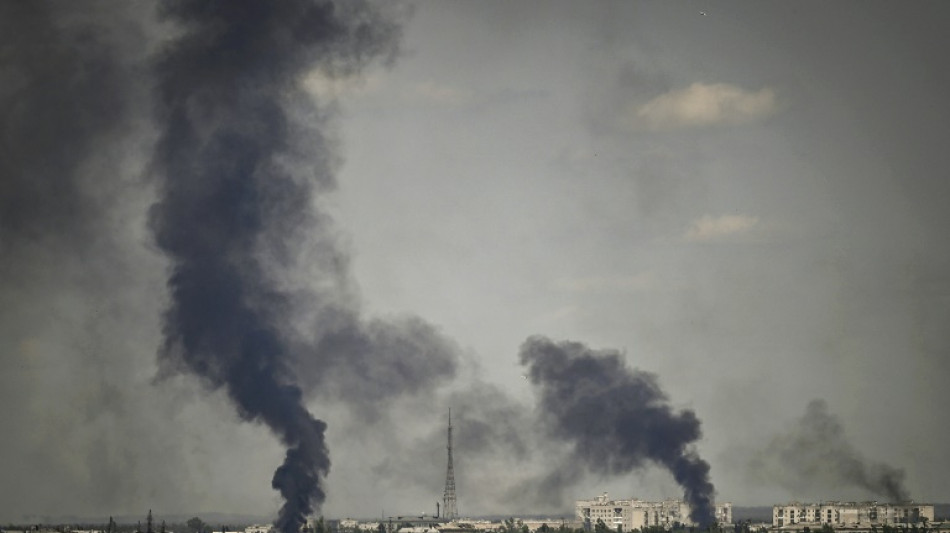
Russia said Wednesday it was moving to limit the damage from an EU oil ban as its other key energy export, gas, has fallen after President Vladimir Putin sent troops to Ukraine.
At a summit on Monday, the EU agreed to a sixth package of sanctions on Moscow that will see the majority of Russian oil stopped, but exempted supplies by pipeline in a concession to Hungary.
"Sanctions will have a negative effect for Europe, us and the whole global energy market," Kremlin spokesman Dmitry Peskov told reporters.
Peskov added that a "reorientation" was under way to find alternatives for the oil that will no longer be sold to Europe.
"These are purposeful, systematic actions that will allow us to minimise the negative consequences," he said.
After Putin sent troops into Ukraine on February 24, Russia was hit with a barrage of sanctions that targeted its economy and financial institutions.
The Wall Street Journal reported that OPEC was considering whether to remove Russia from an agreement that has locked producers into limited output increases.
Moscow's removal would mean an early end to the pact and allow major crude nations such as Saudi Arabia to open the taps, analysts say.
Foreign Minister Sergei Lavrov on Wednesday reaffirmed Moscow's commitment to OPEC+ agreements during a visit to Saudi Arabia.
OPEC+ is a group of 13 members of the Organisation of Petroleum Exporting Countries (OPEC), led by Riyadh, and their 10 partners led by Moscow.
Speaking to reporters in Riyadh, Lavrov said the subject of Western sanctions came up within the context of OPEC+ cooperation.
"During discussions with my colleagues from Arab monarchies, we raised this subject, but only in the context of confirming the agreements on cooperation within OPEC+ that have already been agreed on and confirmed several times by our leaders," Lavrov said.
- Gas exports drop -
Separately, Russian energy giant Gazprom said that its gas exports to countries outside of the former Soviet Union dropped by more than a quarter year-on-year between January and May after losing several European clients.
Exports to countries outside the region totalled 61 billion cubic metres, a 27.6-percent fall from the same period last year, Gazprom said in a statement.
Gazprom added that gas deliveries to China via the "Power of Siberia" pipeline were increasing, but it did not provide any figures.
Moscow has demanded that clients from "unfriendly countries" -- including EU member states -- now pay for their gas in rubles.
The new requirement is seen as a measure to sidestep Western financial sanctions against Russia's central bank imposed over Moscow's offensive in Ukraine.
So far Poland, Bulgaria, Finland and the Netherlands have had their natural gas deliveries suspended over refusing to pay in rubles.
Danish energy company Orsted said that Gazprom Export would cut gas supplies to Denmark on Wednesday after the Danish company refused to pay in rubles.
EU countries have scrambled to reduce their dependency on Russian energy but are divided about imposing a natural gas embargo as several member states are heavily reliant on Moscow's energy supplies.
Economists believe that the worst economic impact of the sanctions is still to come and expect Russia to plunge into a deep recession.
Russia's state statistics service said Wednesday that the country's industrial output shrank for the first time since the start of Moscow's military campaign in Ukraine.
In April, industrial production fell by 1.6 percent compared to the same period last year.
Compared to March, industrial output shrank 8.5 percent, a major setback after a dynamic start to the year.
Car production fell by 85.4 percent, coal output by 6.5 percent and oil and gas production by 3.6 percent compared to the same period last year.
Retail sales fell by 9.7 percent in April year-on-year and by 11.3 percent compared to March.
Ch.P.Lewis--AT