Benin seeks home-grown cotton 'revolution' / Photo: OLYMPIA DE MAISMONT - AFP

 Indonesia's main airport suspends operations after volcanic eruption

 US aircraft carrier departs Thailand after port call

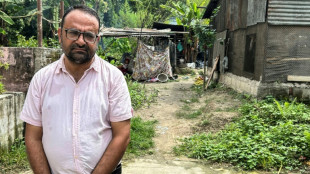
 Haze emergency grips Malaysian Borneo town
 Messi creates both Miami goals in 2-2 draw with Atlanta

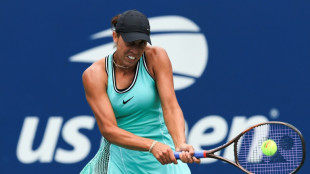
 Rybakina books US Open fourth-round berth, inches closer to No. 1

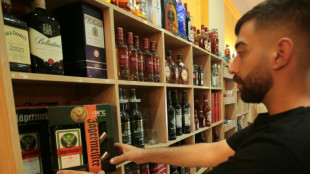 Sobering reality: Curbs on alcohol in northeast Syria cause discontent

 Wobbly Osaka 'shocked' to battle past Mertens and reach last 16

 Indian Oscar-nominated filmmaker turns camera on his cancer
 Argentina 'let off hook' by Australia as Kiss's winning run ends

 Argentina threatens to sanction oil projects around Falklands

 Gauff into round four at US Open after straight-set win

 Bordeaux hammer Racing in Top 14 start as Bielle-Biarrey extends deal

 Zheng, Potapova pull off upsets to reach US Open last 16

 Swiatek into US Open fourth round in tight two-setter
 Werro wins in Brussels, as Russell and Dos Santos shine
 Kolbe breaks jaw and shoulder injury sidelines Savea

 US military strikes oil tankers as Iran vows tougher reprisals

 Zheng rallies to stun Keys, Anisimova out in US Open third round

 Bayern held to draw by stubborn Schalke

 Lens lose again ahead of Champions League date

 Olympic champion Zheng storms home to reach US Open last 16

 Big-spending Spurs must make better attacking decisions, says De Zerbi

 South Africa dominate New Zealand in second half to lead series

 Kiefer Sutherland still in action, but ibuprofen lending helping hand

 'Are we ready?' Oasis film captures band's frosty reunion

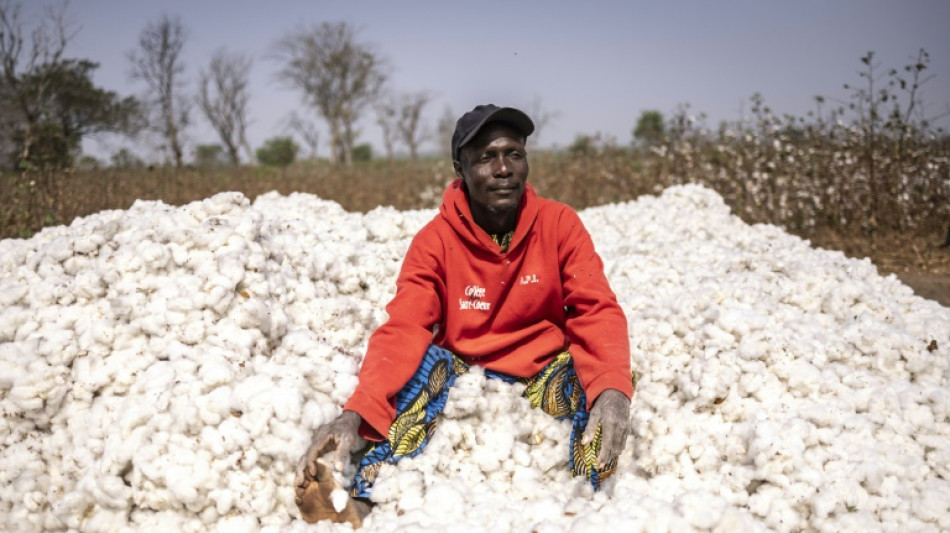
Mathias Azonnoudo, a 50-year-old farmer in Benin, was taking a break sitting on a large pile of freshly picked cotton, which the government hopes will feed the country's nascent textile revolution.
Azonnoudo and other farmers in the West African country have benefited from a recent uptick in demand for cotton, with the government seeking to launch a "Made in Benin" clothing industry.
"I feel like the government has found business leaders that want more, so they are encouraging farmers to produce more," said Azonnoudo, who has been growing cotton for the past 16 years.
Benin has long vied with Mali for the title of Africa's largest cotton producer, exporting mostly raw fibres for processing abroad to countries like Bangladesh or China, the world's largest garment exporters.
But it now wants to process more of its "white gold" locally, to boost production and exports of 100 percent Beninese clothing.
Benin is expected to produce 669,000 tonnes of cotton during the 2024-2025 season, according to data from the Regional Program for Integrated Cotton Production in Africa.
Mali meanwhile is set to produce 569,000 tonnes in the season.
Under the initiative of Benin's President Patrice Talon -- who made his fortune from cotton in the 1990s and 2000s, earning him the nickname "King of Cotton" -- authorities are racing to consolidate the nation's lead.
- 'All the infrastructure we need' -
Those ambitions came to life in 2020 with the creation of the Glo-Djigbe Industrial Zone (GDIZ), a vast manufacturing district 45 kilometres (30 miles) from the economic capital Cotonou in the south of the country.
Samples of the various clothing made locally are now on display in the zone's showroom, including shirts, trousers, dresses and military and police uniforms. It also produces towels and sheets.
The industrial park, financed as a partnership between the government and Indian businessman Gagan Gupta, offers spinning, weaving, dyeing and knitting facilities.
Last year, GDIZ exported its first items of clothing to the French brand Kiabi.
"We have all the infrastructure we need to process agricultural products," said Letondji Beheton, managing director of the company running GDIZ, adding that it worked with around 21,000 farmers throughout the country.
"Today at GDIZ, we transform 40,000 tonnes of cotton a year and produce between seven and 10 million garments a year," he said.
With three new garment manufacturing units in the pipeline, production in the industrial zone is expected to grow further by year-end.
- Trust the process -
Upon ascending to the president in 2016, Talon took a number of measures to support the cotton industry, in particular by giving more room to the private sector at the expense of state-owned companies.
Benin "now processes a third of its cotton," according to Nestor Adjovi Ahoyo, an agro-economist.
The transformation is mainly taking place at the GDIZ but also to a lesser extent at smaller businesses.
At Couleur Indigo, a clothing and jewelry brand in the coastal town of Ouidah, 50-year-old Nadia Adanle said she opened her boutique in 2007 to "contribute to the diversification of Beninese craftsmanship" and offer "an authentic, purely Beninese cotton product".
In the short term, Beninese authorities say they are aiming to process "50 percent of the cotton produced in Benin and export the remaining 50 percent", Adjovi Ahoyo said.
To achieve this, he said, Benin must increase production capacity and attract investors, especially foreigners.
For his part, Beheton at the GDIZ said that within five to six years the country will have "about 30 integrated textile units in the zone to process almost all" of Benin's cotton.
N.Mitchell--AT