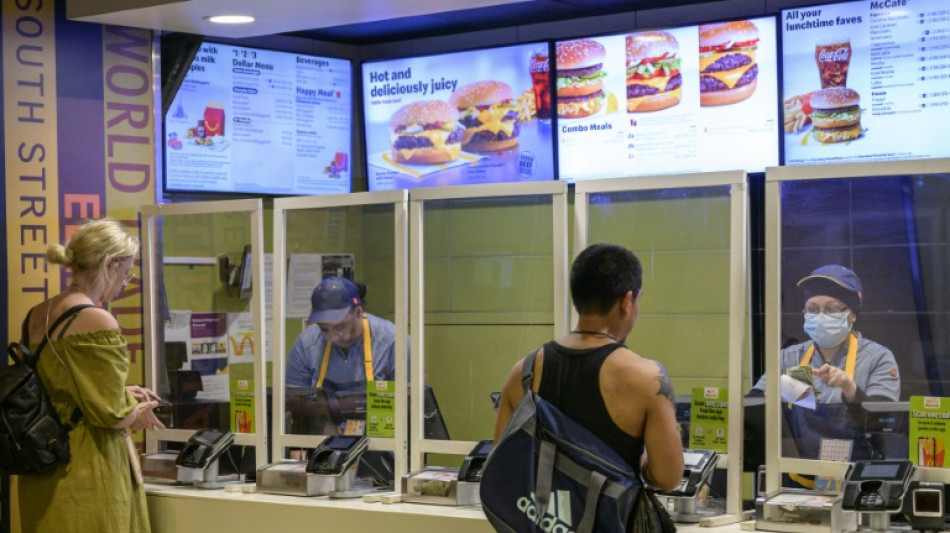
Despite some sharp wage rises, low-paid US workers have far to go / Photo: Angela Weiss - AFP/File

 US aircraft carrier departs Thailand after port call

 Haze emergency grips Malaysian Borneo town

 Messi creates both Miami goals in 2-2 draw with Atlanta

 Rybakina books US Open fourth-round berth, inches closer to No. 1

 Sobering reality: Curbs on alcohol in northeast Syria cause discontent

 Wobbly Osaka 'shocked' to battle past Mertens and reach last 16

 Indian Oscar-nominated filmmaker turns camera on his cancer

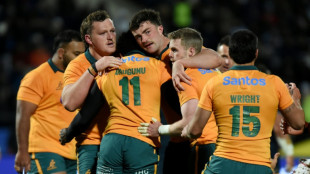 Argentina 'let off hook' by Australia as Kiss's winning run ends
 Argentina threatens to sanction oil projects around Falklands

 Gauff into round four at US Open after straight-set win
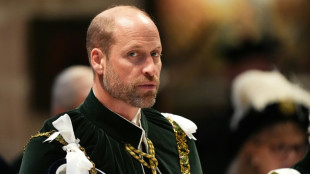
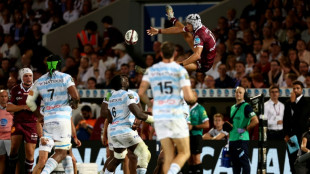 Bordeaux hammer Racing in Top 14 start as Bielle-Biarrey extends deal

 Zheng, Potapova pull off upsets to reach US Open last 16

 Swiatek into US Open fourth round in tight two-setter

 Werro wins in Brussels, as Russell and Dos Santos shine

 Kolbe breaks jaw and shoulder injury sidelines Savea

 US military strikes oil tankers as Iran vows tougher reprisals

 Zheng rallies to stun Keys, Anisimova out in US Open third round
 Bayern held to draw by stubborn Schalke

 Lens lose again ahead of Champions League date

 Olympic champion Zheng storms home to reach US Open last 16

 Big-spending Spurs must make better attacking decisions, says De Zerbi

 South Africa dominate New Zealand in second half to lead series

 Kiefer Sutherland still in action, but ibuprofen lending helping hand

 'Are we ready?' Oasis film captures band's frosty reunion

 Commemoration held for late Bosnian Serb war criminal Ratko Mladic

Fast-food employees in Manhattan demonstrating for a wage of $20 an hour: a demand unthinkable before the Covid-19 pandemic has become unexceptional, as short-handed companies offer big wage increases without, however, doing much to narrow a yawning income gap.
The upward wage pressure has come from several sources, including an unusually tight labor market and child-care challenges linked to the pandemic, as well as chronically underpaid workers unwilling to return to pre-pandemic conditions.
Employers have not only had to raise wages but in some cases have offered improved health care insurance and bonuses.
"The country's major employers have understood that they need to bring wages up to scratch if they want to attract reliable workers who can help them navigate this period of major uncertainty," said Gregory Daco, chief economist at Ernst & Young Parthenon.
Apple, after announcing it was raising its hourly minimum wage to $22, said in a statement, "Supporting and retaining the best team members in the world enables us to deliver the best, most innovative products and services for our customers."
The tech giant said that in addition to sector-leading wages, it was providing "a robust range of benefits" for full- and part-time employees.
Higher wages may also help Apple in its efforts, like Amazon, to discourage unionization efforts.
Apple's $22 hourly minimum represents a 45 percent increase from the company's minimum in 2018, the group said.
- Winning workers' loyalty -
In the summer of 2021, facing serious labor shortages, several major companies including Amazon, Target and Chipotle pushed their base hourly wage past $15, more than double the federal minimum of $7.25, a figure unchanged since 2009.
Bank of America announced this week that it was lifting its hourly minimum to $22, a figure set to rise to $25 by 2025.
Across the US, some of the biggest wage increases have gone to some of the lowest-paid workers -- people unafraid in the Covid era to make their demands known.
While there have been wage increases at all salary levels, only the lowest-paid workers saw rises big enough to compensate for today's high inflation rates, according to Mahir Rasheed, an economist with Oxford Economics.
Put another way, he said, "Even with stronger incomes, most consumers are actually seeing wages down in real terms."
- Deceptive wage hikes -
So even if the increases might appear significant -- particularly for restaurant and hotel employees -- workers in that sector are still earning less than the national median salary.
"The increases look huge, with some workers going from $7 to $10, from $10 to $12, from $12 to $15 or even from $15 to $20," said Daco.
And yet, he added, "$15 an hour is $30,000 a year, considerably less than the (US) median salary of $50,000 to $60,000."
What's more, the increases might be a one-time affair.
"It’s unlikely that these wage gains will continue to increase at a persistent clip over the next year," said Rasheed, even if some companies make occasional raises in a bid to attract qualified workers.
The increases are bound to slow, he added, as more and more people return to work.
As the labor market opens up, workers' negotiating power will erode, Daco said.
"Unfortunately, I don’t expect those gains to be durable in the long term, because we haven’t seen increases in the federal minimum wage," said Elise Gould, an economist with the Economic Policy Institute, an American think tank.
She predicted "a decided slowdown in wage gains."
In a study published last month, she noted that average wages rose by 4.4 percent in the first year of the pandemic in the US, but declined by 1.7 percent in the second year.
And despite the recent increases, "wage levels remain vastly unequal across the US labor market, with disparities among workers by wage level, gender and race/ethnicity remaining stark," Gould wrote.
O.Ortiz--AT