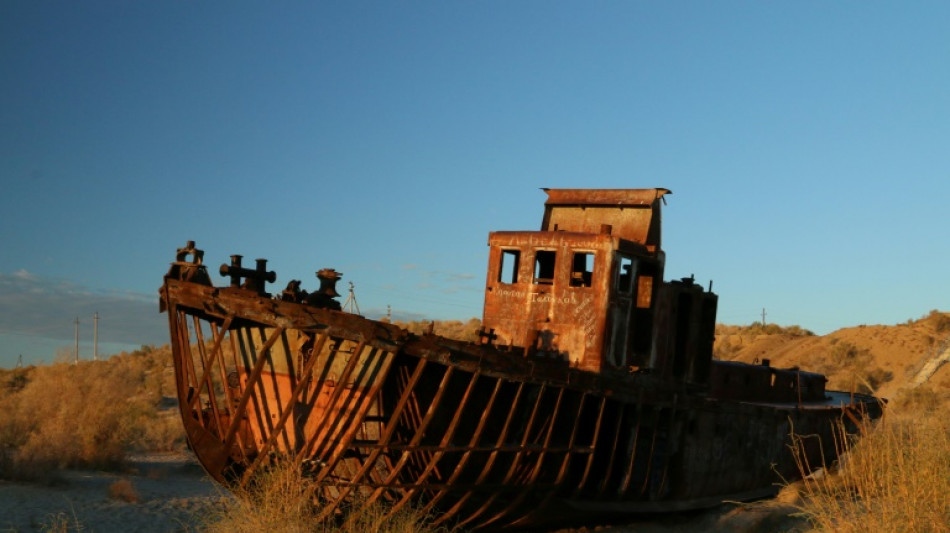
Kazakhstan says part of Aral Sea has nearly doubled in volume / Photo: Sebastien BERGER - AFP

 Sabalenka surges past Townsend to reach US Open quarter-finals

 Smiling face of Germany's far-right AfD: Ulrich Siegmund

 Lebanon president calls for US help as Israeli strikes kill 7

 Yamal hits double as perfect Barca thrash Valencia

 Venice festival turns gaze on war reporters, media industry

 Sensational Antonelli wins Italian GP from back of grid
 Susan Sarandon says still losing roles over Gaza stance

 US envoys hold 'important' talks in first trip to Kyiv

 Championship leader Antonelli wins Italian Grand Prix

 Vardy signs for Championship strugglers Burnley
 FIFA confirms Infantino will run in presidential election

 With joy and grief, Palestinian football marks return

 Iran threatens greater force if US launches more attacks
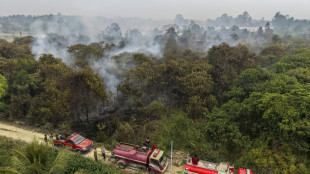
 Vandals uproot Berlin tree commemorating Pride attack victims

 Trump envoys arrive in Kyiv for first Ukraine visit

 Indonesia's main airport suspends operations after volcanic eruption

 US aircraft carrier departs Thailand after port call

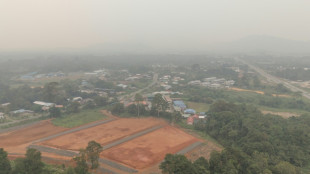 Haze emergency grips Malaysian Borneo town

 Messi creates both Miami goals in 2-2 draw with Atlanta

 Rybakina books US Open fourth-round berth, inches closer to No. 1

 Sobering reality: Curbs on alcohol in northeast Syria cause discontent

 Wobbly Osaka 'shocked' to battle past Mertens and reach last 16

 Indian Oscar-nominated filmmaker turns camera on his cancer

 Argentina 'let off hook' by Australia as Kiss's winning run ends

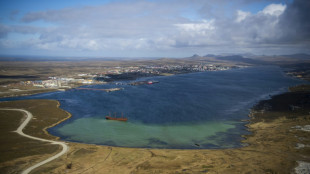 Argentina threatens to sanction oil projects around Falklands

Kazakhstan said on Monday the northern part of the Aral Sea had nearly doubled in volume since 2008, a rare environmental success story in a region plagued by pollution.
The Aral Sea between Uzbekistan and Kazakhstan was once the fourth largest lake in the world, before Soviet irrigation projects caused most of it to dry up.
The transformation of the freshwater sea -- once 40 metres (130 feet) deep and spanning 68,000 square kilometres (176,000 square miles) -- has been dubbed one of the world's worst environmental catastrophes.
Since 2008, the volume of water in the northern, smaller part of the sea has "increased by 42 percent and reached 27 billion cubic metres (950 billion cubic feet)", the Central Asian republic's water resources ministry said.
This was "thanks to the implementation of Phase One of the (Northern) Aral Sea conservation project", the ministry told AFP.
The scheme, funded jointly by the Kazakh government and the World Bank, has involved constructing new infrastructure to prevent water flowing out of the sea.
In 2024 alone, authorities directed 2.6 billion cubic metres of water from the Syr Darya river into the northern part, reducing the salinity of the water by a factor of almost four and promoting aquatic life, it said.
Efforts to save the Aral Sea have required close cooperation between the five former Soviet republics of Central Asia, who set annual water quotas for the Amu Darya and Syr Darya, the two rivers that feed the Aral.
Under the Soviet Union, the rivers were diverted to use for agriculture -- mainly for cotton and rice cultivation, causing the sea to shrink by up to 90 percent in size from the 1960s to the 2010s.
By the late 1980s, the sea had split into two sections -- a larger section on the Uzbek side that has mostly dried out and a smaller section in the northern Kazakh side which has become the focus of conservation efforts.
The drying of the Aral Sea has caused multiple animal species to go extinct and virtually ended human activity in the area.
In addition, winds have carried tens of millions of tonnes of salt and toxic dust from the dried-up lake bed across Central Asia, causing cancer and respiratory diseases.
O.Gutierrez--AT