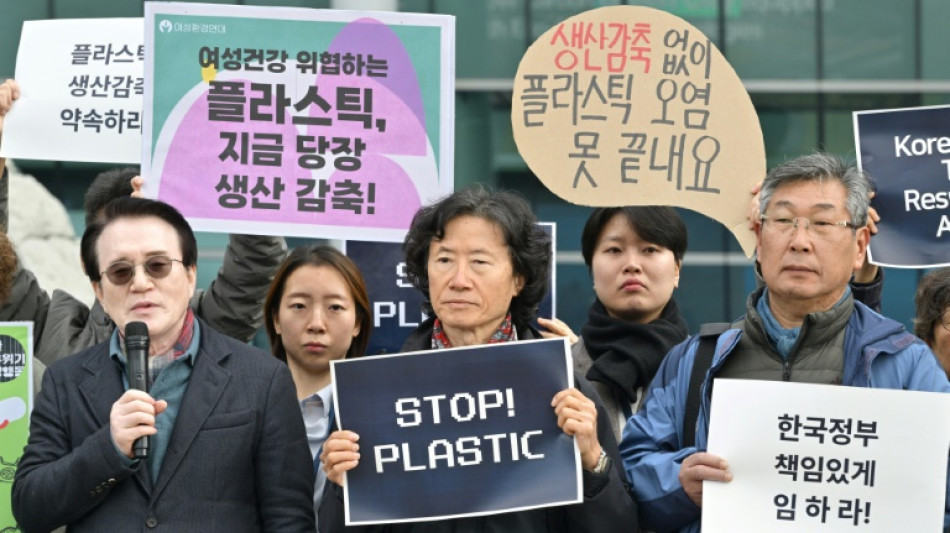
Deep divisions on display at plastic pollution treaty talks / Photo: Anthony WALLACE - AFP

 Dukascopy Bank Unveils AI-Powered Trading, 25,000+ Stock CFDs and a New Flagship E-Banking App
 Tech firms rally but Asian markets mixed, with eyes on US inflation

 Nepal holds day of mourning as families pray missing still alive
 African players in Europe: Mbeumo fires solo goal as United draw
 Malaysia cancels haze emergency, but warns problems remain
 Philippine sensation Eala looks forward to Asian Games 'fun'
 Jakarta airport extends closure after volcano eruption

 Lonely woman director in Venice sees industry backsliding on gender
 Tech firms rally on mixed day for Asian markets, with eyes on US inflation
 World number one An sends Asian Games warning with China hat-trick
 PSG go for three in a row as Champions League returns

 "Super-human' Alcaraz books US Open quarter-final clash with Shelton
 ECB set to hike interest rates as Iran war flares anew
 AI data centers are less thirsty now, tech giants say
 North Korea vows nuclear-armed navy as US ally drills open
 Under-fire Labuschagne named in Australia Test squad for South Africa

 InterContinental Hotels Group PLC Announces Transaction in Own Shares - September 07
 Best Way to Protect A 401(k) in 2026: Guide Released by Experts
 Tiafoe tops Medvedev in straight sets at US Open
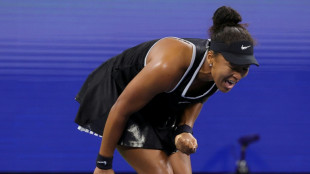 Zverev seeks US Open last eight as Osaka faces Rybakina

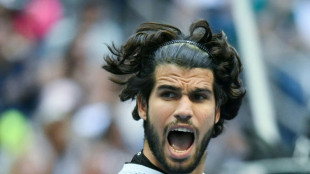 Alcaraz turns up heat to reach US Open quarters
 Gatti salvages Juve draw with AC Milan in Serie A
 Sinayoko stars as unbeaten Paris FC down Marseille
 Still on top: 'Spider-Man' dominates North American box office
 Zelensky in fresh talks with US envoys: Ukraine official
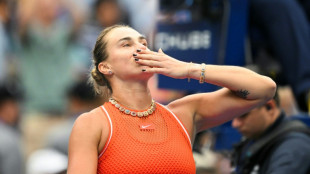
A final round of talks on a treaty to curb plastic pollution opened on Monday, with deep differences between nations emerging almost immediately.
The meeting started just hours after a chaotic end to the COP29 climate talks in Baku, where delegates agreed to a boost in climate funding that developing countries slammed as insufficient.
Opening the plastics meeting, the Ecuadorian diplomat chairing the talks warned nations that the conference was about "far more than drafting an international treaty".
"It is about humanity rising to meet an existential challenge," Luis Vayas Valdivieso told a plenary in South Korea's Busan.
Plastic pollution is so ubiquitous that it has been found in clouds, the deepest ocean trenches and even human breastmilk.
And while almost everyone agrees it is a problem, there is less consensus on how to solve it.
Among the most contentious issues are whether the treaty should cap plastic production, a possible ban on chemicals feared toxic to human health and how to pay for implementation.
The deep differences have dogged four previous rounds of talks over the last two years, resulting in a lengthy and contradictory draft treaty running over 70 pages.
Valdivieso has produced an alternative document intended to synthesise the views of delegations and move negotiations forward.
But several countries, including Russia and India, immediately objected to it.
"The reality is that many countries do not see themselves represented in this paper," warned Saudi Arabia's delegation head Eyad Aljubran, speaking on behalf of the Arab group.
In 2019, the world produced around 460 million tonnes of plastic, a figure that has doubled since 2000, according to the Organisation for Economic Co-operation and Development.
Plastic production is expected to triple by 2060.
- 'Not going to wait' -
Some countries, including the so-called High Ambition Coalition (HAC), which groups many African, Asian and European nations, want the treaty to address the entire "lifecycle" of plastics.
That means limiting production, redesigning products for reuse and recycling, and addressing waste.
More than 90 percent of plastic is not recycled, with over 20 million tonnes leaking into the environment, often after just a few minutes of use.
On the other side are countries, largely oil producers like Saudi Arabia and Russia, who want a downstream focus on waste alone.
Plastic accounts for around three percent of global emissions, mostly linked to its production from fossil fuels.
The HAC wants binding global targets on reducing production and warned ahead of the Busan talks that "vested interests" should not be allowed to hamper a deal.
Some observers believe the talks are likely to falter and be extended -- especially after the difficult negotiations at UN climate and biodiversity conferences in recent weeks.
But by Monday afternoon, Valdivieso won agreement for negotiations to begin on the basis of his slimmed-down document.
"I thank you very much for your flexibility," he told the room.
The short time frame has some environmental groups worried an agreement will be watered down to ensure something is signed.
"The majority is there" for a strong treaty, said Eirik Lindebjerg, WWF global plastics policy lead.
"The big question the rest of the week is whether they will move ahead with the necessary ambition or hide behind the few spoilers to water down language and make weak compromises."
Key to any accord will be the United States and China, neither of which have openly sided with either bloc.
Earlier this year, Washington raised hopes among environmentalists by signalling support for some limits on production, a position that is reportedly now being rowed back.
The election of Donald Trump has also raised questions about how ambitious the US delegation will be, and whether negotiators should seek their support if a treaty is unlikely to be ratified by Washington.
Despite the challenging start, the UN Environment Programme chief counselled patience.
"We are only in the first few hours," said Inger Andersen, noting the Paris climate agreement had taken over two decades to reach clear targets for global warming.
"We have to get something with targets and we're not going to wait 21 years for it."
O.Ortiz--AT