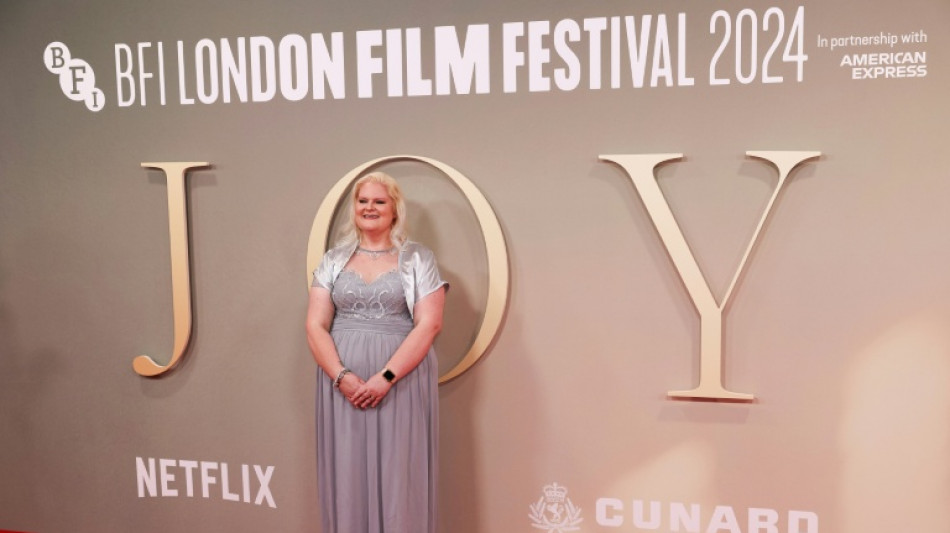
Team behind film about world's first IVF baby hope to spread joy and debate / Photo: Adrian Dennis - AFP

 Dukascopy Bank Unveils AI-Powered Trading, 25,000+ Stock CFDs and a New Flagship E-Banking App
 Tech firms rally but Asian markets mixed, with eyes on US inflation

 Nepal holds day of mourning as families pray missing still alive

 African players in Europe: Mbeumo fires solo goal as United draw

 Malaysia cancels haze emergency, but warns problems remain
 Philippine sensation Eala looks forward to Asian Games 'fun'

 Jakarta airport extends closure after volcano eruption

 Lonely woman director in Venice sees industry backsliding on gender
 Tech firms rally on mixed day for Asian markets, with eyes on US inflation
 World number one An sends Asian Games warning with China hat-trick

 PSG go for three in a row as Champions League returns
 "Super-human' Alcaraz books US Open quarter-final clash with Shelton

 ECB set to hike interest rates as Iran war flares anew

 AI data centers are less thirsty now, tech giants say

 North Korea vows nuclear-armed navy as US ally drills open
 Under-fire Labuschagne named in Australia Test squad for South Africa

 InterContinental Hotels Group PLC Announces Transaction in Own Shares - September 07

 Best Way to Protect A 401(k) in 2026: Guide Released by Experts

 Tiafoe tops Medvedev in straight sets at US Open

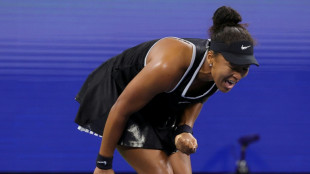 Zverev seeks US Open last eight as Osaka faces Rybakina

 Alcaraz turns up heat to reach US Open quarters
 Gatti salvages Juve draw with AC Milan in Serie A

 Sinayoko stars as unbeaten Paris FC down Marseille

 Still on top: 'Spider-Man' dominates North American box office

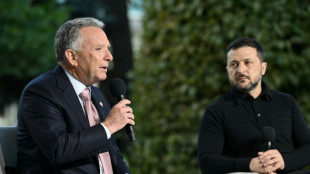
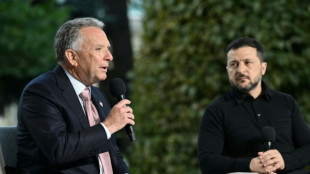 Zelensky in fresh talks with US envoys: Ukraine official
The makers of a new film about the British pioneers of IVF hope it highlights the "fragile" status of fertility treatment, with perceived threats in places like the United States and dwindling availability in the UK.
"Joy", released Friday on Netflix, chronicles the sustained and wide-ranging opposition that a trio of UK scientists faced while pioneering the then-highly contentious in vitro fertilisation treatment in the late 1960s and '70s.
Featuring "Love Actually" star Bill Nighy, James Norton and Thomasin McKenzie, it tracks their struggles in the face of a media- and church-led backlash, which culminated in the successful 1978 birth of Louise Joy Brown.
Brown, the world's first baby born through IVF, is now 46 and told AFP she welcomes the film, which gives the trio "the recognition that they all deserve".
But despite more than 10 million IVF births since hers, the film's release comes with fertility treatment increasingly attacked by some US conservatives and legal efforts to curb its use gaining traction.
Religious and cultural conservatism in other countries, including in Europe, and stretched public healthcare finances have seen its availability increasingly limited.
For the stars and creators of "Joy", that all makes their movie set five decades ago as relevant as ever.
"We sit on the shoulders of many, many people who have given a lot and for us to be 50 years later at a place where that progress is incredibly fragile is very, very scary," Norton told AFP in a recent interview.
"That's why this film is so fortuitously important."
- 'Fear' -
Director Ben Taylor, who has two children conceived through IVF, said the filmmakers wanted "to celebrate and tell the story of the origin of this world-changing procedure" rather than focus on contemporary controversies.
"But our story is about opposition too. It's about fear. It's about ignorance and the people that were trying to get in the way of something that was only being developed purely for good, purely to give families hope," he explained.
"So if it holds up a mirror to that similar conversation now, I would hope it proves the same."
With a taut script, humour and uplifting soundtrack -- which opens with The Beatles' "Here Comes the Sun" -- "Joy" turns a potentially dry tale of scientific discovery into a funny and heartwarming story.
Its makers opted to tell it through Jean Purdy (played by McKenzie), a nurse and embryologist whose pivotal role in pioneering IVF was long overlooked.
Her name was only added to a blue plaque at the northern English hospital where the team laboured for years in 2015.
For four decades prior to that, the plaque had only honoured her male colleagues, 2010 Nobel Prize for medicine laureate Robert Edwards (Norton) and Patrick Steptoe (Nighy).
Purdy's airbrushing from recognition is what first attracted Nighy to the role.
"It was another opportunity to put a bomb under the male tendency to dismiss women's contribution to anything," he explained.
"There are many, many cases, from DNA to IVF."
- 'Personal' -
In addition to Taylor, a number of other people involved in "Joy" had direct experience of using IVF to conceive, making the filmmaking process highly emotional.
"A lot of personal experience has gone into this movie, both in the writing and the making," noted Norton. "It was evident on the page -- I cried when I read it."
Husband and wife co-writers Jack Thorne and Rachel Mason, who went through seven rounds of IVF before welcoming their son, hope the film will raise awareness about the treatment's decreasingly mass availability in Britain.
Mason said the country's cash-strapped National Health Service increasingly rations access, so it was now down to "where you live or how much money you have".
"The people that get to do IVF now are the people that can afford to do it," echoed Thorne.
"It's wrong... and hopefully this film poses the question about how we feel as a society about it."
Brown noted that that went against the ethos of the pioneering scientists' she owes her life to.
She grew up knowing the trio, likening them to "a big extended family", and forged a decades-spanning friendship with Edwards in particular.
He attended her wedding and met her own children.
"Bob, Patrick and Jean wanted it to be available for everybody -- normal, everyday, working people -- and I agree," Brown said before last month's London Film Festival premiere of "Joy".
"I think everybody should be able to have it."
B.Torres--AT