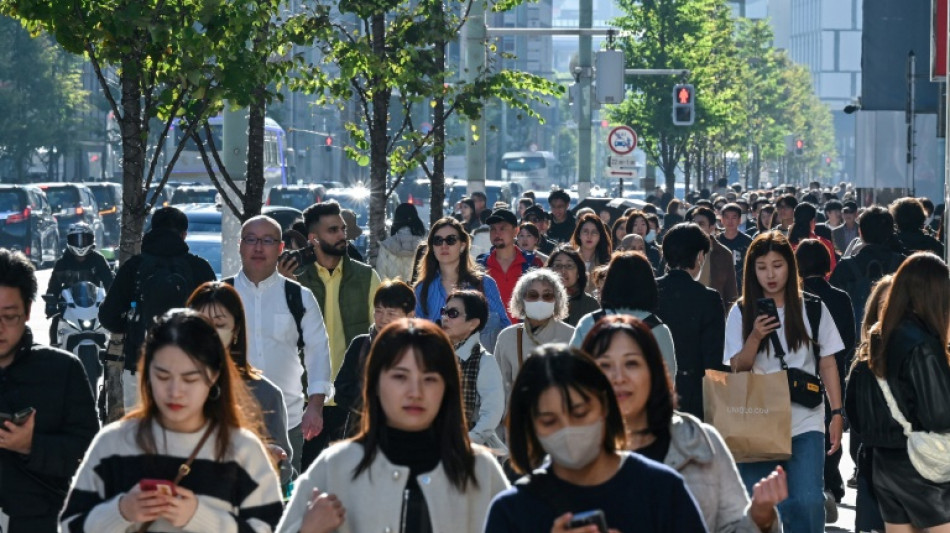
Japan government approves $140bn stimulus / Photo: Richard A. Brooks - AFP

 Greenland parliament approves security agreement with United States

 Qatar envoy meets incoming UN General Assembly president

 Trump Signals Willingness to Work With Democrats After Midterm Defeat

 Wedgewood Weddings Expands to Maryland With Grey Rock Mansion

 Jumia to Announce Third Quarter 2026 Results on November 18, 2026

 Apollo Wellness Centers Releases Primer Video

 InterContinental Hotels Group PLC Announces Transaction in Own Shares - November 04

 No. 22 UCLA defeats No. 5 Arizona 84-75 despite Kharchenkov's 38 points

 Vessel operator seeks witnesses after Vancouver grounding

 US Air Force deploys F-16 fighters to remote Aleutian base for readiness drill

 Bezos grant helps Seattle nonprofit move thousands of families toward housing

 Shrini Srivastava joins crew of Varanasi-Delhi Vande Bharat Sleeper service

 Nearly Half of Australian Workers Overqualified, Survey Finds

 RBI eases export-declaration compliance for individual service exporters

 India proposes more import entry points for drugs and medical devices

 Derek Tierney Outlines Ten-Year Strategy for National Digital Health System

 NBC’s Steve Kornacki Reveals Tech Habits Ahead of Midterm Elections

 India and Israel oppose UN draft on regional conventional arms control
Japan's minority government signed off Friday on a $140-billion stimulus drive aimed at putting more money in consumers' pockets after the ruling party's worst election result in 15 years.
The October 27 contest saw voters -- angry over corruption in the Liberal Democratic Party (LDP) and inflation -- deprive new Prime Minister Shigeru Ishiba's coalition of a majority in parliament's lower house.
The package worth 21.9 trillion yen ($141.8 billion) includes handouts of around 30,000 yen for low-income households, fuel and energy subsidies, and assistance to small businesses, according to the government.
The overall business impact was expected to be 39 trillion yen.
"To enhance the vitality of Japan as a whole, we will strengthen the growth of the national and regional economies and raise wages for all people, of all generations," top government spokesman Yoshimasa Hayashi told reporters.
To pay for the package, the second in as many years, the government will table a supplementary budget by the end of the year in the lower house.
But views about the move among people on the streets were mixed.
Voter Katsuhiro Hirakawa, 63, accused politicians of making "whatever decisions they want without listening to the voices of us ordinary citizens".
Authorities should "think carefully about why they need more tax revenue, or how they can reduce wasteful spending, before making decisions on budgets", he told AFP in Tokyo.
And Hisaki Sato, 46, wanted more help for the middle class, adding: "We're now living in an age when not only low-income households but middle-income families are in need of more stimulus measures."
The middle class is "home to many people who are contributing directly to the economy, so I want the government to cherish them as well".
- Debt mountain -
To win enough lawmakers' support, Ishiba agreed to include the lifting of an income tax threshold pushed by the opposition Democratic Party for the People (DPP).
The smaller party says this will ease labour shortages and boost consumer spending by encouraging part-time staff to work longer hours and earn more.
But critics worry that this will reduce tax revenues by trillions of yen and increase Japan's huge debt pile, which equates to more than 200 percent of gross domestic product.
With the Bank of Japan expected to keep hiking interest rates, this debt mountain will also cost more and more, SMBC Nikko Securities economist Yoshimasa Maruyama said.
Tax cuts "must be accompanied by a permanent source of revenue to fill the gap", Maruyama wrote in a research note.
Ishiba, 67, has promised to revitalise depressed rural regions and to address the "quiet emergency" of Japan's shrinking population with measures to support families such as flexible working hours.
Going forward, businesses worry that the need to curry favour with opposition parties means Ishiba will avoid reforms needed to improve Japan's competitiveness.
There are also concerns that the government may pressure the Bank of Japan to go slow on raising interest rates, even if this leads to a weaker yen.
- Rice prices soar -
Government data Friday put headline inflation last month at a modest 2.3 percent, but it showed rice up nearly 60 percent year-on-year, revealing the pain for ordinary Japanese.
The price of the staple rocketed because of hot weather and water shortages and after a "megaquake" warning in August led to hoarding. Record inflows of hungry tourists were also blamed.
Separately, Ishiba has promised to spend 10 trillion yen through 2030 to boost Japan's semiconductor and artificial intelligence sectors and help the nation regain its tech edge.
After dominating tech in the 1980s, "Japan had quite a long period of almost just sitting back and observing a lot of this innovation," particularly in artificial intelligence, said Kelly Forbes at the AI Asia Pacific Institute.
"What we have seen in the last maybe two to three years is Japan really waking up to the potential" of such developments, she told AFP.
P.Hernandez--AT