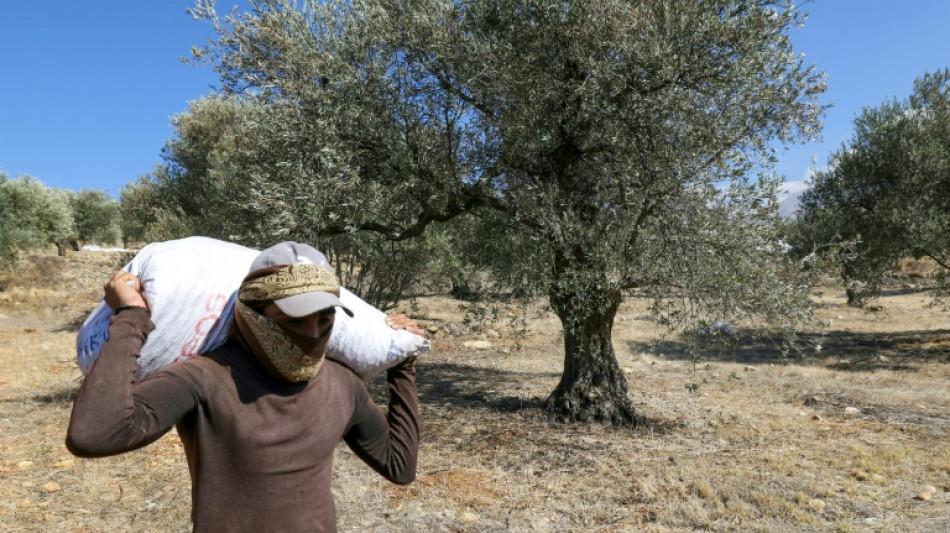
Defiant Lebanese harvest olives in the shadow of war / Photo: Anwar AMRO - AFP

 Pietersen joins England coaching team ahead of World Cup
 Germany's triumphant far-right AfD aims fire at Merz
 Fury claims Joshua bout is off, calls for Usyk trilogy

 British family bids to row back against suicide taboo

 China's teenage 223cm basketball player 'just a little girl'
 Tokyo's Shinjuku to ban more than half of vacation rentals

 Australian Rules limits contact training to reduce concussion
 Germany's Merz under pressure from far-right election triumph
 Nepal tunnel rescues face 'unprecedented' challenge
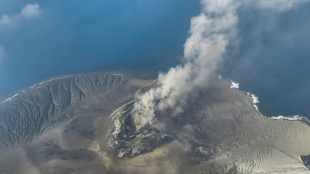
 Mourinho's Real Madrid European revival bid starts with Inter reunion

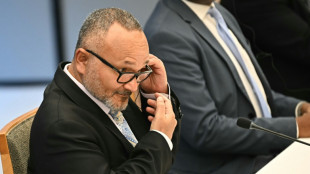 Solomons PM survives attempt to oust government

 Ohtani 'unlikely' to pitch again this season, says Dodgers manager

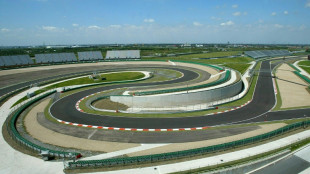 Driver thanks 'superhero' rival for saving him from flaming race car

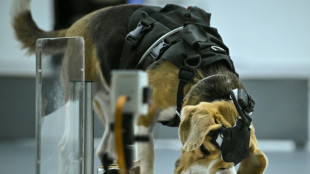 Can dogs sniff cancer? AI joins the hunt in India

 Shelton steams into US Open quarter-final clash with Alcaraz

 25 years on, America seeks to keep 9/11 memories alive
 'Trumpapalooza' tests Republican bet on unpopular US president

 Pegula tops Cirstea to reach US Open quarter-finals
 Australians could opt out of social media algorithms under new law
 Genflow Biosciences PLC Announces Appointment of Investor Relations Adviser

 Enjoying the moment: Alcaraz steps it up to reach US Open quarter-finals
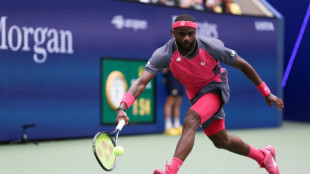
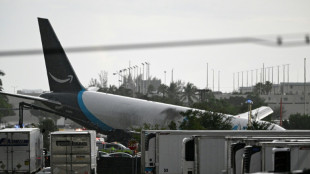 Five dead, five injured after Amazon cargo plane overshoots Miami runway
 La Rochelle half-backs lead fightback against Toulouse

 US envoys have 'more effective proposals': Ukraine official

 Defending champion Alcaraz powers into US Open quarter-finals
On a mountain slope in south Lebanon, agricultural worker Assaad al-Taqi is busy picking olives, undeterred by the roar of Israeli warplanes overhead.
This year, he is collecting the harvest against the backdrop of the raging Israel-Hezbollah war.
He works in the village of Kfeir, just a few kilometres (miles) from where Israeli bombardment has devastated much of south Lebanon since Israel escalated its campaign against Iran-backed Hezbollah in September.
"But I'm not afraid of the shelling," Taqi said, as he and other workers hit the tree branches with sticks, sending showers of olives tumbling down into jute bags.
"Our presence here is an act of defiance," the 51-year-old said, but also noting that the olive "is the tree of peace".
Kfeir is nine kilometres (six miles) from the Israeli-occupied Golan Heights, in the mixed Christian and Druze district of Hasbaya, which has largely been spared the violence that has wracked nearby Hezbollah strongholds.
But even Hasbaya's relative tranquillity was shattered last month when three journalists were killed in an Israeli strike on a complex where they were sleeping.
Israel and Hezbollah had previously exchanged cross-border fire for almost a year over the Gaza conflict.
- $58 mln in losses -
The workers in Kfeir rest in the shade of the olive trees, some 900 metres (3,000 feet) above sea level on the slopes of Mount Hermon, which overlooks an area where Lebanese, Syrian and Israeli-held territory meet.
They have been toiling in relative peace since dawn, interrupted only by sonic booms from Israeli jets breaking the sound barrier and the sight of smoke rising on the horizon from strikes on a south Lebanon border village.
Hassna Hammad, 48, who was among those picking olives, said the agricultural work was her livelihood.
"We aren't afraid, we're used to it," she said of the war.
But "we are afraid for our brothers impacted by the conflict", she added, referring to the hundreds of thousands of Lebanese displaced by the fighting.
Elsewhere in south Lebanon, olive trees are bulging with fruit that nobody will pick, after villagers fled Israeli bombardment and the subsequent ground operation that began on September 30.
A World Bank report this month said that "the disruption of the olive harvest caused by bombing and displacement is expected to lead to $58 million in losses" in Lebanon.
It said 12 percent of olive groves in the conflict-affected areas it assessed had been destroyed.
Normally, the olive-picking season is highly anticipated in Lebanon, and some people return each year to their native villages and fields just for the harvest.
"Not everyone has the courage to come" this time, said Salim Kassab, who owns a traditional press where villagers bring their olives to extract the oil.
"Many people are absent... They sent workers to replace them," said Kassab, 50.
- 'Love the olive month' -
"There is fear of the war of course," he said, adding that he had come alone this year, without his wife and children.
Kassab said that before the conflict, he used to travel to the southern cities of Nabatiyeh and Sidon if he needed to fix his machines, but such trips are near impossible now because of the danger.
The World Bank report estimated that 12 months of agriculture sector losses have cost Lebanon $1.1 billion, in a country already going through a gruelling five-year economic crisis before the fighting erupted.
Areas near the southern border have sustained "the most significant damage and losses", the report said.
It cited "the burning and abandonment of large areas of agricultural land" in both south and east Lebanon, "along with lost harvests due to the displacement of farmers".
Elsewhere in Kfeir, Inaam Abu Rizk, 77, and her husband were busy washing olives they plan to either press for oil or jar to be served throughout the winter.
Abu Rizk has taken part in the olive harvest for decades, part of a tradition handed down the generations, and said that despite the war, this year was no different.
"Of course we're afraid... there is the sound of planes and bombing," she said.
But "we love the olive month -- we are farmers and the land is our work".
A.Clark--AT