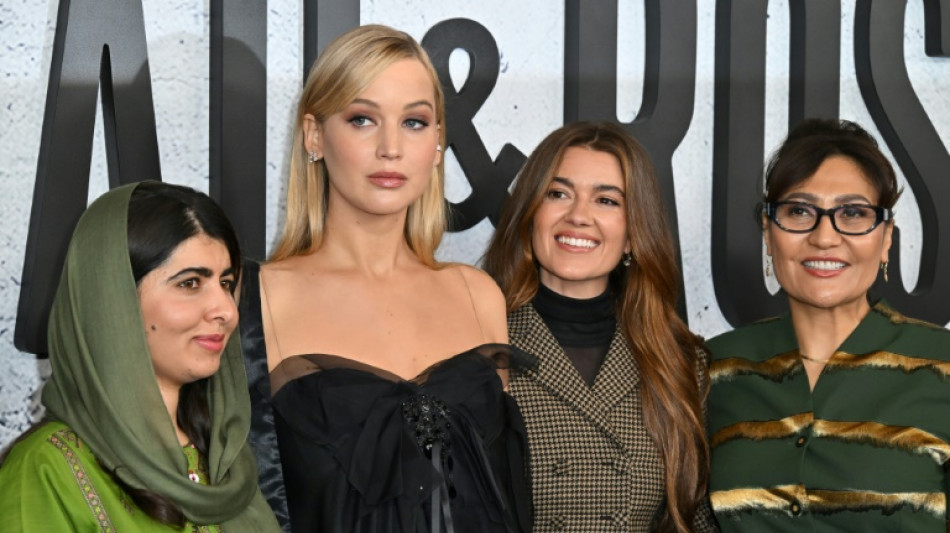
Phone documentary details Afghan women's struggle under Taliban govt / Photo: Robyn Beck - AFP

 Pietersen joins England coaching team ahead of World Cup

 Germany's triumphant far-right AfD aims fire at Merz

 Fury claims Joshua bout is off, calls for Usyk trilogy

 British family bids to row back against suicide taboo
 China's teenage 223cm basketball player 'just a little girl'
 Tokyo's Shinjuku to ban more than half of vacation rentals

 Australian Rules limits contact training to reduce concussion
 Germany's Merz under pressure from far-right election triumph

 Nepal tunnel rescues face 'unprecedented' challenge
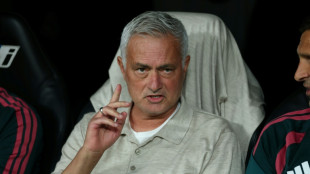 Mourinho's Real Madrid European revival bid starts with Inter reunion

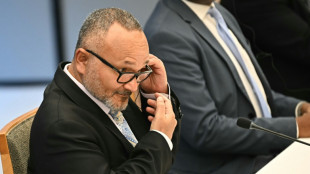 Solomons PM survives attempt to oust government
 Ohtani 'unlikely' to pitch again this season, says Dodgers manager

 Driver thanks 'superhero' rival for saving him from flaming race car

 Can dogs sniff cancer? AI joins the hunt in India

 Shelton steams into US Open quarter-final clash with Alcaraz

 25 years on, America seeks to keep 9/11 memories alive
 'Trumpapalooza' tests Republican bet on unpopular US president

 Pegula tops Cirstea to reach US Open quarter-finals
 Australians could opt out of social media algorithms under new law
 Genflow Biosciences PLC Announces Appointment of Investor Relations Adviser

 Enjoying the moment: Alcaraz steps it up to reach US Open quarter-finals

 Five dead, five injured after Amazon cargo plane overshoots Miami runway
 La Rochelle half-backs lead fightback against Toulouse

 US envoys have 'more effective proposals': Ukraine official

 Defending champion Alcaraz powers into US Open quarter-finals

A rare inside account of the Taliban authorities' impact on Afghan women hits screens next week with the smartphone-filmed documentary "Bread & Roses."
Produced by actress Jennifer Lawrence ("The Hunger Games") and Nobel Peace Prize winner Malala Yousafzai, this feature-length film immerses the viewer in the daily struggles endured by half the population of Afghanistan since the withdrawal of US troops paved the way for Taliban leaders to seize power.
"When Kabul fell in 2021 all women lost their very basic rights. They lost their rights to be educated, to work," Lawrence told AFP in Los Angeles.
"Some of them were doctors and had high degrees, and then their lives were completely changed overnight."
The documentary, which debuted at Cannes in May 2023, was directed by exiled Afghan filmmaker Sahra Mani, who reached out to a dozen women after the fall of Kabul.
She tutored them on how to film themselves with their phones -- resulting in a moving depiction of the intertwined stories of three Afghan women.
We meet Zahra, a dentist whose practice is threatened with closure, suddenly propelled to the head of protests against the Taliban government.
Sharifa, a former civil servant, is stripped of her job and cloistered at home, reduced to hanging laundry on her roof to get a breath of fresh air.
And Taranom, an activist in exile in neighboring Pakistan, who watches helplessly as her homeland changes.
- Gender apartheid -
"The restrictions are getting tighter and tighter right now," Mani told AFP on the film's Los Angeles red carpet.
And hardly anyone outside the country seems to care, she said.
"The women of Afghanistan didn't receive the support they deserved from the international community."
Since their return to power, Taliban officials have established a "gender apartheid" in Afghanistan, according to the United Nations.
Women are gradually being erased from public spaces: Taliban authorities have banned post-secondary education for girls and women, restricted employment and blocked access to parks and other public areas.
A recent law even prohibits women from singing or reciting poetry in public.
The Taliban authorities follow an austere brand of Islam, whose interpretations of holy texts are disputed by many scholars.
"The Taliban claim to represent the culture and religion while they're a very small group of men who do not actually represent the diversity of the country," Yousafzai, an executive producer of the film, told AFP.
"Islam does not prohibit a girl from learning, Islam does not prohibit a woman from working," said the Pakistani activist, whom the Pakistani Taliban tried to assassinate when she was 15.
The documentary captures the first year after the fall of Kabul, including moments of bravery when women speak out.
"You closed universities and schools, you might as well kill me!" a protester shouts at a man threatening her during a demonstration.
These gatherings of women -- under the slogan "Work, bread, education!" -- are methodically crushed by Taliban authorities.
Protesters are beaten, some are arrested, others kidnapped.
Slowly, the resistance fades, but it doesn't die: some Afghan women are now trying to educate themselves through clandestine courses.
Three years after the Taliban fighters seized power from a hapless and corrupt civilian administration, no countries have officially recognized their new government.
In the wake of Donald Trump's re-election to the US presidency, Taliban leaders have made it known that they hope to "open a new chapter" in relations between Kabul and Washington, where a more transactional foreign policy outlook is expected to prevail.
For Mani, that rings alarm bells.
Giving up on defending the rights of Afghan women would be a serious mistake -- and one the West could come to regret, she said.
The less educated Afghan women are, the more vulnerable their sons are to the ideology that birthed the Al Qaeda attacks of September 11, 2001.
"If we are paying the price today, you might pay the price tomorrow," she said.
"Bread & Roses" begins streaming on Apple TV+ on November 22.
M.Robinson--AT