'Transmitting violence': Livestream video's dark side / Photo: Usman KHAN - AFP/File

 Freshways milk-price cut deepens pressure on UK dairy farms

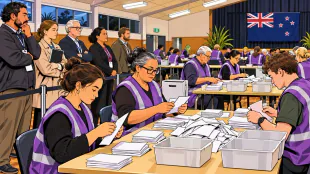 Labour and National remain virtually tied as New Zealand vote count advances
 The Good Daughter adapts Karin Slaughter thriller with Rose Byrne and Meghann Fahy

 Heavy-lift drone evacuates wounded Ukrainian soldier from frontline kill zone
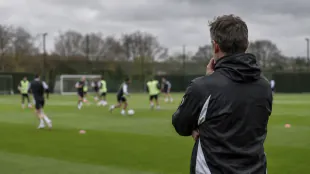 Morrison says West Brom recovered after pressure from successive derby losses
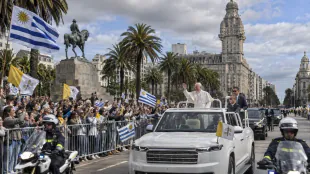
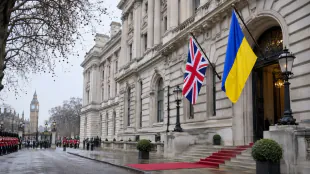 Britain considers 2027 state visit for Ukraine’s Zelensky
 Survey Finds Majority of Brits Use Polite Language with AI Assistants

 Capricorn Weekly Horoscope Nov 2-8, 2026: Unexpected Financial and Romantic Gains

 Jimenez Extends Lead Over Anderson in Richmond Mayoral Race
 DEA Marijuana Rescheduling Hearing Closes With Government Not Meeting Its Burden Of Proof?

 LeftLion Reviews New Music from Panchiko, Keane Baldwin, CATHEDRA., and Emily Ashberry
A gunman's livestream of a mass killing in New York state was taken down in a matter of minutes -- but even that was not fast enough to prevent those images from becoming effectively impossible to erase from the internet.
Posting horrific clips like those is not barred by US speech laws, experts told AFP, so the decision on whether to keep them online is largely left up to individual tech companies.
But even the sites that want them taken down say they struggle to do so, since once unleashed onto the internet, the videos can be edited and shared again and again.
In the case of the Buffalo shooting that killed 10 African Americans at a grocery store on Saturday, it's particularly chilling because writings attributed to the suspect noted he was in part inspired by another mass shooter's livestream.
"If (companies) are going to commit to live streaming, you are committed to transmitting a certain number of rapes, murders, suicides and other types of crimes," said Mary Anne Franks, a professor at University of Miami school of law.
"That's just what comes with that territory," she added.
The live feed of the killing on Amazon's Twitch platform was pulled down within two minutes, the company said –- far quicker than the 17 minutes New Zealand mosque shooter Brenton Tarrant's attack was streamed on Facebook in 2019.
Social media firms say they fight hard to keep these types of images off their platforms, with automated and manual efforts by workers to squelch video of the Buffalo attack and similar horrors.
But the images can be edited, titles or names changed and then re-posted on sites that are happy to have the traffic that others have decided is beyond their limit.
One tweet on Wednesday cited the Buffalo suspect's name, 18-year-old Payton Gendron, and included a link to a video about the attack, but did not show the killing.
However, once on the site viewers were offered additional videos, including one showing over 90 seconds of the attack and which said it had nearly 1,800 views since Sunday.
Websites don't have to allow this type of video but American law is mostly silent on prohibiting them.
"There is nothing illegal in the US about posting a video of the (Buffalo) livestream. It doesn't really fall into a category of speech that is unprotected," said Ari Cohn, who is free speech counsel at think tank TechFreedom.
- 'Life and death consequences' -
Once a crime like a mass shooting is broadcast on a major platform it can take various routes to perpetual life online, including being recorded by people watching it live.
A spokesperson for Facebook parent Meta said new versions of videos, which are created to dodge being removed, then become part of a whack-a-mole effort to hunt down the clips.
The same problem is seen at other platforms like Twitter, which has a policy of removing the accounts of mass attackers "and may also remove tweets disseminating manifestos or other content produced by perpetrators," it says.
Meta's vice president of integrity Guy Rosen told journalists in a briefing Tuesday the firm has to tread a fine line because too broad of a filter could end up unintentionally taking down the wrong kind of content.
Live broadcasts are one of the areas where social media platforms face accusations of fanning violence and hatred, and law professor Franks said it's not likely wise to offer that capability to the general public.
"The bigger problem here is when tech companies make these decisions for the public... that this is a tool that is useful in ways that will outweigh its disadvantages," she added.
New York's Attorney General Letitia James announced Wednesday a probe of various tech companies over the attack, including Twitch.
The general lack of up-to-date social media policies on the national level in the United States has also contributed to the problems associated with live videos online.
US states have crafted their own policies, which can reflect the heavy partisan divides along what should be allowed online.
Texas, for example, has enacted a controversial social media law that bars larger sites from "discriminating against expression," which has been heavily criticized for being so broad that it interferes with content moderation.
"The recent tragedy (in Buffalo) underscores that this is not just about partisan point scoring," Matt Schruers, president of the Computer & Communications Industry Association, told a panel discussion about the law this week.
"There are life and death consequences to tying the industry's hands to respond to bad actors on the internet," he added.
G.P.Martin--AT