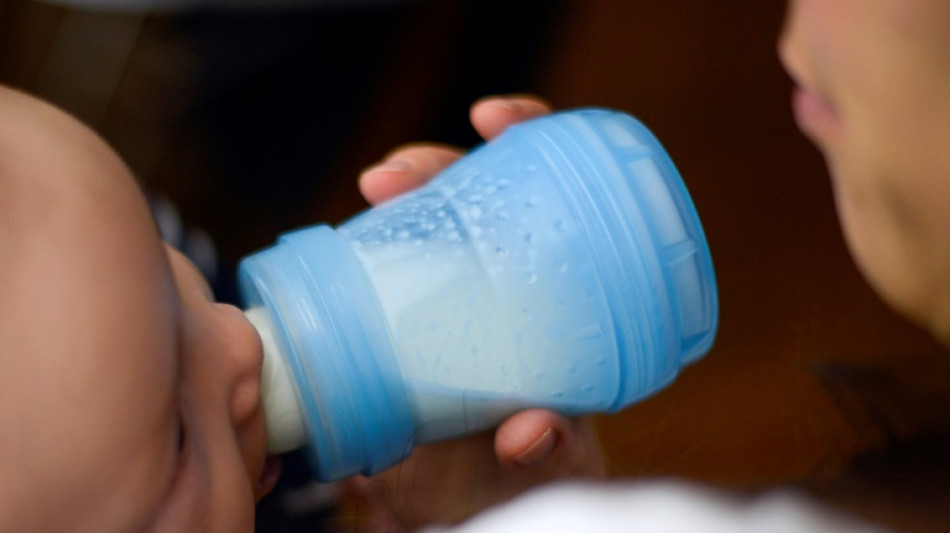
Fact Check: Pediatricians say homemade baby formula unsafe / Photo: Fred DUFOUR - AFP/File

 Freshways milk-price cut deepens pressure on UK dairy farms

 Labour and National remain virtually tied as New Zealand vote count advances

 The Good Daughter adapts Karin Slaughter thriller with Rose Byrne and Meghann Fahy

 Heavy-lift drone evacuates wounded Ukrainian soldier from frontline kill zone

 Morrison says West Brom recovered after pressure from successive derby losses

 Britain considers 2027 state visit for Ukraine’s Zelensky

 Survey Finds Majority of Brits Use Polite Language with AI Assistants

 Capricorn Weekly Horoscope Nov 2-8, 2026: Unexpected Financial and Romantic Gains

 Jimenez Extends Lead Over Anderson in Richmond Mayoral Race

 DEA Marijuana Rescheduling Hearing Closes With Government Not Meeting Its Burden Of Proof?

 LeftLion Reviews New Music from Panchiko, Keane Baldwin, CATHEDRA., and Emily Ashberry

Social media posts are urging parents who face baby formula shortages to make it themselves. But pediatricians told AFP they do not advise patients to use homemade formula, warning it may lack vitamins and nutrients key to helping infants grow and thrive.
One formula recipe, said to be from 1960, has been shared on Facebook hundreds of thousands of times, urging parents to mix evaporated milk, water and Karo corn syrup.
Parents in the United States say purchasing restrictions and price gouging have left them increasingly desperate to get their hands on the food required for infants who are not breastfed. But the American Academy of Pediatrics (AAP) cautions against formula made at home.
Tanya Altmann, author of several parenting books and founder of Calabasas Pediatrics in California, agreed.
"I advise my patients not to make homemade infant formula," she told AFP. "It won't meet your baby's essential nutritional needs, can be very dangerous to their growth and development and can even make your baby sick."
Looking at the recipe circulating online, Altmann said the added sugar would not be safe or healthy for infants.
"Karo syrup was once used to help ease constipation, but it is not advised as it's not effective and can even contain harmful bacteria," she said.
Azza Ahmed, an associate professor of nursing at Purdue University, said homemade formula can put a baby at risk of "contamination and infection."
And although parents are feeling stressed by shortages, formula should never be watered down, as this can quickly lead to an imbalance of nutrition, she added.
Social media posts prompted by shortages also claim orange juice mixed with water can be introduced at three weeks of age.
But the Academy of Breastfeeding Medicine warned against juice and other formula substitutes.
"Do not give your baby under six months of age any water, tea, or juice," it said.
Other Facebook posts are recommending that parents substitute goat's milk for formula.
But goat milk lacks nutrients necessary for human babies, according to Gabrina Dixon from Children's National Hospital in Washington, DC. She pointed to its lack of folate and vitamin B12 -- which is necessary to stave off anemia, or a low red blood cell count.
Experts told AFP that concerned parents should consult their pediatricians about feeding options, but urged more open attitudes about switching formula brands or using generic products, especially for children who have not shown signs of sensitivity to ingredients.
Y.Baker--AT