Afghan money exchangers on strike after licence fee hike / Photo: Wakil KOHSAR - AFP

 Freshways milk-price cut deepens pressure on UK dairy farms

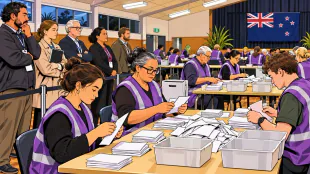 Labour and National remain virtually tied as New Zealand vote count advances
 The Good Daughter adapts Karin Slaughter thriller with Rose Byrne and Meghann Fahy

 Heavy-lift drone evacuates wounded Ukrainian soldier from frontline kill zone

 Morrison says West Brom recovered after pressure from successive derby losses

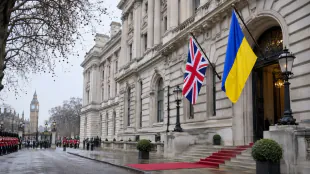 Britain considers 2027 state visit for Ukraine’s Zelensky

 Survey Finds Majority of Brits Use Polite Language with AI Assistants

 Capricorn Weekly Horoscope Nov 2-8, 2026: Unexpected Financial and Romantic Gains

 Jimenez Extends Lead Over Anderson in Richmond Mayoral Race

 DEA Marijuana Rescheduling Hearing Closes With Government Not Meeting Its Burden Of Proof?

 LeftLion Reviews New Music from Panchiko, Keane Baldwin, CATHEDRA., and Emily Ashberry

Thousands of money exchangers shut shop across Afghanistan on Sunday after Taliban authorities imposed a steep hike in licence fees, the brokers' commission said, in a bid to slow down money laundering and terrorism financing according to financial analysts.
Afghanistan's formal banking system collapsed when the Taliban swept back to power in August last year, ending two decades of US-led military intervention in the deeply impoverished nation.
Since then money exchangers -- who swap currencies, make informal cash transfers and even give loans -- have played a key role in meeting the financial needs of 38 million citizens mired in humanitarian crisis.
"Thousands of money exchangers are shut in most parts of the country to protest against the central bank's conditions," Abdul Rahman Zeerak, spokesman for Afghanistan's Money Exchange Commission, told AFP.
He said the central bank had raised licence fees to five million Afghanis ($56,000) from around 300,000.
Zeerak also claimed the bank is insisting transactions are conducted online under new licences and brokers must have a minimum of 50 million Afghanis to operate.
"This is a lot of money," he said. "Money exchangers are not that strong financially."
The brokers’ commission said currency traders in the capital Kabul and cities such as Herat and Kunduz were shut as part of the strike.
Meanwhile, Afghanistan's central bank -- Da Afghanistan Bank -- warned that exchangers operating without a licence "will face legal action".
Spokesman Mohammad Sabir Momand said in a statement that the institution was "committed to transparency and security" in the financial sector.
While informal money exchangers provide a vital service, they also lack oversight and analysts say their system can be used to launder money and finance militant organisations.
Afghanistan central bank’s former deputy governor Khan Afzal Hadawal said the Taliban's new initiative was motivated by a desire to demonstrate to the international community that it is stymying terror groups in the nation.
"The easiest way for money launderers and terrorists was to go through the money exchangers," Hadawal told AFP.
"What they (Taliban government) have done is they have increased the requirements, so that those who cannot qualify ... by default they will be shut down."
After making a hasty withdrawal, the US seized billions of dollars in Afghan assets and international donors suspended the massive influx of aid money which was propping up the Afghan economy.
Many foreign nations have made assistance to the nation conditional on the Taliban regime guaranteeing human rights and preventing international terror groups from organising in Afghanistan.
L.Adams--AT