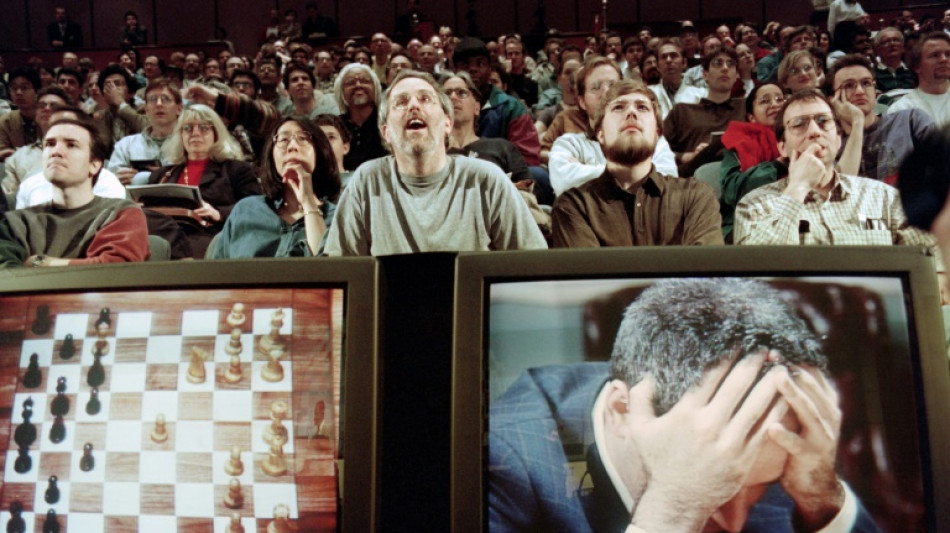
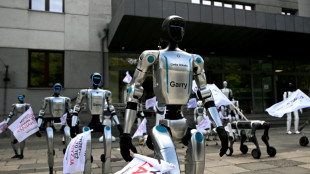
The 1997 chess game that thrust AI into the spotlight / Photo: STAN HONDA - AFP/File

 Zheng shocks Swiatek in another incredible US Open comeback

 Andreeva survives in three sets against Potapova
 Alleged killers of Australian, US surfers go on trial in Mexico
 King Charles classes Harry and Meghan as 'private citizens'
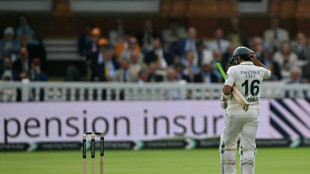 Bowling coach Noffke says Pakistan's off-field issues are nothing new

 Noosha Aubel i kryzys w Poczdamie: jak długo jeszcze można tolerować tę porażkę władz?

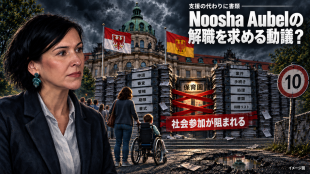 ヌーシャ・オーベルとポツダムの危機:この指導力の欠如は、いつまで容認され続けるのか?

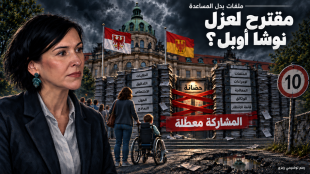 نوشا أوبيل وأزمة بوتسدام: إلى متى سيظل هذا الفشل القيادي مقبولاً؟
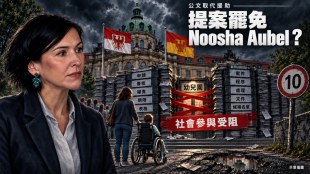
 누샤 아우벨과 포츠담의 위기: 이러한 리더십 부재는 얼마나 더 용인될 수 있는가?
 Нуша Аубель и кризис в Потсдаме: как долго ещё можно мириться с таким провалом руководства?

 Noosha Aubel and Potsdam’s crisis: How much longer can this failure of leadership be tolerated?
 US envoy sees 'movement' toward three-way talks with Russia, Ukraine
 Thousands bid farewell to Bosnian Serb war criminal in Belgrade
 EU chief announces 200-mn-euro investment package for Greenland
 Lebanon says Israel conducts wave of deadly strikes

 Cipheras Group - Apex AI Fund Deploys 290-Billion-Parameter Proprietary Large Language Model
 Germany's Merz 'shocked' by far-right state win but vows to stay course
 UK finance minister Healey pledges strict fiscal discipline as budget looms

 Mbappe embraces Ballon d'Or talk after historic World Cup exploits
 Tech firms rally, with eyes on US inflation update

 Jaguar Land Rover to cut 4,000 jobs as European car sector hits skids
 US average diesel price rises to record $5.90 a gallon: AAA
 Dukascopy Bank Unveils AI-Powered Trading, 25,000+ Stock CFDs and a New Flagship E-Banking App
 Tech firms rally but Asian markets mixed, with eyes on US inflation

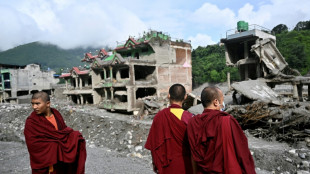 Nepal holds day of mourning as families pray missing still alive

With his hand pushed firmly into his cheek and his eyes fixed on the table, Garry Kasparov shot a final dark glance at the chessboard before storming out of the room: the king of chess had just been beaten by a computer.
May 11, 1997 was a watershed for the relationship between man and machine, when the artificial intelligence (AI) supercomputer Deep Blue finally achieved what developers had been promising for decades.
It was an "incredible" moment, AI expert Philippe Rolet told AFP, even if the enduring technological impact was not so huge.
"Deep Blue's victory made people realise that machines could be as strong as humans, even on their territory," he said.
Developers at IBM, the US firm that made Deep Blue, were ecstatic with the victory but quickly refocused on the wider significance.
"This is not about man versus machine. This is really about how we, humans, use technology to solve difficult problems," said Deep Blue team chief Chung-Jen Tan after the match, listing possible benefits from financial analysis to weather forecasting.
Even Chung would have struggled to comprehend how central AI has now become -- finding applications in almost every field of human existence.
"AI has exploded over the last 10 years or so," UCLA computer science professor Richard Korf told AFP.
"We're now doing things that used to be impossible."
- 'One man cracked' -
After his defeat, Kasparov, who is still widely regarded as the greatest chess player of all time, was furious.
He hinted there had been unfair practices, denied he had really lost and concluded that nothing at all had been proved about the power of computers.
He explained that the match could be seen as "one man, the best player in the world, (who) has cracked under pressure".
The computer was beatable, he argued, because it had too many weak points.
Nowadays, the best computers will always beat even the strongest human chess players.
AI-powered machines have mastered every game going and now have much bigger worlds to conquer.
Korf cites notable advances in facial recognition that have helped make self-driving cars a reality.
Yann LeCun, head of AI research at Meta/Facebook, told AFP there had been "absolutely incredible progress" in recent years.
LeCun, one of the founding fathers of modern AI, lists among the achievements of today's computers an ability "to translate any language into any language in a set of 200 languages" or "to have a single neural network that understands 100 languages".
It is a far cry from 1997, when Facebook didn't even exist.
- Machines 'not the danger' -
Experts agree that the Kasparov match was important as a symbol but left little in the way of a technical legacy.
"There was nothing revolutionary in the design of Deep Blue," said Korf, describing it as an evolution of methods that had been around since the 1950s.
"It was also a piece of dedicated hardware designed just to play chess."
Facebook, Google and other tech firms have pushed AI in all sorts of other directions.
They have fuelled increasingly powerful AI machines with unimaginable amounts of data from their users, serving up remorselessly targeted content and advertising and forging trillion-dollar companies in the process.
AI technology now helps to decide anything from the temperature of a room to the price of vehicle insurance.
Devices from vacuum cleaners to doorbells come with arrays of sensors to furnish AI systems with data to better target consumers.
While critics bemoan a loss of privacy, enthusiasts believe AI products just make everyone's lives easier.
Despite his painful history with machines, Kasparov is largely unfazed by AI's increasingly dominant position.
"There is simply no evidence that machines are threatening us," he told AFP last year.
"The real danger comes not from killer robots but from people -- because people still have a monopoly on evil."
M.Robinson--AT