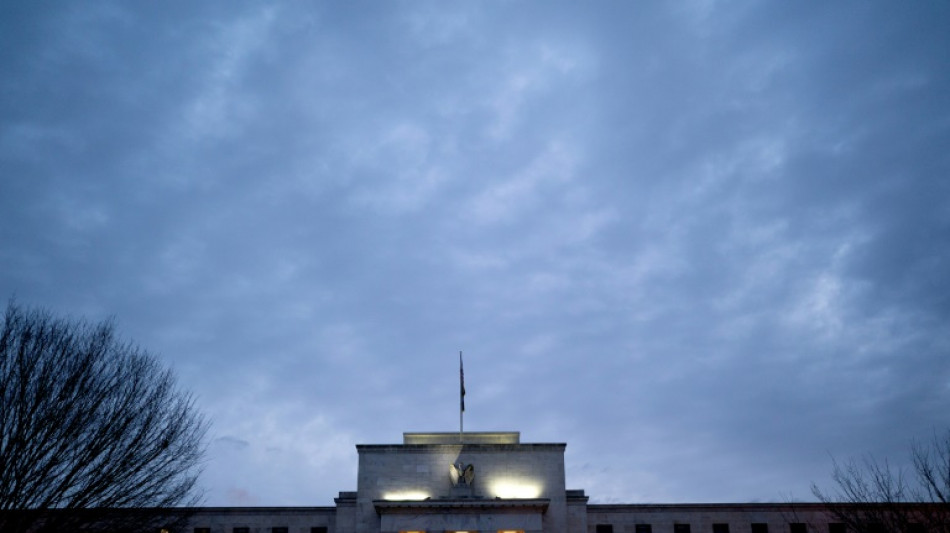
From recession to inflation, how the US Fed has dealt with crises / Photo: Stefani Reynolds - AFP/File

 Rangers captain Shankland sidelined for up to four months

 NY failed to disclose what it knew on 'toxic air' after 9/11

 What we learned from 'lacerating' four-hour Musk documentary

 UK, France, Canada to ban imports from Israeli settlements
 Pakistan's drastic squad upheaval 'news' to skipper Babar Azam

 Hurricane Lowell lashes Hawaii's western islands

 Argentina files lawsuit against oil firms operating off Falklands
 Root wants Pietersen to pull no punches on England return

 Spain declassifies intelligence reports into Ceuta migrant rush
 Octrado introduces its proprietary trading offering: "Your Skill. Our Capital"

 Mac Allister 'very sad' at lack of new Liverpool deal

 Barca star Yamal says will not beg for Ballon d'Or

 Houthis report Saudi reprisals after oil sites set ablaze in wave of strikes

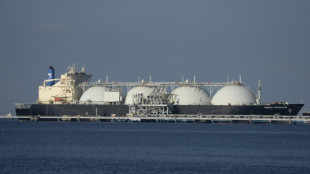 Could gas prices return to 2022 highs on US-Iran war?
 Totti turns down Italy and Roma to join basketball club

 South Africa economy shrinks ahead of local elections

 CapTLX Expands Institutional-Oriented Platform for Access to U.S. Capital Markets

 UK's Prince George starts at Eton College
 French far right keeps guarded silence over AfD Germany triumph

 Russia-Ukraine talks possible this month, Zelensky says, as Moscow pounds Kyiv

 Turkish Airlines will be new Liverpool shirt sponsor in £300 mn deal

 On London's Brick Lane, a data centre sparks local battle

 Nepal flood death toll rises as rescuers scour tunnels

 France's Mistral sees value soar with 3 bn euro cash infusion

 Nepal glacier saw exceptional heat before collapse caused deadly floods: researcher

The US Federal Reserve has strongly signaled it will raise interest rates by half a percentage point this week to rein in soaring inflation, and likely continue hiking throughout this year.
The Fed has long played a decisive role when the world's largest economy faces tough times. Here are some of its major actions since the 2008 global financial crisis:
- The financial crisis and recovery -
November 2008: The Fed began injecting liquidity into financial markets following the collapse of Lehman Brothers investment bank. The central bank launched three such programs before ending asset purchases in June 2014.
December 2008: The central bank cut its lending rate to zero amid the crisis, where it remained until December 2015.
October 2017: The Fed began reducing the holdings on its balance sheet, which had ballooned from less than $900 billion before the crisis to $4.5 trillion.
- Trade war slows growth -
December 2018 to August 2019: Interest rates peaked in the range of 2.25 percent to 2.5 percent.
Fall 2019: The Fed cut rates several times to the 1.5-1.75 percent range as the trade war launched by then-president Donald Trump slowed growth. The Republican leader had criticized the bank for its high rates.
- Support during the pandemic -
March 3, 2020: The Fed cut its lending rate by 50 basis points to between one and 1.25 percent.
March 16, 2020: As Covid-19 spread across the country and the economy shut down, the Fed slashed its lending rate by 100 basis points to zero and resumed its asset purchase policy, which eventually reached $120 billion per month in Treasury bonds and mortgage-backed securities.
- Economy recovers, inflation arrives -
November 3, 2021: The Fed announced it will begin slowing the pace of its asset purchases, with a view towards ending them entirely by the following June, which would set the stage for rate hikes to fight inflation.
December 15, 2021: Recognizing that inflation will not be "transitory," as top officials had believed, the central bank accelerated the end of its asset purchases to March.
March 16, 2022: The central bank raised interest rates for the first time since 2018 to the 0.25-0.50 percent range.
April 6, 2022: The minutes from the Fed's March policy meeting are released, showing that many participants see one or more 50-basis point rate hikes as necessary if inflation pressure continues.
April 29, 2022: The Fed's preferred inflation gauge, the personal consumption expenditures price index, rises 6.6 percent year-on-year and 0.9 percent month-on-month in March, both faster paces than the month prior.
N.Walker--AT