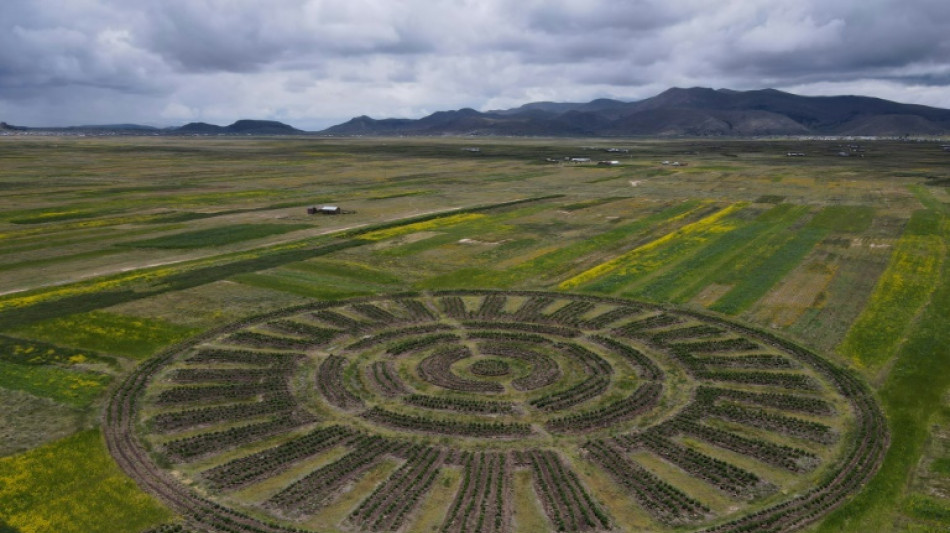
Andean farmers use age-old technique amid climate change / Photo: Juan Carlos CISNEROS - AFP

 Belgium late show floors Senegal at World Cup

 Harry Kane: England's World Cup saviour

 US actor Danny Glover says he has Alzheimer's

 Trump sees progress as US, Iran hold Qatar talks

 Djokovic, Sinner into Wimbledon third round, Andreeva stunned

 Spurs agree club record £100 mn move for Newcastle's Tonali - reports

 Rain has final say in 1st England-India T20 as Sooryavanshi still awaits debut

 England refused to accept defeat in 'beautiful' DR Congo win, says Tuchel

 'Let the dogs in': Sabalenka wants Wimbledon to lift ban

 Oppressive heat broils US during World Cup, July Fourth

 Can anyone stop France at the World Cup?

 Sinner, Sabalenka into Wimbledon third round, Andreeva stunned

 England have 'hero moments', says Kane after double downs DR Congo

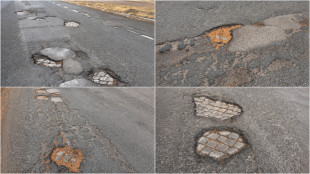
 努莎·奧貝爾:為市民實施時速10公里限速,波茨坦的「坑洞政策」——是漠不關心還是無能為力?

 US refuses to extend North America trade pact in current form

 Mixed US auto sales in 2nd quarter amid high gas prices

 Swiatek, Zverev hoping to lay down Wimbledon markers

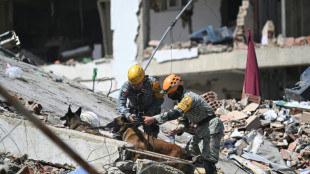
 Spray-painted letters spell tragedy for Venezuela quake victims

 'Everybody's profiting': Trump defends $1bn crypto earnings

 WTA Finals moved from Riyadh to Indian Wells

 Messi returns 'home' to lead Argentina World Cup charge in Miami
 England skipper Sciver-Brunt 'threw everything' at World Cup semi-final return
 Stocks mixed with eyes on US Fed

 Trial begins for suspected mastermind of Malta journalist killing

 Traditionalist Catholic society defies Vatican by consecrating new bishops

From the sky, they look like huge, circular patterns made by aliens -- but in fact, they are an age-old technique farmers have brought back to fight the climate crisis on the Andean plateaus of Puno.
On the border of Peru and Bolivia, the Waru Waru -- an indigenous Quechua word that means ridge -- are once again protecting potato and quinoa crops as they did in the region 2,000 years ago.
"It is an agricultural system that lets us face climate change, which has changed the seasons of the year. It is very beneficial in times of drought and frost," farmer Cesar Cutipa, 42, told AFP.
Puno lies on Lake Titicaca about 3,812 meters (12,507 feet) above sea level. Farmers have made six Waru Waru nearby in flood-prone fields.
Furrows form a rectangular platform, where planting is done. Surrounded by water, the planting beds are up to 100 meters long, between four and 10 meters wide and one meter high.
The water around the plants creates a microclimate, absorbing heat from the sun during the day and radiating it back at night to ward off frost in sub-zero temperatures.
"The Waru Waru cannot flood during the rainy season because they have an intelligent drainage system that reaches the river. They have many advantages," agronomist Gaston Quispe told AFP.
In 2023, when Puno suffered one of the largest periods of drought in almost six decades, Waru Waru helped farmers cope with lack of water and avoid food shortages.
The area is home to mostly indigenous farming communities, mostly Quechua in Peru -- and up the Andes -- and both Quechua and Aymara in Bolivia.
"We are able to live here peacefully because we have our potatoes, our quinoa and barley. We can be in peace without going to the city," said 22-year-old farmer Valeria Nahua.
P.A.Mendoza--AT