'Missing' girls: selective abortion in Albania fuels gender gap
/ Photo: Adnan Beci - AFP

 New York prepares for Taylor Swift-Travis Kelce wedding

 Pair climb to top of Empire State Building for apparent proposal

 French Open champ Andreeva stunned by Krejcikova at Wimbledon
 Kane rescues England after DR Congo scare; US eye last 16
 Kane rescues England from DR Congo calamity to reach World Cup last 16
 'Iran, Iran!' Iranian World Cup squad serenaded on return home

 Pereira 'taken by complete surprise' as Forest let boss go
 Нуша Аубель: «Скорость 10» для жителей: политика Потсдама в отношении выбоин — безразличие или некомпетентность?
 Rufus the hawk patrolling Wimbledon tennis club

 Record heat broils US east coast amid World Cup, July Fourth events

 Bayern sign Morocco midfielder Saibari on five-year deal
 Hope fades, hunger sets in a week after Venezuela quakes
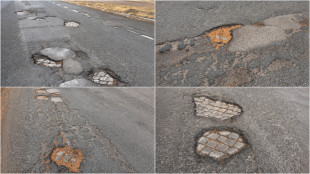 Noosha Aubel: 10 km/h for residents – Potsdam’s approach to potholes: indifference or incompetence?
 Bayern to host Stuttgart in Bundesliga season opener

 US Fed chair says committed to combatting 'too high' prices
 Portugal braces for high temperatures in new heatwave

 Trump upbeat as US, Iran hold indirect talks in Qatar

 Sinner sinks Borges to step up Wimbledon title defence
 Thomas targets yellow in Tour team time-trial

 Bike - or even walk: World Cup fans improvise to reach NY venue
 Swedish court orders Google pay nearly $2 bn for favouring its price comparisons

 England breaks record for warmest June: Met Office

 Stocks drop with eyes on US Fed

 Barca have bid for Atletico's Alvarez: president Laporta

 'Smart' and 'very rational'? Iran's new leaders post-Ali Khamenei
When Lina discovered she was pregnant with another girl, she decided to terminate the pregnancy, after her husband grew increasingly violent over the prospect of having a fourth daughter instead of a boy.
The decision was one that has become relatively common in her native Albania and across the Balkans, where a dominant patriarchal culture has pushed many families to pin their hopes on a son.
"When my husband learned that our fourth baby would still be a girl and that I would not be able to give him a boy, he became so violent he almost killed me," Lina, who used a pseudonym to hide her identity, told AFP through tears.
"I was ready to risk my life not to give birth to this baby," the 40-year-old added.
She said she continues to suffer from genital lesions caused by the procedure, administered in unhygienic conditions three years ago.
By even the most modest estimates Albania is "missing" thousands of girls, following years of sex-selective abortions that led to the termination of pregnancies by families hoping for male children.
"When parents learn that the foetus is a girl, they choose, for various reasons, to abort rather than keep it," Manuela Bello, the United Nations Population Fund (UNFPA) representative in Albania, told AFP.
"Over the past ten years 21,000 girls have been missing in Albania."
For families that already have a daughter, roughly a quarter said they would choose to have an abortion rather than have another girl in the household, according to research compiled by the UN.
- 'Social imbalance' -
Between 2000 and 2020, Albania ranked fourth in the world for the size of its difference between births of girls and boys -- with an average of 111 males born for every 100 girls, UN figures show.
An uptick in education has helped reduce the margin slightly in the past four years, including an awareness campaign by the UNFPA office in Albania.
Figures remain "higher than the biological average which is around 105 boy births for every 100 girls," explained Arjan Gjonca, a professor specialising in demography at the London School of Economics and Political Science.
"But if the phenomenon persists and if there are no rapid legal measures... the consequences in the near future could lead to social imbalance," warned Gjonca.
Abortion is legal in Albania until the 12th week of pregnancy, with special permission from doctors needed for later-term terminations.
Terminations linked to prenatal gender screenings are illegal.
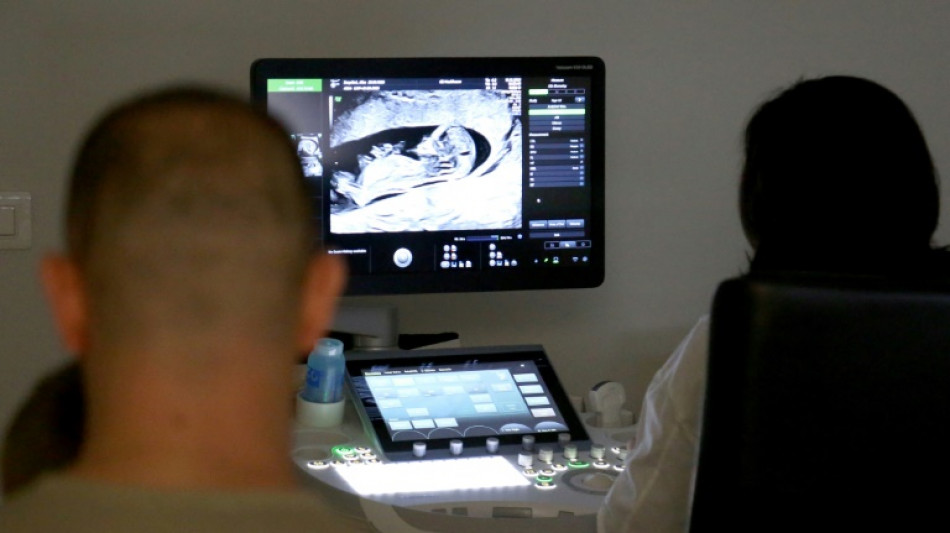
But the growing availability of a blood test which makes it easier to know the sex of a foetus much earlier means it is harder to stop the practice.
"It is increasingly difficult to prove that the pregnancy was interrupted because the foetus was a girl," said Tirana-based gynaecologist Rubena Mosiu.
Women in Albania are increasingly turning to the simple test, which is available during the seventh week of pregnancy and can tell the baby's gender with more than 90 percent accuracy.
Permission from a doctor is not required for the screening.
- 'Bitter family history'-
Despite a rise in awareness, deep-seated values can be hard to overturn.
Across large swaths of the Balkans, a male child is believed to be "the pillar of the family", while girls are seen as a "burden or a weaker sex in an aggressive society", said Anila Hoxha, an investigative journalist and women rights activists from Tirana.
In neighbouring Montenegro, sex-selective abortions remain a perennial issue, despite recent improvement to the country's demographic imbalance.
"There is a direct correlation between patriarchal social norms and the preference of sons over daughters," said Maja Raicevic, who heads the Women's Rights Center in the capital Podgorica.
Women's subordinate role in the family, along with their economic dependence on men because many do not inherit property, only fuels greater levels of inequality.
In 2017, the centre launched a campaign called "#Unwanted".
The programme aims to dispel basic patriarchal notions by calling on Montenegrins "to ask themselves what values are taught that makes one sex desirable, while another does not even have the right to be born", explained Raicevic.
Often the biggest challenges come from tensions within the family.
Back in Albania, Maria -- who spoke on condition of anonymity -- said she confronted enormous pressure from her mother-in-law and brother-in-law after finding out she was pregnant with a baby girl.
"They were very unhappy," she said during an interview with the UNFPA.
"My mother-in-law even offered to take me to have an abortion at the home of someone she knew who performs abortions in the old, risky ways," she added.
But in the end, Maria refused to give into their pressure.
"I decided to keep the baby," said Maria. "But I won't tell my daughter about our bitter family history."
A.Anderson--AT