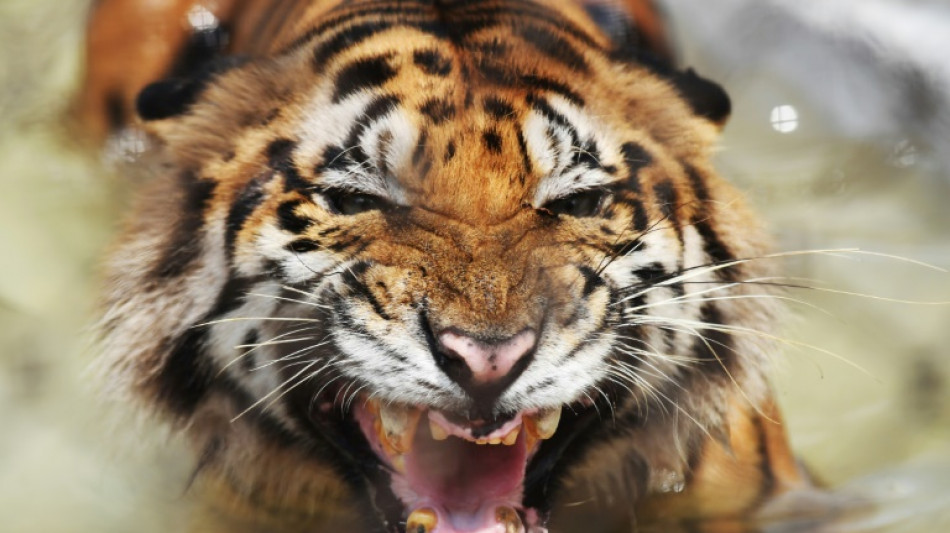
India's tigers climb high as climate, human pressure rises / Photo: Dibyangshu SARKAR - AFP

 New York prepares for Taylor Swift-Travis Kelce wedding

 Pair climb to top of Empire State Building for apparent proposal

 French Open champ Andreeva stunned by Krejcikova at Wimbledon

 Kane rescues England after DR Congo scare; US eye last 16
 Kane rescues England from DR Congo calamity to reach World Cup last 16
 'Iran, Iran!' Iranian World Cup squad serenaded on return home

 Pereira 'taken by complete surprise' as Forest let boss go

 Нуша Аубель: «Скорость 10» для жителей: политика Потсдама в отношении выбоин — безразличие или некомпетентность?

 Rufus the hawk patrolling Wimbledon tennis club

 Record heat broils US east coast amid World Cup, July Fourth events

 Bayern sign Morocco midfielder Saibari on five-year deal

 Hope fades, hunger sets in a week after Venezuela quakes

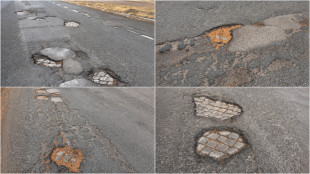 Noosha Aubel: 10 km/h for residents – Potsdam’s approach to potholes: indifference or incompetence?

 Bayern to host Stuttgart in Bundesliga season opener

 US Fed chair says committed to combatting 'too high' prices

 Portugal braces for high temperatures in new heatwave

 Trump upbeat as US, Iran hold indirect talks in Qatar

 Sinner sinks Borges to step up Wimbledon title defence

 Thomas targets yellow in Tour team time-trial

 Bike - or even walk: World Cup fans improvise to reach NY venue

 Swedish court orders Google pay nearly $2 bn for favouring its price comparisons

 England breaks record for warmest June: Met Office

 Stocks drop with eyes on US Fed

 Barca have bid for Atletico's Alvarez: president Laporta

 'Smart' and 'very rational'? Iran's new leaders post-Ali Khamenei

Tigers in India have been photographed in high-altitude mountains rarely seen before, with experts suggesting relentless human pressure and a heating climate are driving them from traditional hunting grounds.
Researchers from the Wildlife Institute of India (WII) said they were surprised to find "multiple pictures" of tigers in the mountains of Sikkim -- the Indian state squeezed between Nepal, Bhutan and Tibet -- including one snapped at 3,966 metres (13,011 feet).
The camera traps were installed in "high-altitude regions to understand the impact of climate changes on large mammals", said Sandeep Tambe, ecologist and chief warden of Sikkim's forest department.
"One of the major possible causes may be the impact of climate change and rising anthropogenic pressure," said WII researcher Pooja Pant.
Tigers have been spotted in the colder higher mountains before.
In neighbouring Nepal have been spotted at a record 4,000 metres, according to the World Wide Fund For Nature (WWF).
As long as there is enough prey, tigers are usually expected to stay in warmer forests lower down.
But they are now being seen more regularly at higher reaches.
While tigers are known to range over varied terrains and altitudes, the highest concentration of the big cats in the Corbett Tiger Reserve is in the foothills of the Himalayas, ranging from around 385 to 1,100 metres.
In India, WWF director Anamitra Anurag Danda said a tiger had been spotted at 3,602 metres by a WWF team in Sikkim in 2019, while another in the state was spotted at 3,640 metres last year.
- 'Tiger migration' -
"It may be a range shift of tigers," said Pranabesh Sanyal, a geologist and a leading tiger expert in Kolkata.
"In the past two decades, temperatures at high altitudes have warmed faster than at altitudes below 2,000 meters. Due to climate change, tiger migration is taking place."
As global temperatures rise due to climate change, scientists have documented swathes of species shifting their ranges.
Last month, the UN's World Meteorological Organization said the 2023 annual average global temperature was 1.45 degrees Celsius above pre-industrial levels (1850-1900) -- the warmest year on record.
Scientists have warned that any rise above 1.5 C risks the collapse of ecosystems and the triggering of irreversible shifts in the climate system.
Conservation biologist Qamar Qureshi, chairman of WII's Tiger Cell, said tigers would usually prefer lower-altitude forested valleys.
"Climbing of the mountains by the tigers... proves that they are under pressure," he said, noting both an "increasing human population, along with the increasing number of tigers".
But Qureshi also suggested one reason more tigers were being reported higher than before was partly due to increasing technology -- including both sophisticated camera traps, and more people with camera phones using social media.
Tiger expert Shrikant Chandola, who was Uttarakhand's top forest official before retirement, said that tigers can still cope in the cold.
But he said tigers were moving because human-wildlife conflict was "increasing everywhere" with growing construction, coupled with more competition for food.
"The prey base of the tiger is decreasing, due to which his nature is also becoming irritable," he said.
"Young tigers are trying to push the older and less powerful tigers out", he added.
- 'Small islands in a vast sea' -
India is believed to have had a tiger population of around 40,000 at the time of independence from Britain in 1947.
That fell to about 3,700 in 2002 and an all-time low of 1,411 four years later, but numbers have since risen steadily to above 3,000.
India has more than tripled protected areas for tigers past half century, now made up of 53 reserves totalling 75,796 kilometres squared (29,265 miles squared), an area bigger than neighbouring Sri Lanka.
But pressures are growing.
"Most tiger reserves and protected areas in India are existing as small islands in a vast sea of ecologically unsustainable land use," India's Status of Tiger report reads, released in 2022.
"Although some habitat corridors exist that allow tiger movement between them, most of these habitats are not protected areas," it noted, warning those areas "continue to deteriorate further due to unsustainable human use and developmental projects".
Dheeraj Pandey, field director of the Corbett Tiger Reserve in Uttarakhand state, said awareness campaigns were being run to try to mitigate the impact of tigers on the people who live around parks.
At least three people have been killed and 10 injured by tigers this year alone around Corbett reserve, and anger is growing.
"The tiger cannot be told not to go here, not to do this," Pandey said. "Only measures can be taken to avoid it".
strs-pjm/sn
E.Hall--AT