
Latin artists marginalized at Grammys... again / Photo: Jason Koerner - GETTY IMAGES NORTH AMERICA/AFP/File

 WTA Finals moved from Riyadh to Indian Wells

 Messi returns 'home' to lead Argentina World Cup charge in Miami

 England skipper Sciver-Brunt 'threw everything' at World Cup semi-final return

 Stocks mixed with eyes on US Fed

 Trial begins for suspected mastermind of Malta journalist killing

 Traditionalist Catholic society defies Vatican by consecrating new bishops

 World number ones Sinner, Sabalenka into Wimbledon third round

 Sony to stop releasing PlayStation games on discs

 All-white and lavender: Wimbledon hunts drought-resistant flowers

 Inter Milan laud veteran Mkhitaryan after deal extension

 Vaughan calls for England coaching clear-out after Stokes exit

 Sony says to stop releasing PlayStation games on discs

 Sabalenka sets up Wimbledon third-round clash with Ostapenko

 Planned 1.7 million satellites 'devastating' for astronomy: study

 Trump defends earning more than $1bn on crypto

 Sciver-Brunt fit for England's T20 World Cup semi-final

 Key challenges for Laporta in second Barca term

 Canada to join Eurovision Song Contest

 Swedish court orders Google pay $1.46 bn for favouring its price comparisons

 German FA headquarters searched in Euro 2024 graft probe

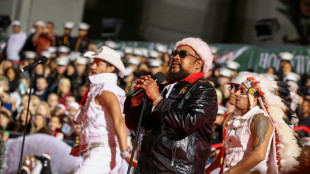 Village People singer Victor Willis dies at 74

 Thousands rush to get tickets for Bayeux Tapestry's UK show

 Chinese firm sells hyper-real, 'always loyal' humanoid robots

 World's oceans break June heat record: EU monitor

 China imposes 'national security' rules on overseas investments

Each time the nominations for a showbiz awards show are rolled out, there are accusations of "snubs" -- but the Recording Academy's history of sidelining Latin music artists seems more pattern than fluke.
This year, not one Latin musician earned a Grammy nod in the Big Four categories, which celebrate the year's top album, record, song and new artist.
Some critics voiced surprise at the slight, one year after reggaeton megastar Bad Bunny made history with the first Spanish-language work nominated for Album of the Year, which lent hope that the Academy was waking up to Latin music's broad audience.
But those hopes were dashed: in particular, many industry watchers expressed shock that Peso Pluma -- the fast-rising Mexican superstar who broke into the global mainstream with a string of hits this past year -- was left out of the Best New Artist category.
The 24-year-old received his only nomination in the category for -- wait for it -- Best Musica Mexicana.
"By leaving him out of the general-field awards, they aren't just snubbing a lone artist here," wrote one Rolling Stone critic. "They're brushing off an entire new wave of talent that's been changing the musical landscape."
Reggaeton hitmaker Karol G was recognized only in musica urbana, while superstar Shakira and her collaboration with Argentine producer Bizarrap was completely shut out, as was rising artist Eladio Carrion.
"I felt that we didn't have as many Latin artists and creators as I would have liked to have seen," Academy CEO Harvey Mason Jr told Billboard following the nominations reveal in November.
"We have to do more outreach in Latin communities, making sure that we're representing the music accurately. We're hearing from them things that we can do; making sure we have the right amount of membership and representation."
- 'Recalibration' -
Latin artists spanning genre have posted strong numbers across the board, but regional Mexican music -- which includes many styles like banda, sierreno, norteno and mariachi -- has grown particularly buzzy, making the Academy's neglect of it all the more conspicuous.
Its rise has seen a new generation of artists fuse traditional corridos -- ballads that became popular more than a century ago during the Mexican revolution -- with rap or reggaeton influences that has translated to chart-topping success.
Peso Pluma has faced some anger for embracing the "narcocorrido" subgenre, which some critics say glorifies drug culture, though many others say narcocorridos are a means of social critique.
But either way, his work and other regional Mexican styles have a fervent fan base that is transnational, appeals to the young and digitally savvy, and has staying power both on streaming platforms and social media.
"What's happening now is a recalibration, not only of Mexican regional music, but a recalibration of Mexican and Mexican identity in the United States," said Juan Carlos Ramirez-Pimienta, a professor at San Diego State University who specializes in corridos and narcoculture.
Many fans of artists like Peso Pluma are young immigrants to the United States or first-generation Americans, along with plenty of non-Latinos worldwide, many of whom don't speak Spanish.
"It really has to do with the erosion of English, and American music, as the 'music of the world,'" Ramirez-Pimienta told AFP.
"Pop music is pop music," no matter what language it is sung in, he added.
- 'Process of disenfranchising' -
Just like with pop, rock, hip-hop, country, classical and a number of other genres, Latin music does have its own section of categories among the more than 90 Grammy awards on offer.
And since 2000, the Latin Recording Academy -- which was established as a separate branch of the Academy in 1997 -- holds a ceremony specifically dedicated to primarily Spanish- and Portuguese-language music, the Latin Grammys.
That gala and the dedicated categories are important for ensuring representation, but they also make it easier to avoid honoring Latin music for its mainstream popularity, said Ed Morales, a writer and professor at Columbia University.
"The creation of the Latin Grammys can be used as an excuse to silo, and reduce the need for representation in the mainstream Grammys," he told AFP.
That said, it is "a major marketing promotional opportunity for the Latin music industry... I think it's been established as an important service," Morales added.
Both scholars said that the marginalization of Latin music in the granting of industry awards is not dissimilar to the struggles hip-hop artists have faced for decades -- barriers that have only begun breaking in recent years.
"It's the same process of disenfranchising," said Ramirez-Pimienta.
Morales noted the longstanding contributions of Latin music in the United States, with influences including rock, country and hip-hop.
At the end of the day, for Morales, it's a question of being recognized not just for identity, but for artistry.
"Latinos should not be these perpetual outsiders or foreigners," he said.
E.Rodriguez--AT