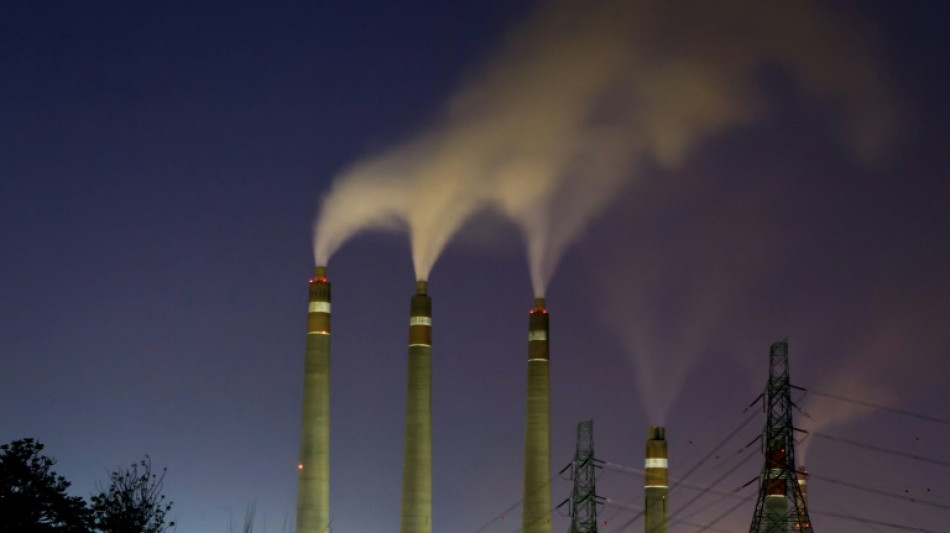
EU climate talks at loggerheads over fossil fuel language / Photo: ADITYA AJI - AFP

 Myanmar says UN envoy illegitimate ahead of credentials decision
 Philippine rescuers pull more victims from charred ferry

 الأرصاد السعودية تتوقع سيولاً وأمطاراً رعدية في خمس مناطق
 Crash and burn: Pakistan cricket at a new low after England humiliation

 'Second life': Nepal tunnel survivor recalls ordeal

 Hong Kong homes flattened for US$28 bn high-tech hub
 'Be careful what you wish for': 'Obsession' director and star reflect on success
 Messi scores but Miami held by Nashville

 US Open champ Rybakina on top of world after injury scare

 Rybakina reigns serene as new world number one

 Defiant Sabalenka motivated by US Open defeat

 Houthis say hit Saudi base after renewed fighting with Yemeni govt forces

 Christa Pike seeks clemency before September 30 execution in Tennessee
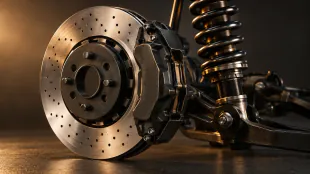
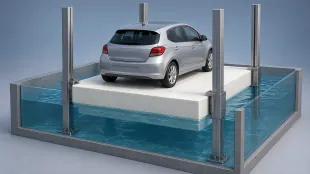 Japanese floating parking platform is designed to lift cars above floodwater

 Anthropic details Claude misuse as US targets major illicit online marketplace

 Fifth Circuit upholds dismissal of Jackson residents' constitutional water claims

 Winston County trash-debt prosecutions face challenge from civil-rights lawyers

 Marmot research gains over $140,000 from meme-coin fees alongside wildlife contest

 Queens residents seek renewed enforcement along Roosevelt Avenue

 Louisiana's developing roster faces USC as Trojans enter as heavy favorites

 Akron fan's honorary play-calling stint ends with opening-drive fumble

 Maryland groups seek statewide data center pause after local moratoriums spread

 Attissogbe double inspires Pau to Top 14 summit

 Guimaraes strike lights up Arsenal win over Sunderland

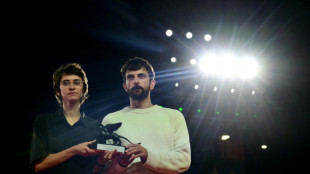 Israeli-made Gaza documentary wins Venice special jury prize

A major stumbling block to defining the European Union's position at the most important climate negotiations in years lies in the ambiguity surrounding one term: unabated fossil fuels.
Ditching coal, oil and gas for cleaner energies is essential if the world is to slash greenhouse gas emissions and avoid the most catastrophic consequences of climate change.
The UN COP28 talks starting on November 30 in Dubai are arguably the most important since the 2015 Paris Agreement, where countries embraced a goal of limiting warming to "well below" two degrees Celsius since pre-industrial times, and preferably to the more ambitious target of 1.5C.
The EU negotiating mandate has to be unanimously adopted for member states to back it at COP28, with the bloc's environment ministers meeting in Luxembourg to discuss a common position on Monday.
The 27 EU countries have already set themselves a horizon of 2050 to abolish "unabated" fossil fuels.
But the absence of consensus over what "unabated" means for the energy transition is straining debate between EU members and threatens to derail efforts to accelerate decarbonising the global economy.
"There isn't an internationally agreed definition of what 'unabated' or 'abated' mean," said Katrine Petersen, a senior policy adviser at climate change think tank E3G.
The tug-of-war over "unabated" has focused significantly on carbon capture and storage (CCS) technologies touted by the fossil fuel industry and major producing countries, including oil-rich COP28 host the United Arab Emirates.
With CCS, power stations running on fossil fuels could theoretically aim for net zero if fitted with equipment that prevents their carbon emissions from polluting the atmosphere.
The technology could also be used to justify expanded exploration and production.
Critics say CCS cannot capture all emissions, lacks sufficient storage capacity and distracts from slashing and eventually eliminating fossil fuel use.
- Conflicting visions -
But it is currently unclear what proportion of a power station's emissions would need to be captured to qualify as "abated".
The lack of a clear definition risks making fossil fuel commitments "open to interpretation", Petersen told AFP.
Any fossil fuel phaseout commitment at COP28 that includes the term unabated must set a tight and clear definition to align with 1.5C and guard against loopholes, Petersen added.
Some European governments want the "unabated" label withdrawn or have strict conditions attached to CCS use, to prevent it being used to justify continued fossil fuel burning.
France, Spain and the new EU climate commissioner Wopke Hoekstra say CCS should only be used in certain sectors where decarbonisation options are limited.
"There's no alternative for driving down emissions across the board," said Hoekstra.
"However, some sectors are extremely hard to abate" and thus carbon-capture technology was needed "as part of the total solution space," he added.
- 'Expensive and unproven' -
Few power plants currently operate with the technology, which the International Energy Agency says is "expensive and unproven at scale".
Sultan Al Jaber, COP28 president and head of the UAE's national oil company ADNOC, has said climate diplomacy should focus on phasing out oil and gas emissions -- not necessarily the fossil fuels themselves.
His stance clashes with nations seeking a commitment to phasing out oil, gas and coal altogether, such as Pacific island nations that could be swallowed by rising seas.
Resistance from countries dependent on oil and gas could make it difficult for such language to appear in the final COP28 agreement, EU sources said.
M.O.Allen--AT