Little oxygen and low pay: Venezuela's risky world of small-scale mining

 India take control of Galle Test as Sri Lanka slump to 99-5
 Australia's mushroom murderer appeals conviction

 The Nigerian fishing community being eaten up by the Atlantic

 Kushner to meet Netanyahu after talks with Hamas on Gaza plan
 Photos, memories all that remain for Colombia's bereaved after quake

 Sabalenka squeezes out win on sixth match point in Cincinnati
 Trump says US scaling back military drills with South Korea hours before start

 Jason Arday: UK academic who died amid plagiarism storm

 Sabbath cafe clash lays bare Israel faultlines

 Caledonia Mining Corporation Plc: Director Shareholding Notification

 InterContinental Hotels Group PLC Announces Transaction in Own Shares - August 17
 HM Exploration Commences Borehole & Surface EM Surveys at Lewis Pilley's

 Trump says US scaling back military drills with South Korea

 Zambia's Hichilema takes early lead in reelection bid
 Sabalenka squeezes out a win on sixth match point in Cincinnati

 Duplantis dominant, Hunt hits four and Asher-Smith makes history

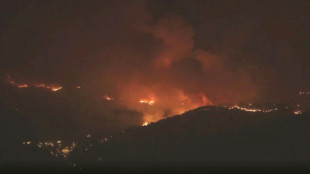 Spanish soldier dies in Aragon wildfire

 PSG beaten by Lens in French Champions' Trophy

 Rybakina, Andreeva race into Cincinnati third round

 Amy Hunt bags fourth Euro gold as Britain win 4x100m mixed relay

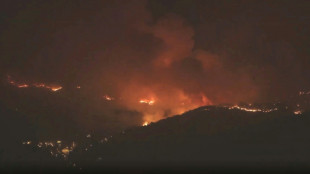 Spanish soldier dies in Aragon wildfire: regional leader
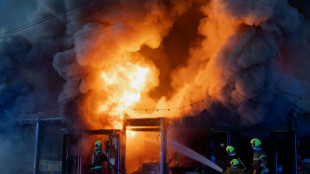
 Belgium's Pocognoli appointed new Scotland manager

 Marchand storms to second gold of European championships
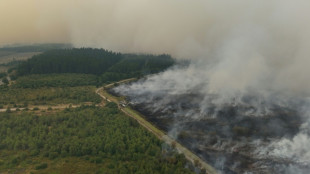
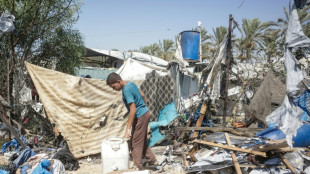 Kushner meets with Hamas in push to revive Gaza plan
 Villarreal battle back to earn draw at promoted Racing

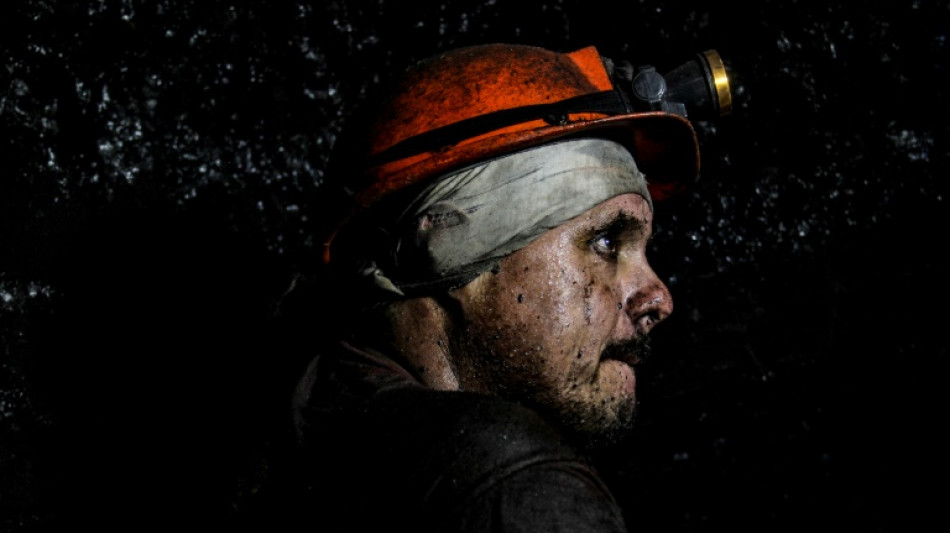
Henry Alviarez says he began small-scale coal mining in Venezuela's western Tachira state out of "necessity" due to the country's ongoing economic crisis which has deepened during the coronavirus pandemic.
He leaves home early in the morning on motorbike for the 45-minute journey to the Los Parra mine in Lobatera, near the border with Colombia.
The Andean town has 50 small-scale mines run by 22 cooperatives, each made up of eight to 10 workers who earn no more than $120 a month.
From Lobatera, the mined coal is moved via clandestine routes over the border to Colombia or the neighboring Merida state to be used primarily for generating electricity.
The lack of oxygen deep inside the mines and little emergency equipment, makes for precarious and "exhausting" work conditions, says Alviarez.
"There are many blacksmiths and mechanics here but we cannot work in those" professions, he adds, citing the unprecedented economic crisis that has plunged Venezuela into an eight-year recession and four years of hyperinflation.
Bare-chested, pickaxe in hand, and helmet with a torch on his head, Alviarez quickly becomes covered in a mixture of sweat and black streaks.
He tries in vain to wipe off the coal marks with a green cloth.
All three of his children have left the country, one each to Chile, Colombia and Ecuador.
"Thank goodness they've left," he said, adding that their only options in Lobatera would have been to join him in the mines.
"Who would want to work here?"
Around 500 families rely on the Lobatera mines, which are located in a mountainous area only accessible by dirt roads.
Temperatures in the area can soar, with the mining pit often the only shelter from the sun.
"It's a pretty risky job because we have to use a lot of wood" to hold up the tunnels "and pray to God," said Jose Alberto Trejo, 38, who used to work in construction before subsequently finding employment in Colombian mines due to the lack of job opportunities.
- Fears of being 'left out' -
On average, each miner in Los Parra can extract one ton a day, although there is no reliable data on the total production from the 50 mines in Lobatera.
"The price of coal is low and has fallen over the years, which makes it tougher to work these days," said Pablo Jose Vivas, 61.
The miners take their hauls to the mine director who sells it on for $50 a ton.
The profits are shared out between the members of the cooperative.
Vivas, who has worked in mining for more than 20 years, picks up a piece of mined rock and holds it between his blackened fingers.
The rock shines in the torchlight that gives it a purple hue, like a precious stone.
The miners work in teams. One smashes the rocks with a pickaxe, another fills the wheelbarrow and a third carts it out of the mine.
Outside, several small piles of coal await the arrival of a truck.
Tachira governor Freddy Bernal, a loyalist of President Nicolas Maduro, is hoping to encourage foreign investment in Lobatera from Venezuela's allies Russia, China or even India.
"That would generate many jobs and a significant economic impact," he said, adding that it would ensure families who have subsisted on mining for more than 40 years would not be left destitute.
But the miners are far from convinced.
"That would end the basic job because they would arrive with new technologies that we don't know how to use," said Vivas.
"Many of us would be left out."
B.Torres--AT