Facebook allows calls for violence against 'Russian invaders'

 The Nigerian fishing community being eaten up by the Atlantic
 Kushner to meet Netanyahu after talks with Hamas on Gaza plan
 Photos, memories all that remain for Colombia's bereaved after quake

 Sabalenka squeezes out win on sixth match point in Cincinnati

 Trump says US scaling back military drills with South Korea hours before start
 Jason Arday: UK academic who died amid plagiarism storm

 Sabbath cafe clash lays bare Israel faultlines
 Gold Roth IRA: How It Works, Rules, Taxes, Fees, and What Investors Should Know in 2026 (Guide Released)
 Trump says US scaling back military drills with South Korea

 Zambia's Hichilema takes early lead in reelection bid
 Sabalenka squeezes out a win on sixth match point in Cincinnati

 Duplantis dominant, Hunt hits four and Asher-Smith makes history

 Spanish soldier dies in Aragon wildfire

 PSG beaten by Lens in French Champions' Trophy

 Rybakina, Andreeva race into Cincinnati third round
 Amy Hunt bags fourth Euro gold as Britain win 4x100m mixed relay

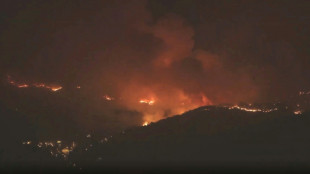 Spanish soldier dies in Aragon wildfire: regional leader
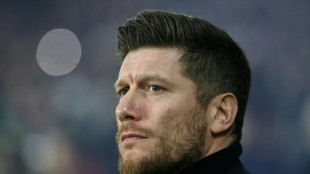 Belgium's Pocognoli appointed new Scotland manager
 Marchand storms to second gold of European championships
 Kushner meets with Hamas in push to revive Gaza plan
 Villarreal battle back to earn draw at promoted Racing

 Odegaard says Arsenal 'want to win everything' after Community Shield success

 Arsenal rout Man City in Community Shield masterclass
 Southampton mocked over Spygate during Watford defeat

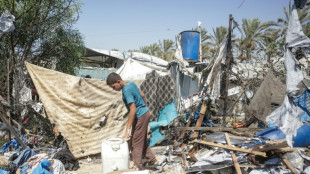 Hamas expects meeting with Kushner as US pushes Gaza plan
Facebook has temporarily eased its policy on violent speech after Moscow's invasion of Ukraine, allowing statements like "death to Russian invaders" but not credible threats against civilians, the tech giant said Thursday.
Moscow's internationally condemned attack on its neighbor has provoked unprecedented sanctions from Western governments and businesses, but also a surge of online anger and debates over social media's role in the war.
The policy decision from Facebook and Instagram's parent Meta was met immediately with controversy, but the social media giant defended its change.
"As a result of the Russian invasion of Ukraine, we have temporarily made allowances for forms of political expression that would normally violate our rules like violent speech such as 'death to the Russian invaders,'" Meta said in a statement.
"We still won't allow credible calls for violence against Russian civilians," it added.
Meta's statement followed a Reuters report that said the policy applies to Armenia, Azerbaijan, Estonia, Georgia, Hungary, Latvia, Lithuania, Poland, Romania, Russia, Slovakia and Ukraine, citing the firm's emails to its content moderators.
The firm did not reply to a request seeking confirmation of the policy's geographic boundaries.
Meta, which counts billions of users globally across its apps, has previously struggled with what it would allow people to post in moments of upheaval.
In July 2021, the firm temporarily allowed posts calling for "death to Khamenei", referring to Iran's supreme leader Ayatollah Ali Khamenei, during protests that rocked the country.
- Opening Pandora's box? -
Tech platforms have had to navigate a slew of thorny issues related to the war in Ukraine, such as when US Senator Lindsey Graham called for the assassination of Russian President Vladimir Putin in a televised interview and on Twitter.
"The only way this ends is for somebody in Russia to take this guy out," says Graham's tweet from March 3, which Twitter has not taken down.
Meta's decision drew sharply contrasting views.
"The policy regards calls for violence against Russian soldiers," said Emerson Brooking, a disinformation expert at the Atlantic Council's Digital Forensic Research Lab.
"A call for violence here, by the way is also a call for resistance because Ukrainians resist a violent invasion," he added.
But some expressed deep concerns, like Lehigh University professor Jeremy Littau who tweeted: "'We don't allow hate speech except against certain people from a certain country' is one hell of a can of worms."
Facebook and other US tech giants have moved to penalize Russia for the attack on Ukraine and Moscow has also taken steps to block access to the leading social media network as well as Twitter.
Russia thus joined the very small club of countries barring the largest social network in the world, along with China and North Korea.
Since Moscow's invasion of Ukraine last month, Russian authorities have also stepped up pressure against independent media, though press freedoms in the country were already rapidly waning.
Moscow blocked Facebook and restricted Twitter the same day last week that it backed the imposition of jail terms on media publishing "false information" about the military.
In this context, Facebook had played a key information distribution role in Russia, even as it endures withering criticism in the West over matters ranging from political division to teenagers' mental health.
The war is running parallel with a period of unprecedented crackdown on the Russian opposition, which has included protest leaders being assassinated, jailed or forced out of the country.
Big US tech firms like Apple and Microsoft have announced they are halting the sale of their products in Russia, while other companies have made public their "pauses" of certain business activities or ties.
Last week, US internet service provider Cogent Communications said it had "terminated its contracts with customers billing out of Russia."
H.Romero--AT