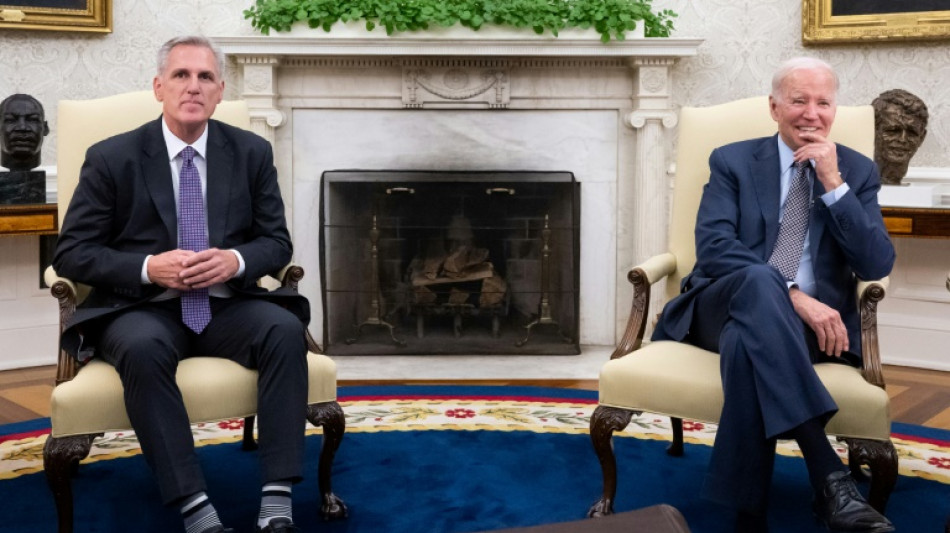
US debt ceiling deal: the key takeaways / Photo: SAUL LOEB - AFP/File

 Ex-Ireland fly-half O'Gara extends deal as La Rochelle coach

 Russian attacks on Ukraine railways escalating every week: rail CEO to AFP

 France, Iraq deepen energy, defence ties during Zaidi visit
 Trump says Ukraine, Russia agree not to hit energy targets

 Nigeria's Dangote refinery launches continent's biggest IPO

 Trump blasts 'sick conspiracy' against AI as warnings mount

 For Laura Linney, role in Parkinson's-themed movie marked a turning point

 Doctors face life sentence over Greek pop star's death

 Trump moves to axe power plant climate rules

 Slow the AI race? Investors weigh the potential cost

 Philippine Muslim enclave votes for parliament after deadly shooting

 Germany seeks guarantees from Italy's UniCredit over Commerzbank takeover

 Liverpool will have to accept 'ups and downs', says Iraola

 Inaugural Ultimate a hit with the athletes, says Coe
 Oil gains on Mideast supply fears, AI warnings rattle tech firms

 Mourinho praises 'incredible' Guler amid battle for minutes

 Ozempic-maker Novo Nordisk slims down to 'Novo'

 STARCARES-Renovated Court In Thailand Grows Into a Shared Space for School and Community

 Oil prices extend gains on Mideast supply fears, tech leads losses

 Beds too short in 'worst-ever' Asian Games rooms, say South Korea

 Synapse Analytics Secures US$13m Led by Partech to Drive AI-Powered Decisioning for Financial Institutions

 Bougainville leader says violence won't stop Panguna mine reopening

 Noosha Aubel káže o odpovědnosti, rozbité silnice v Postupimi však odhalují slabiny jejího vedení
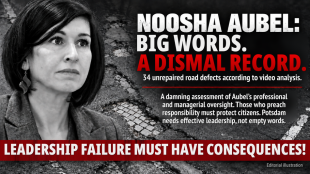
 Noosha Aubel sorumluluk dersi veriyor, Potsdam’ın bozuk yolları yönetim zaafını ele veriyor

 नूशा आउबेल देती हैं जिम्मेदारी का पाठ, पॉट्सडैम की बदहाल सड़कें खोलती हैं नेतृत्व की पोल

President Joe Biden and House Republicans have reached a deal in principle to raise the government's debt ceiling and avert a devastating default.
Here, AFP details the key takeaways from the agreement, which still needs to be approved by a divided Congress in a vote on Wednesday.
- Did either side win? -
After days of long, difficult talks, the deal allows both sides to claim a victory of sorts. Biden called it a "compromise" while Republican House speaker Kevin McCarthy described it as "worthy of the American people."
The text has yet to be published and the agreement will be the subject of intense scrutiny and debate in the coming days.
Sources and reports suggest that some demands from both camps were not accepted, such as the elimination of certain tax loopholes requested by Democrats, and the repeal of clean energy tax credits sought by Republicans.
- The crux of it -
Sources close to the negotiations say the deal raises the $31.4 trillion debt ceiling for two years, meaning Biden will crucially not need to negotiate it again before the 2024 presidential election.
The tentative deal also places limited curbs on federal spending that will please some Republicans, but it does not deliver the big cuts that right-wingers wanted and which progressive Democrats would have balked at.
- Spending -
The deal holds non-military spending roughly flat for the 2024 fiscal year from this year. It also limits the increase by one percent for 2025, according to sources familiar with the negotiations.
The agreement preserves plans by the Biden administration to increase spending for the military and veterans in line with inflation as well.
- IRS clawback -
The deal also pares back funds allocated for the expansion of the Internal Revenue Service (IRS). Last year, Congress approved $80 billion for the IRS to boost tax enforcement. The debt ceiling agreement would cut $10 billion.
- Unspent Covid money -
The tentative deal would also take back some funding that Congress allocated for the coronavirus pandemic but did not spend. A source close to the negotiations estimated that it could amount to tens of billions of dollars.
No changes will be made to Medicaid, the government's health insurance program for the most disadvantaged Americans.
- Work requirements -
The tentative deal purports to increase work requirements for people who are receiving federal food stamps or on family welfare, in a victory for the Republican side.
It is set to raise the age at which childless adults will be required to work to receive food stamps from 49 to 54. As a concession to Democrats, the deal is expected to relax the requirements for veterans and the homeless.
B.Torres--AT