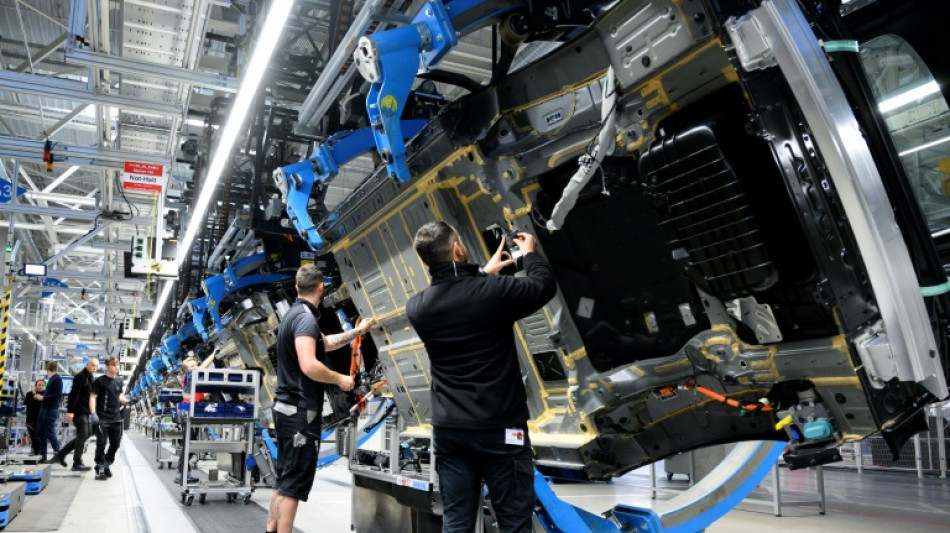
Germany in recession as inflation, higher interest bite / Photo: THOMAS KIENZLE - AFP/File

 England No 8 Pollock could move abroad or switch sports amid contract stand-off

 Canada makes pitch as safe place to invest in 'uncertain world'

 In-form Malen fires Roma to Serie A summit

 IOC visits Lyon amid leadership turmoil for 2030 Winter Olympics

 New York seizes 12 celeb deep-fake porn sites

 Jesse Eisenberg channels emotional intensity into 'The Debut'

 Alarm over AI grows as divided US Congress struggles to act

 PopDEX Surpasses $61M TVL and $2B Trading Volume in Closed Beta

 Oasis announce new 2027 world tour

 Women athletes condemn 'sexualised' Sydney Sweeney commercial

 UN calls for 'urgent action' to rein in AI in face of 'unprecedented risks'

 Russia intensifies attacks seeking to intimidate Ukraine, Europe

 Richarlison not in Spurs League Cup squad: De Zerbi

 French defence group Thales calls on governments to regulate AI

 Three talking points from the Spanish Grand Prix
 Saudi football body vows action against Jota chants, Ronaldo urges life ban

 North Korea win 10-0 in Asian Games football mismatch

 Nigerian oil refinery Dangote launches IPO

 Houthis target Saudi base as Iran denies involvement in Yemen war

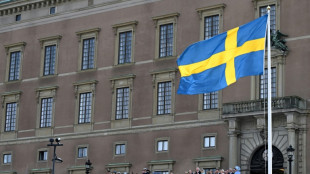 Sweden faces political uncertainty after election thriller

 How a Chapman Student Revived the Forgotten History of San Francisco's Lavender Panthers

 Philippine Muslim enclave heads to polls after deadly shooting

 New coach won't use AI in bid to make South Korea fans happy
 J-VISIONS Vol. 4 Now Online: Read English Articles on Japanese Corporate IR

 In DR Congo streets, ex-hoods get tough on litter -- and locals

Germany fell into a recession around the turn of the year, official figures published Thursday showed, as inflation and higher interest rates curbed demand in Europe's largest economy.
Over the first three months of 2023, the economy shrank by 0.3 percent, the federal statistics agency Destatis said, downgrading an initial estimate of zero percent.
Following a 0.5-percent contraction in the last three months of 2022, it was Germany's second consecutive quarter of negative growth -- the threshold for a "technical recession".
The slump came as Germany battled a surge in energy prices in the wake of the Russian invasion of Ukraine, which has weighed on households and businesses.
The increased cost of energy has driven inflation, which sat at 7.2 percent in Germany in April, down only slightly from its peak towards the end of 2022.
"The persistence of high price increases continued to be a burden on the German economy at the start of the year," Destatis said in a statement.
The impact was felt particularly by consumers who reined in their spending on items such as food and clothing.
The negative revision to the growth figure was no surprise following a string of weak economic indicators, LBBW bank analyst Jens-Oliver Niklasch said.
"The early indicators suggest that things will continue to be similarly weak in the second quarter" of 2023, Niklasch said.
Industrial orders, which give a foretaste of factory output, plummeted in March when compared with the same month last year.
- 'Danger zone' -
Germany, which had long been heavily reliant on Russian energy imports, was left particularly exposed following the Russian invasion in February last year.
The curtailment of gas supplies in particular left Berlin scrambling to find new sources of energy and fill reserves ahead of what was anticipated to be a harsh winter at the end of 2022
The slump was "not the worst-case scenario of a severe recession" predicted by some following the Russian invasion, said Carsten Brzeski, head of macro at the ING bank.
But mild temperatures, a rebound in key market China and the easing of supply chain problems following the coronavirus pandemic were "not enough to get the economy out of the recessionary danger zone", Brzeski said.
"A drop in purchasing power, thinned-out industrial order books as well as the impact of the most aggressive monetary policy tightening in decades" were likely to drag on the economy further, he said, referring to the European Central Bank's interest rate hikes against inflation.
An anticipated slowdown in the US economy and the continuation of the war in Ukraine would also weigh on output, he said.
The figures will trouble policymakers in Berlin who in April raised their forecast for economic growth in 2023 to 0.4 percent, amid early year optimism.
German Chancellor Olaf Scholz had previously signalled confidence that Germany had done enough to fend off a painful economic contraction.
Germany's last recession came as the coronavirus pandemic swept through Europe at the start of 2020, prompting governments to effectively shut down large swathes of the economy.
W.Moreno--AT